
Description
Symptoms
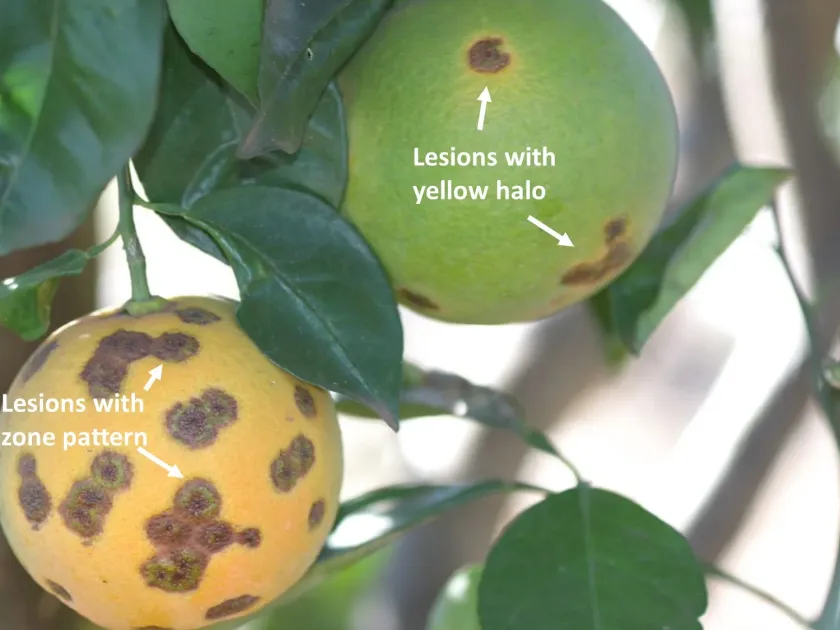
The first symptoms appear as small circular lesions on leaves, stems, or fruits. These lesions often have a yellow halo and a necrotic center with a darker brown color.
On fruits, the lesions manifest as distinct, sunken, reddish-brown spots. As the infection progresses, these spots can enlarge and disfigure the fruit surface, significantly reducing marketability.
Branches show signs of bark cracking and localized cankers. This is due to the death of tissues in the affected areas, which impairs the tree's ability to transport nutrients and water.
Severe infestation causes premature yellowing and dropping of leaves. The tree crown becomes sparse, and in advanced stages, twigs die back from the tips toward the main trunk.
The general appearance of an infected tree is characterized by low vigor, poor development of new canopy, and reduced fruit size compared to healthy specimens.
Pathogen
Citrus leprosis is a serious viral disease caused by several viruses, most notably the Citrus leprosis virus (CiLV). It is recognized as one of the most economically damaging diseases for the citrus industry globally.
The virus is transmitted by mites belonging to the genus Brevipalpus (false spider mites). The mites acquire the virus from infected tissues and transmit it while feeding on healthy parts of the citrus tree.
The pathogen is systemic, moving through the phloem of the plant. It does not kill the host tree quickly but causes severe physiological damage that leads to decline over time.
Unlike many other plant viruses, Citrus leprosis is strictly dependent on the mite vector for spread. The virus cannot be transmitted mechanically through pruning tools or contact between leaves.
This disease is of major quarantine concern for many citrus-producing nations, as it can cause complete loss of fruit production if not managed aggressively.
Conditions for development
The disease thrives in warm, humid conditions that favor the development of Brevipalpus mite populations. High humidity in the canopy is a critical factor for mite survival.
Outbreaks are frequently observed after periods of active plant growth. The mites prefer the soft tissue of young, succulent shoots and newly developing leaves for feeding and oviposition.
Poor orchard management, particularly the lack of pruning, increases the density of the canopy, providing an ideal microclimate for the mite vector to flourish undetected.
Dissemination of the disease between orchards occurs primarily via the movement of infested nursery stock or during seasonal pruning when mites are inadvertently transported.
Environmental stress, including drought or excessive moisture, may influence the host tree's susceptibility and the rate at which the viral symptoms manifest.
Why it matters
The primary damage caused by Citrus leprosis is the dramatic reduction in yield. The presence of necrotic lesions on the fruit peel makes the crop unsellable in the fresh market.
Chronic infection leads to significant leaf drop and branch death, causing the tree to lose its photosynthetic capacity and eventually leading to its decline.
Costs associated with frequent chemical applications to control the mite vector significantly increase production costs, squeezing the profit margins for citrus farmers.
If left unmanaged, the tree becomes increasingly stressed, making it more prone to secondary infections from fungi or bacteria that colonize the necrotic lesions.
The presence of this virus often leads to strict quarantine regulations, limiting the ability of producers to export their citrus fruit to international markets.
Protection
The main strategy for managing Citrus leprosis is the intensive control of the Brevipalpus mite vector. Effective acaricide rotation programs are essential to prevent the development of resistance.
Sanitary measures are crucial. Infected branches and foliage should be pruned and immediately removed or burned to reduce the reservoir of the virus within the orchard.
Opening up the tree canopy through proper pruning techniques improves air circulation and sunlight penetration, making the environment less hospitable for the mites.
Establishing new orchards requires the use of clean, certified, and virus-free propagation material. This is the single most important preventative measure.
- Regular scouting for mite presence using magnifying lenses.
- Using registered acaricides with different modes of action.
- Implementation of biosecurity measures for personnel and equipment.
Pathogens and affected parts
Affects crops · 1
Discussion
No discussions yet — be the first.