
Description
Symptoms
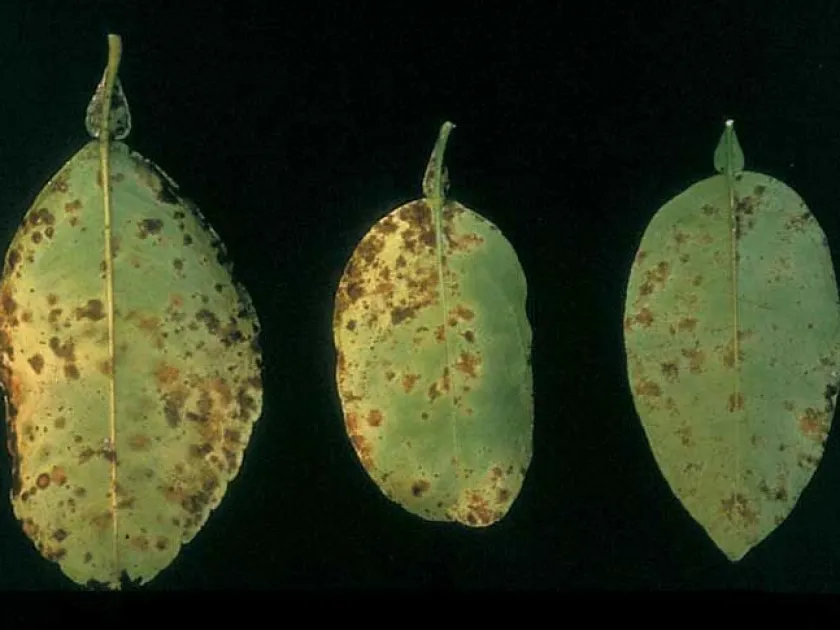
The primary symptom of this disease is the distinct deformation of leaf blades, which develop a characteristic rugose or blistered texture. Leaf margins often become wavy, and the surface appears uneven due to irregular tissue development.
Infected plants show overall stunted growth and shorter internodes. Branches may grow in a twisted manner, and the canopy becomes thin and sparse due to the premature shedding of affected leaves.
Early signs often include mosaic-like chlorosis or vein clearing. As the disease progresses, the affected areas of the leaves may turn yellowish or bronze, indicating severe impairment of photosynthetic activity.
Fruit development on affected trees is significantly impacted. Fruits become smaller, misshapen, and less juicy, losing their marketability and overall aesthetic quality in the orchard.
Diagnosing this condition can be challenging as symptoms may mimic nutritional deficiencies or other viral infections. PCR and ELISA laboratory tests are typically required to confirm the presence of the virus.
Pathogen
The causative agent of this disease is the Citrus leaf rugosity virus (CLRV), which belongs to the Ilarvirus genus. It is a systemic pathogen that infects all parts of the host plant, including the woody tissues.
The virus is primarily transmitted through contaminated grafting material. Asymptomatic carrier trees in nurseries are the most common source of the virus, facilitating its long-distance spread.
Mechanical transmission during pruning is a critical risk factor. Contaminated tools used on multiple trees without disinfection serve as an efficient vector for the spread of the virus within an orchard.
While the exact role of specific insect vectors or nematodes is still under investigation, it is known that these organisms can potentially facilitate the transmission of the virus in field conditions.
The virus relies on the plant's cellular machinery for replication. This process depletes the plant's metabolic reserves, which directly contributes to the gradual decline of the tree's health.
Conditions for development
The disease spreads and develops most rapidly during periods of active sap flow and favorable temperatures. Optimal temperatures for viral replication typically range between 20 and 28 degrees Celsius.
High humidity and moisture levels can influence the activity of potential vectors, thereby increasing the risk of infection. In greenhouse environments, the disease spreads more quickly due to plant density.
Environmental stress, such as nutrient deficiencies, drought, or extreme temperatures, weakens the plant's immune system, making it more susceptible to displaying overt symptoms of the virus.
The global spread of the virus is largely attributed to the international trade of non-certified or poorly inspected nursery stocks. Quarantine violations remain the leading cause of new infections.
During the dormant winter season, viral activity may decrease, but the pathogen persists within the buds and bark, remaining ready to resume its spread as soon as the growing season commences.
Why it matters
The primary economic impact is a significant reduction in fruit yield and quality. Infected trees produce lower quantities of fruit that fail to meet commercial standards for fresh consumption.
Long-term infection leads to the dieback of skeletal branches and can eventually result in the total death of the citrus tree, necessitating costly orchard replanting procedures.
The impaired photosynthetic capacity of rugose leaves reduces the accumulation of sugars and vitamins in the fruit, leading to poor taste profiles and diminished nutritional value.
Infected trees are significantly more susceptible to secondary infections and pest attacks. This complex stress weakens the tree further and increases the costs associated with pest management.
The disease poses a persistent threat to the citrus industry, as there is no cure for infected trees. It requires long-term management and strict adherence to sanitary protocols to minimize damage.
Protection
The foundation of management is the exclusive use of certified, virus-free planting material. Establishing new orchards must only be done using seedlings from reputable, monitored nurseries.
- Regular disinfection of pruning tools using alcohol or chlorine solutions after contact with each tree to prevent mechanical transmission.
- Prompt identification and removal of infected trees followed by destruction (burning) to eliminate the source of the virus.
- Monitoring for potential insect vectors and implementing integrated pest management (IPM) strategies.
- Periodic laboratory testing of mother trees in nurseries to verify their health status.
- Strict adherence to quarantine and import regulations for all citrus plant materials.
Currently, there are no curative chemical treatments available to eliminate the virus once a tree is infected. Consequently, preventative measures are the only effective strategy for disease control.
Proper agricultural practices, including balanced fertilization and controlled irrigation, help the trees maintain vigor and resilience against various pathogens, including viral infections.
All control efforts must focus on maintaining a virus-free environment, ensuring that the spread of CLRV is contained through rigorous orchard hygiene and surveillance.
Pathogens and affected parts
Affects crops · 1
Discussion
No discussions yet — be the first.