
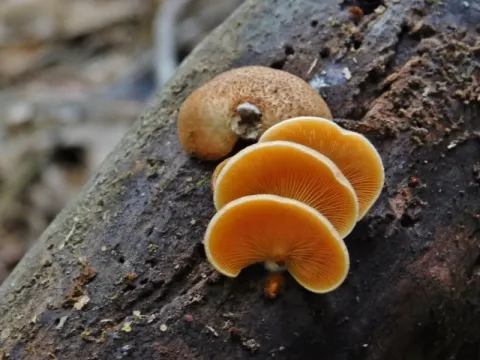
Crepidotus crocophyllus
Crepidotus crocophyllus
Crepidotus crocophyllus is a species of fungus in the family Inocybaceae. It is recognized as a wood-decaying saprophyte that plays a significant ecological role by breaking down dead plant material and lignocellulosic structures.
What the section contains
Crepidotus crocophyllus
While this fungus is not a primary parasite that infects healthy, vigorous trees, it is frequently found colonizing decaying wood, stumps, and the stressed, dead sections of live tree trunks.
The fungus produces shelf-like fruiting bodies that lack a distinct stalk and attach laterally to the substrate. The most distinguishing characteristic of this species is the color of its gills, which are a vibrant saffron or ochre-yellow when young.
The mycelium of the fungus penetrates deep into the wood tissue, secreting specialized enzymes that effectively degrade cellulose and lignin. This process is essential for nutrient cycling in nature but detrimental to timber or garden structural integrity.
In an agricultural setting, the appearance of Crepidotus crocophyllus is an important diagnostic signal that parts of the tree have died or are currently undergoing active decomposition.
The most visible sign of this fungus is the emergence of semi-circular or fan-shaped fruiting bodies directly from the bark or exposed wood of trees. They often appear in clusters, sometimes in a tile-like arrangement.
The caps of the mushroom can be smooth or finely scaly, depending on the moisture level of the surrounding environment. Their color ranges from whitish to yellowish-brown, making them relatively inconspicuous until the gills are observed.
The bright saffron-orange color of the gills under the cap is the primary identification feature. As the mushroom matures, the spores darken the gill color to a rusty brown, which is a key trait for field identification.
Wood colonized by this fungus eventually exhibits signs of rot. The affected wood loses its density, becomes brittle, and may show distinct changes in color and texture as it breaks down into organic mulch.
Excessive moisture retention within the wood is often associated with the presence of this fungus, providing a humid micro-habitat that facilitates further decay and the colonization of secondary pests.
The development of Crepidotus crocophyllus is strictly dictated by the availability of moisture. The fungus thrives in shaded, damp locations where evaporation is minimal and the substrate remains consistently wet.
Temperature plays a crucial role in its lifecycle, with optimal growth occurring between +15°C and +25°C. Under these conditions, the fungal mycelium can colonize wood tissues very rapidly.
Spores of the fungus are wind-borne or spread by splashing rain, allowing them to lodge in bark crevices or fresh mechanical wounds, such as pruning cuts or branch breaks, where the tree's natural defenses are compromised.
Hardwood trees are the most common hosts for this species. Trees that are already stressed by drought, poor soil nutrition, or pest infestations are significantly more susceptible to colonization.
Gardens and forest areas with high concentrations of dead wood, unmanaged brush piles, and poor air circulation create the perfect environment for the fungal spores to settle and germinate successfully.
Although it does not act as a typical pathogen of living cells, the harm caused by this fungus lies in its ability to compromise the structural integrity of woody plants. Over time, it destroys the inner wood, leaving the tree hollow or weak.
This structural degradation significantly increases the risk of branch failure or total tree collapse, especially during severe weather conditions, posing a safety risk to nearby structures and people.
In orchards and landscapes, the presence of the fungus indicates an underlying decline in tree health. The destruction of the tree's internal structure impairs water and nutrient transport, leading to reduced vigor and yield.
The fungal decay serves as a bridge for further damage by attracting wood-boring insects. Once the fungus softens the wood, these insects quickly infest the tree, often accelerating its decline and eventual death.
The aesthetic value of trees is also diminished. The growth of these fungal structures is a visual indicator of long-term neglect or severe damage that may be costly or impossible to reverse.
The most effective strategy for managing this fungus is proactive maintenance. Regular pruning of dead, diseased, or damaged branches prevents the fungus from finding a suitable substrate to establish itself.
All pruning cuts and bark injuries should be treated immediately with wound dressings or copper-based fungicides to seal the area and prevent spore entry into the tree’s heartwood.
Sanitation is critical; removing rotting stumps, fallen logs, and accumulated woody debris from the vicinity of healthy trees reduces the overall spore load in the garden environment.
Maintaining the overall vitality of trees through appropriate irrigation and soil fertilization is essential, as healthy trees possess much stronger natural defenses against fungal colonization.
- Perform regular tree health inspections to detect fungal growth early.
- Promptly remove and dispose of heavily colonized woody material by burning.
- Improve air circulation in the garden to reduce humidity levels.
- Use professional sealants on large wounds to protect exposed wood.