
Crepidotus caspari
Crepidotus caspari
Description
Symptoms
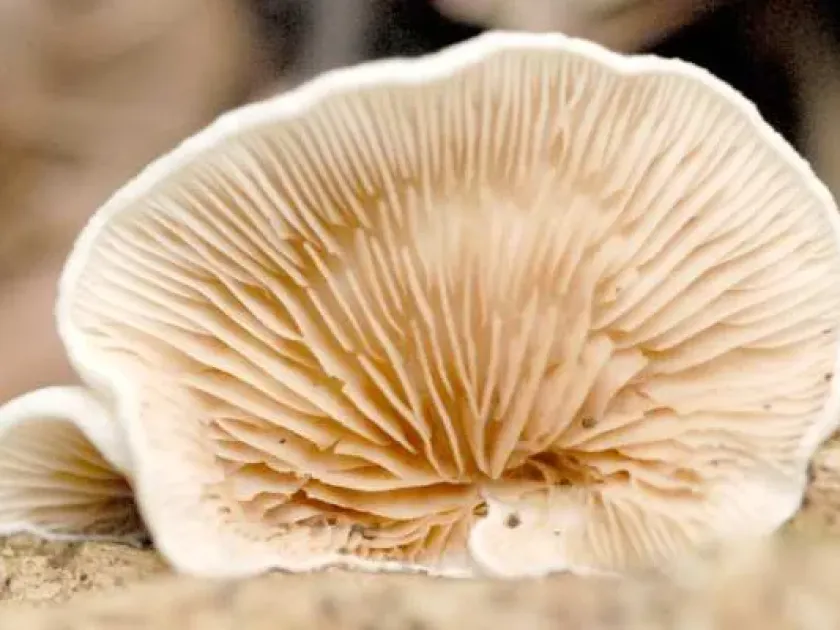
The macroscopic signs of Crepidotus caspari include small, kidney-shaped or fan-shaped fruiting bodies that appear directly on the substrate without a distinct stalk.
The surface of the cap is often covered with a fine, felt-like or slightly scaly pubescence, particularly near the point of attachment.
The gills (hymenophore) change color from whitish or cream to a warm brownish tone as the fungal spores reach maturity.
These fruiting bodies often grow in clusters or overlapping layers on decaying deciduous wood surfaces.
Internally, the presence of the fungus is indicated by white mycelial threads penetrating the wood fibers, which eventually lead to the softening of the material.
Pathogen
Crepidotus caspari is a species of agaric fungus in the Crepidotaceae family. It is not considered a plant pathogen and does not infect agricultural crops.
This fungus is a typical saprotroph, meaning it obtains its nutrients by breaking down non-living organic matter, specifically decaying wood.
It plays a critical ecological role in natural cycles by degrading cellulose and lignin, contributing to the formation of soil humus in forest and rural environments.
The fungus develops a network of mycelium that colonizes the interior of woody material, and its presence becomes apparent only when it produces fruiting bodies.
As it lacks the physiological capacity to infect living plant tissues, it does not pose a threat to plant health in agricultural fields or gardens.
Conditions for development
The growth and spread of Crepidotus caspari are primarily dependent on high moisture levels within the wood substrate.
It thrives in humid, shaded environments where consistent environmental moisture allows for the continuous activity of the mycelium.
Temperature plays a significant role in fruiting; moderate temperatures typically found in the temperate zone are ideal for its development.
Adequate oxygenation of the wood surface is necessary for the development of fruiting bodies, which is why they appear on the outer layers of the wood.
Spore dispersal is primarily managed by wind and water, which carry the microscopic reproductive cells to new, suitable decaying wood targets.
Why it matters
There is no direct agricultural harm associated with Crepidotus caspari, as it strictly decomposes dead matter and avoids live plants.
Potential economic impact is limited to the structural degradation of wooden fence posts, timber structures, or gardening equipment stored in damp conditions.
The fungus does not produce toxins harmful to crops or beneficial soil fauna, making it an ecologically safe organism within the field environment.
It does not interfere with plant growth, nutrient uptake, or yield, as it operates entirely outside the root and foliage systems of crops.
No quarantine or intensive management efforts are necessary for this species, as it is a natural component of environmental decomposition.
Protection
Control measures for Crepidotus caspari are unnecessary in an agricultural context due to its harmless saprotrophic nature.
If decay in wooden infrastructure is a concern, standard preventative maintenance such as chemical wood preservation should be implemented.
Keeping wooden surfaces dry and elevated above the ground is the most effective way to prevent the colonization of this fungus on agricultural structures.
Good site sanitation, such as removing excess wood debris, can naturally reduce the population density of wood-decaying fungi in the vicinity.
In cases of indoor wood growth, ensuring proper ventilation and reducing humidity levels will effectively inhibit the fungus without the need for pesticides.
Discussion
No discussions yet — be the first.