
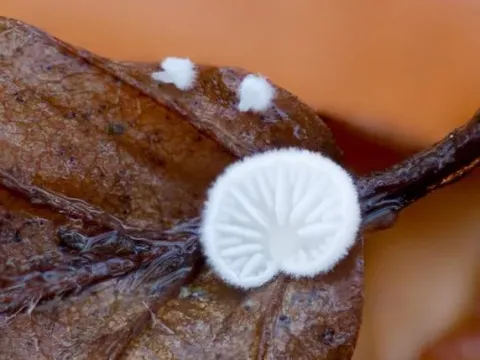
Crepidotus epibryus
Crepidotus epibryus
Crepidotus epibryus is a species of basidiomycete fungus in the family Crepidotaceae. It is classified as a saprotroph, not a plant pathogen.
What the section contains
Crepidotus epibryus
Saprotrophic fungi are organisms that derive their nutrition from dead organic matter, playing a crucial role in nutrient cycling within ecosystems.
Unlike parasitic fungi, Crepidotus epibryus lacks the physiological mechanisms required to infect, colonize, or damage healthy, living plant tissues.
Its natural biological function is the decomposition of cellulose and lignin found in dead plant stems, leaves, and various plant debris.
Therefore, classifying this fungus as a plant disease is biologically inaccurate, as it serves as a decomposer rather than an agent of disease.
The fruiting bodies of Crepidotus epibryus are small, typically ranging from 0.5 to 2 centimeters in diameter, with a shell-like or kidney shape.
The caps are often white or cream-colored, sometimes featuring a slightly fuzzy or hairy texture, and are frequently found attached to decaying substrates.
The gills underneath the cap are initially white but transition to a brownish or ochre color as the spores mature and are released into the environment.
They commonly grow in clusters or rows on damp, rotting plant residues, often sheltered by mosses, hence the specific epithet epibryus.
Visual inspections of nearby plants will show no signs of chlorosis, necrosis, or systemic decline, as the fungus does not interact with the host physiology.
Development of this fungus is strictly dependent on high ambient humidity and the presence of moist, dead organic material.
Fruiting occurs most frequently during prolonged wet weather, with temperatures ranging from 12 to 20 degrees Celsius being optimal for growth.
Shaded, poorly ventilated areas in gardens or fields provide the stagnant, moist microclimate that allows the mycelium to thrive on decaying matter.
Spore dispersal occurs through wind currents, allowing the fungus to colonize available organic residues across various environments.
A reduction in surface moisture and increased air circulation effectively inhibit the growth and reproductive capacity of this fungal species.
Crepidotus epibryus poses no threat to agricultural productivity or plant health, as it is strictly a decomposer of non-living material.
It does not produce any enzymes or toxins that interfere with the metabolic processes of living plants, nor does it compete for root-zone nutrients.
The presence of this fungus is an indicator of accumulation of damp organic waste rather than an infection of the living crop.
In most professional agricultural settings, the presence of such saprotrophs is considered negligible and requires no intervention.
There is no economic damage associated with this species; it serves the ecological function of breaking down organic matter into soil nutrients.
No chemical or biological control methods are necessary for Crepidotus epibryus, as it does not constitute a disease or pest threat.
Good agricultural practices, such as removing excess dead plant matter, are sufficient to prevent the colonization of the fungus.
Improving field drainage and ensuring adequate spacing between plants will create an environment less favorable for the growth of saprotrophic fungi.
Maintaining a clean cultivation area helps manage moisture levels and prevents the buildup of potential substrates for fungal development.
- Regular removal of plant debris
- Maintaining proper soil drainage
- Ensuring adequate ventilation in crop areas