
Crepidotus luteolus
Crepidotus luteolus
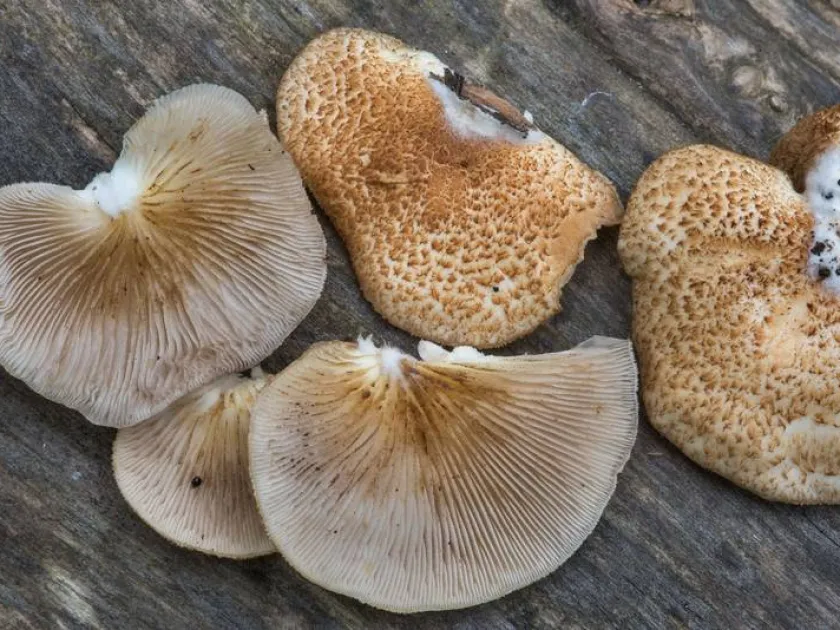
Description
Pathogen
Crepidotus luteolus is a species of fungus in the family Crepidotaceae. It is classified as a saprotroph, which means it obtains nutrients by breaking down non-living organic matter, primarily decaying wood.
This organism does not act as a pathogen for healthy plants. It lacks the biological mechanisms to invade and overcome the immune system of living trees or agricultural crops, making it harmless to plant health.
The fungus produces a mycelial network that penetrates wood, utilizing enzymes to break down complex polymers like cellulose and lignin. This process is essential for nutrient cycling in forest ecosystems.
Its fruiting bodies are small, yellowish, and typically fan-shaped or ear-shaped, attaching directly to the wood surface without a prominent stalk. They appear periodically depending on environmental humidity.
Taxonomically, it belongs to the Agaricales order. Its presence is a natural occurrence in environments where decaying wood is abundant, serving as a biological decomposer.
Conditions for development
High moisture levels are the most critical factor for the growth and development of Crepidotus luteolus. It thrives in humid, shaded environments where wood remains saturated with water for extended periods.
The optimal temperature range for the development of the mycelium and the subsequent formation of fruiting bodies is between +15 and +22 degrees Celsius.
The fungus prefers deciduous wood such as birch, alder, or aspen. It colonizes surfaces that are already decaying or have been softened by environmental exposure.
In managed landscapes or farms, it is often found on damp wooden fence posts, decaying lumber, or stumps that are left in contact with moist soil for long durations.
Spread is facilitated by airborne spores. Once these spores land on a damp, nutrient-rich wooden substrate, they germinate and initiate the development of a new mycelial colony.
Why it matters
There is no direct threat posed by this fungus to healthy agricultural crops or live plants. It cannot infect healthy tissues or damage the harvest of fruits, vegetables, or field crops.
The potential harm is strictly related to the material degradation of wooden structures. If the fungus colonizes garden trellises, wooden supports, or timber structures, it can accelerate the rotting process.
Finding this fungus on a tree is an indicator that the tree or the specific branch is dead or severely weakened. It does not cause the decline of the tree, but rather colonizes it as a secondary inhabitant.
While it does not cause plant disease, its presence on wooden garden infrastructure can lead to the instability of those structures over time, necessitating repair or replacement of affected elements.
The economic impact is minimal and relates primarily to maintenance costs for wooden infrastructure that is not properly protected against biological decay.
Protection
Because Crepidotus luteolus is a saprotroph, traditional plant protection methods like fungicides are unnecessary. Prevention focuses on moisture management and wood protection techniques.
All wooden equipment and structures should be treated with high-quality wood preservatives and fungicides. This creates a chemical barrier that prevents fungi from colonizing the material.
To reduce the presence of such fungi on the property, it is important to remove dead wood, stumps, and unnecessary wooden debris that may hold moisture and serve as a breeding ground.
Proper ventilation and ensuring that wooden structures are not in direct contact with damp soil can significantly inhibit the development of wood-decay fungi.
- Apply protective wood stains or sealants to all garden woodwork.
- Maintain garden hygiene by removing decaying logs and branches.
- Improve air circulation around wooden sheds and structures.
Discussion
No discussions yet — be the first.