
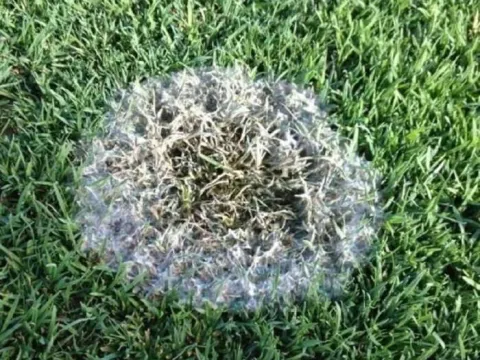
Snow mold
Coprinopsis psychromorbida
The causal agent of this disease is the psychrophilic fungus Coprinopsis psychromorbida. This pathogen is highly adapted to low-temperature environments and primarily infects winter cereals during the winter dormancy period.
What the section contains
Snow mold
The fungus survives in the soil and on crop residues primarily in the form of sclerotia or resilient mycelium. This persistence allows it to initiate infection immediately after the onset of winter conditions or during spring thaw.
It is classified as a low-temperature fungal parasite. The pathogen remains active and capable of infecting host tissues at temperatures near freezing, which distinguishes it from most other plant diseases.
The life cycle of Coprinopsis psychromorbida involves the colonization of weakened plant tissues, which serve as a nutrient base while the cereal crop's metabolism is slowed down by the cold.
The pathogen thrives under a protective layer of snow, which insulates the soil surface and maintains a stable microclimate conducive to mycelial spread between individual plants.
The most distinctive symptom is the appearance of gray-white mycelial mats, often described as felt-like or web-like, on leaves and the crown of the plants shortly after snowmelt.
During the disease progression, the infected plant tissues become necrotic, appearing brown or water-soaked. Small, dark, hard structures known as sclerotia may be visible on the surface of dead leaves.
Affected plants show stunted growth, premature yellowing, and eventually total collapse. The base of the stems (crown area) becomes soft and decayed, allowing for easy separation of the shoot from the root system.
In fields, the disease typically manifests in patches or "bare spots" where the population of winter crops has been completely eliminated by the infection.
An examination of the crown region often reveals tissue disintegration, which is a classic diagnostic sign of severe snow mold damage in winter cereal fields.
The development of snow mold is highly dependent on prolonged snow cover over unfrozen or partially frozen soil. This creates the optimal temperature range (0 to 5°C) for the fungus to thrive.
High humidity and poor air circulation in the micro-layer between the soil and the snowpack are critical factors that promote the infection process and secondary spread.
Plant health is a major factor; crops that are weakened by autumn nutrient deficiencies (especially phosphorus and potassium) are significantly more susceptible to Coprinopsis psychromorbida.
Dense crop stands, which trap moisture and limit airflow, create an ideal environment for the spread of mycelium from plant to plant throughout the winter months.
Delayed seeding or improper hardening of the winter crop before the onset of winter leads to increased vulnerability to fungal infection under the snow layer.
The primary damage caused by snow mold is the destruction of winter cereal stands, leading to significantly reduced plant densities and the need for costly field reseeding in spring.
Plants that survive the infection are often severely stunted and have limited tillering capacity, which results in delayed maturity and lower potential grain yields at harvest.
The presence of snow mold weakens the overall crop vigor, making it more prone to secondary opportunistic pathogens and environmental stresses during the early spring re-growth phase.
Economic losses include direct yield reduction, the cost of fungicides applied as a preventive measure, and the potential need for full field reclamation.
In epidemic years, infection by Coprinopsis psychromorbida can result in severe yield losses, ranging from 20 to 50 percent, depending on the severity of the winter and crop susceptibility.
- Implementation of crop rotation strategies that avoid planting susceptible cereals in the same fields in successive years.
- Incorporation of crop residues into the soil to reduce the fungal inoculum density.
- Usage of high-quality, treated seed lots with systemic fungicides that provide early-season protection.
- Balanced fertilization programs to improve plant hardiness and cold tolerance.
- Planting of winter-hardy and disease-resistant crop varieties adapted to the specific local climate conditions.