
Snowy waxcap
Hygrocybe virginea
Description
Symptoms
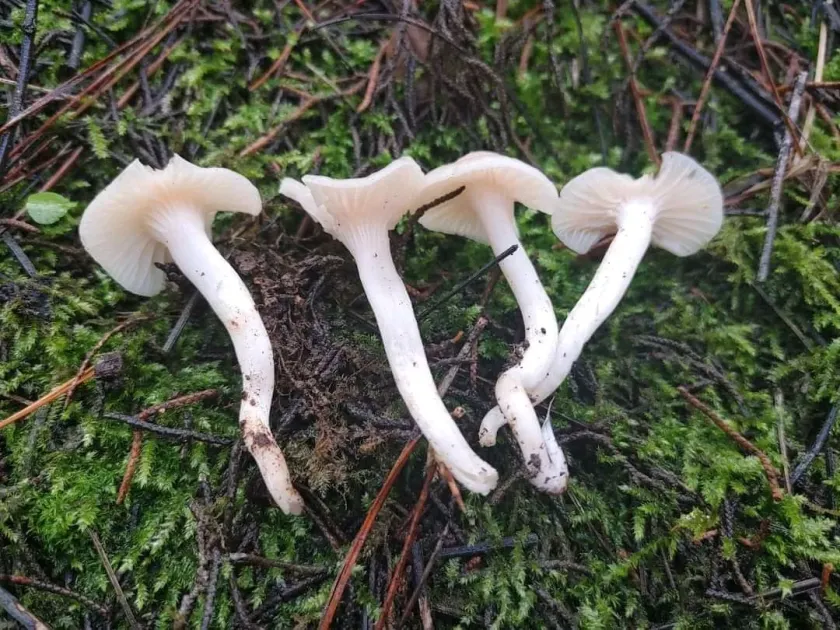
The Snowy waxcap is a small, gilled mushroom characterized by a white, often slightly moist or waxy cap that spans two to five centimeters.
When young, the cap is convex, eventually flattening with maturity, frequently developing a shallow central depression or a small bump.
The gills underneath the cap are distinct, broad, and widely spaced, often running down the upper part of the stem in a decurrent manner.
Its stem is firm, smooth, and typically white, often tapering at the base, which gives the mushroom a delicate and elegant appearance.
These mushrooms are typically found growing in groups or scattered clusters within stable, undisturbed grassy environments.
Pathogen
It is critical to clarify that the Snowy waxcap is not a plant pathogen and does not cause any diseases in agricultural crops.
This species is classified as a saprotrophic fungus, which plays an essential role in decomposing organic matter within the soil.
It does not infect living plant tissues, meaning it has no negative impact on the health of grasses, crops, or ornamental plants.
Biologically, it contributes to the nutrient cycle by breaking down leaf litter and debris, functioning as a beneficial decomposer.
Any categorization of this fungus as a plant disease is factually incorrect and stems from a misunderstanding of its ecological niche.
Conditions for development
The species thrives in moist, nutrient-rich soils often found in meadows, pastures, and lawns with low levels of chemical interference.
Fruiting bodies generally appear during the autumn season when temperatures drop and soil moisture levels remain consistently high.
The Snowy waxcap prefers areas with a well-established turf, showing a high sensitivity to synthetic fertilizers and harsh agricultural chemicals.
It requires stable environmental conditions and is rarely found in intensively cultivated fields where the soil structure is frequently disrupted.
Its distribution is heavily dependent on specific soil mycobiota and the presence of undisturbed organic substrates in the topsoil.
Why it matters
The Snowy waxcap causes zero harm to agricultural productivity, as it does not parasitize crops or impede their growth cycle.
There are no economic losses associated with this species, and it does not affect the market quality of harvested plant products.
Instead of being harmful, its presence often serves as an indicator of a healthy, biologically diverse soil environment.
Since it lacks phytopathogenic traits, it poses no threat to farm management or the standard development of cultivated plants.
It remains a neutral organism in an agricultural context, requiring no attention from farmers or crop protection specialists.
Protection
Since this fungus does not cause plant diseases, there are no control or prophylactic measures necessary for its management.
The use of fungicides is completely unnecessary and discouraged, as such chemicals would be ineffective and potentially damaging to soil health.
Standard agronomic practices, such as routine cultivation and field preparation, are more than sufficient to manage the presence of the fungus.
No preventive measures are needed because the Snowy waxcap does not establish an infection pressure on the crop canopy or root systems.
If removal is desired for aesthetic reasons, simple manual collection of the fruiting bodies is sufficient to mitigate their presence in the area.
Discussion
No discussions yet — be the first.