
Snowdrop grey mould
Botrytis galanthina
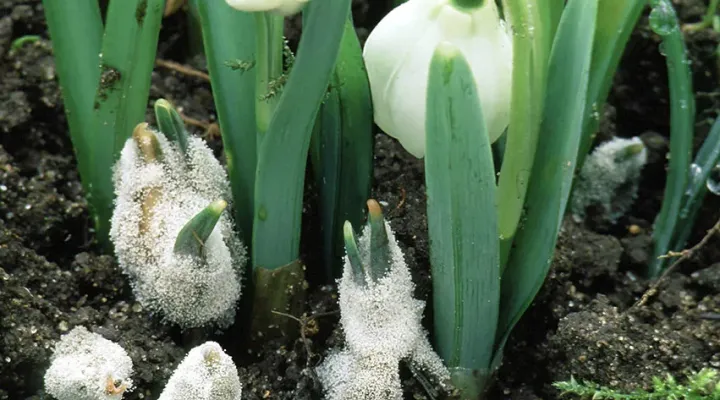
Description
Symptoms
Early symptoms appear as small, water-soaked, or brownish spots on the developing shoots. These lesions expand rapidly, particularly in humid environments, causing the shoots to wilt.
A characteristic sign of the infection is the development of a dense, dusty grey or brownish-grey mycelial mat on the surface of the infected plant parts. This indicates active sporulation.
Stems affected by grey mould often become soft and brittle, leading to the characteristic «bending» or collapsing of the snowdrop shoots before they reach maturity.
Infected bulbs often become discolored, soft, and develop a foul smell. Tiny, black, coal-like sclerotia may be visible on the surface of the bulbs, which are diagnostic of a Botrytis infection.
Leaves may turn yellow and eventually wither away. In severe cases, the entire plant fails to produce flowers, or the flowers emerge malformed and quickly succumb to the fungal growth.
Pathogen
The disease is caused by the fungus Botrytis galanthina, a specialized pathogen that primarily targets species of the Galanthus genus. It belongs to the order Helotiales and is highly aggressive under specific climatic conditions.
The pathogen overwinters as sclerotia, which are dense masses of fungal mycelium, in the soil or on decayed plant debris. It can also survive internally within infected bulbs, ensuring its presence for the following growing season.
In early spring, when temperatures rise, the sclerotia germinate to produce conidia (spores). These spores are highly mobile and easily spread via wind, splashing rain, or contact with garden tools.
Upon landing on a host plant, the spores germinate and penetrate the tissue, often through natural openings or wounds. The fungus colonizes the intercellular spaces, secreting enzymes that break down plant cell walls.
The fungus is capable of rapid systemic infection within the bulb, leading to complete tissue necrosis and the eventual death of the plant if left unchecked.
Conditions for development
High humidity and cool spring temperatures are the primary drivers of grey mould epidemics. Persistent spring rain and fog create perfect conditions for spore germination.
Poor air circulation, often caused by overcrowding or planting in sheltered areas with stagnant air, significantly increases the risk of infection. Moisture on foliage is the key factor for successful pathogen colonization.
Cold, wet soil prevents the plants from establishing strong growth, leaving them vulnerable to attacks from soil-borne pathogens like Botrytis galanthina.
Mechanical injuries to bulbs during lifting or planting provide entry points for the fungus. Even minor scratches can facilitate deep infection within the bulb scales.
Excessive nitrogen fertilization can lead to lush, soft tissue that is physically easier for the fungus to penetrate, making such plants more susceptible to disease outbreaks.
Why it matters
Grey mould is a devastating disease for snowdrop collections, as it can kill entire patches of bulbs rapidly. Once established, it is difficult to eradicate from the soil.
The pathogen ruins the aesthetic value of spring gardens and drastically reduces the survival rate of the bulb population. Infected bulbs rarely recover and often rot entirely in storage.
The disease spreads easily throughout the garden, potentially affecting other related bulbous plants. This makes it a major concern for both amateur gardeners and commercial bulb growers.
Accumulation of sclerotia in the soil means that the same site may remain infested for several years, forcing gardeners to abandon the area for snowdrop cultivation.
Financial impact is notable for nurseries, as infected batches must be destroyed to prevent quarantine issues and further spread to healthy plant stocks.
Protection
The most effective strategy starts with strict hygiene: remove and destroy all infected plant materials, including any surrounding soil, to reduce the inoculum levels.
Inspect bulbs carefully before planting. Discard any that appear soft, discolored, or show visible signs of black sclerotia. Only healthy, firm bulbs should be introduced to the garden.
Ensure your planting site has excellent drainage. Snowdrops perform best in soils that do not retain excess water, as damp conditions directly promote Botrytis.
- Increase spacing between bulbs to improve air circulation.
- Apply fungicide treatments specifically labeled for Botrytis control at the first sign of symptoms.
- Avoid overhead watering, which promotes fungal spread.
- Keep bulbs in a cool, dry, and well-ventilated storage environment if they are lifted.
Rotate planting sites every few years to prevent the build-up of sclerotia in the soil and maintain a healthy, vibrant collection of snowdrops.
Discussion
No discussions yet — be the first.