
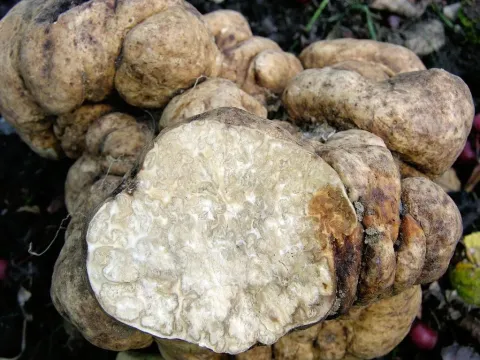
False truffle
Choiromyces meandriformis
The false truffle, scientifically known as Choiromyces meandriformis, is a fungus from the Tuberaceae family. In an agricultural context, it is recognized as a soil-borne pathogen capable of infecting the roots and tubers of various cultivated plants.
What the section contains
False truffle
The pathogen exists primarily as a soil inhabitant that can transition into a parasitic mode, attacking living plant tissues when conditions are favorable. It utilizes a network of mycelium to penetrate and degrade the root systems of crops.
Biologically, the fungus forms fruit bodies that resemble potatoes in appearance, which often complicates early detection in the field. Its life cycle involves the production of resilient spores that can survive in the soil for extended periods.
The fungus thrives on decaying organic matter in the soil before invading healthy root systems. This saprotrophic-to-parasitic transition is a key stage in its lifecycle that facilitates its establishment in agricultural soils.
Understanding the metabolic pathways of Choiromyces meandriformis is crucial, as its secretion of specific enzymes disrupts the normal physiological functions of the host plant, leading to localized tissue necrosis.
A notable sign of infection is the presence of a distinct, earthy, truffle-like odor emanating from the soil around the base of the plant. This scent often indicates active fungal colonization in the rhizosphere.
On tubers and root vegetables, symptoms appear as sunken, dark lesions on the surface. These spots are soft to the touch and indicate that the fungus has successfully penetrated the epidermal layers of the vegetable.
Affected plants show a general decline in vigor, characterized by stunted growth and premature yellowing of the foliage. This occurs because the fungal damage to the roots prevents efficient water and nutrient uptake.
Internal inspection of infected tubers reveals a grayish, web-like fungal growth that gradually replaces the healthy tissue. Over time, the entire tuber may become soft, watery, and completely decomposed.
Severe infestations often result in the cracking of the tuber skin, allowing the fungal mycelium to emerge and produce reproductive structures, further spreading the pathogen across the field.
The fungus prefers heavy, poorly drained soils where stagnant water persists. Such environments are ideal for the germination of spores and the vigorous growth of fungal hyphae near plant roots.
Optimal development occurs in temperate climates with soil temperatures ranging between +12°C and +18°C. These conditions maximize the growth rate and metabolic activity of the pathogen.
Soil pH plays a critical role in the fungus's ability to infect crops; it thrives in slightly acidic environments. Conversely, high soil alkalinity acts as a natural barrier to its development.
Excessive use of uncomposted organic fertilizers provides a ready food source for the fungus, enabling rapid biomass accumulation before it shifts its focus to attacking living host plants.
Poor aeration in the soil profile is a major driver of outbreaks. Compacted soils that fail to drain properly create the exact anaerobic conditions that favor this specific pathogen over other soil microbes.
The primary agricultural impact is the total loss of marketability for infected produce. Crops affected by the fungus rot quickly, making them unsuitable for storage, processing, or consumption.
Significant yield reductions occur due to stunted growth and plant death. Large patches of a field can be decimated if the pathogen spreads unchecked during the early vegetative stages of the crop.
Mycotoxins produced by the fungus during its metabolic activities can contaminate the produce, posing safety risks and further diminishing the economic value of the harvest.
Farmers face substantial financial losses from both the loss of current yields and the long-term impact on soil health, which may require years of remediation before susceptible crops can be grown safely again.
The presence of this pathogen complicates farm management, necessitating expensive changes to soil chemistry and crop rotation schedules to mitigate the risk of ongoing infection.
Preventative measures start with deep autumn tillage, which exposes the soil to lower temperatures and disrupts the fungal mycelium, effectively reducing the viable inoculum for the next season.
Liming the soil is a highly effective cultural practice. By increasing the pH to neutral or slightly alkaline levels, farmers can create a hostile environment for Choiromyces meandriformis development.
Strict crop rotation is mandatory for infected sites. Avoiding the cultivation of potatoes and other root vegetables for at least three to five years is necessary to break the pathogen’s life cycle.
Application of fungicides may be required if an outbreak is identified early. Selecting treatments that are specifically effective against soil-borne fungi is essential for controlling the spread within the field.
Improving soil drainage is paramount. Installing drainage systems or increasing soil organic structure through green manure and proper cultivation techniques helps prevent the water-logging that the fungus relies on.