
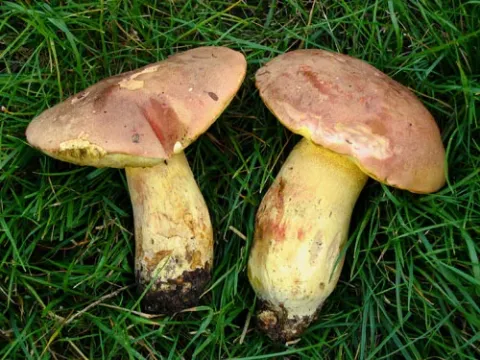
False royal bolete
Boletus pseudoregius
The False royal bolete (Boletus pseudoregius) is not a plant pathogen and does not cause diseases in crops or trees. It is a strictly beneficial mycorrhizal fungus that plays a crucial role in maintaining forest health.
What the section contains
False royal bolete
The species lives in symbiosis with tree roots, forming ectomycorrhiza that enhances the nutrient and water uptake of the host plant, rather than attacking or degrading plant tissues.
Because it is not a pathogenic organism, it does not induce symptoms like wilt, rot, or leaf spots, and therefore, it does not require any agricultural chemical interventions or protection measures.
From an agronomical and forestry perspective, this fungus is considered a valuable indicator of healthy soil and stable ecosystem dynamics, contributing to the overall vigor of forest stands.
Misclassifying this fungus as a disease is scientifically inaccurate, as it promotes plant growth and contributes to the structural integrity of the soil environment.
The cap of the False royal bolete typically measures between 5 and 15 cm in diameter, exhibiting a velvety or suede-like texture with colors ranging from pale brown to golden yellow.
The pore surface is composed of yellow tubes that may turn blue when touched or bruised, a distinct reaction characteristic of this particular member of the Boletaceae family.
Its stipe is dense and robust, often club-shaped or bulbous at the base, covered with a delicate reticulate pattern that is more prominent toward the apex.
Upon cutting, the flesh exhibits a noticeable change to a blue color, which is a standard biological reaction in many bolete species due to enzymatic oxidation.
The fungus produces a pleasant, mild aroma and has a firm texture, making it an interesting subject for mycological studies and forest biodiversity surveys.
This fungus thrives in broad-leaved forests, establishing strong symbiotic relationships with specific tree species like oaks and beeches.
It prefers well-drained, nutrient-rich soils where organic matter accumulation provides the necessary environment for long-term mycelial expansion.
Optimal development of fruiting bodies occurs during late summer and early autumn when moderate temperatures and consistent rainfall occur.
The species is sensitive to extreme environmental stressors and typically avoids highly degraded or polluted industrial forest sites.
It is predominantly found in areas where tree canopy cover allows for moderate light penetration, balancing soil moisture and surface temperatures.