
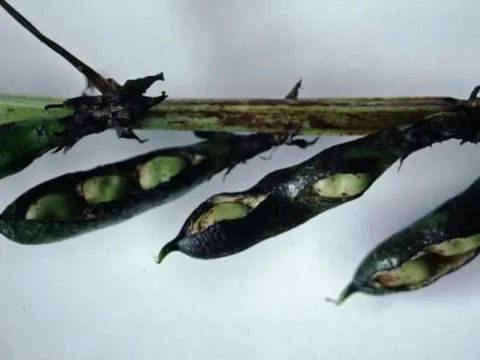
Chocolate spot of beans
Botrytis fabae
Chocolate spot is caused by the fungus Botrytis fabae, which primarily targets plants within the Vicia genus, such as broad beans.
What the section contains
Chocolate spot of beans
The fungus survives in the soil and on crop debris as sclerotia, which act as the primary inoculum for the next growing season, especially in temperate climates.
It produces vast quantities of conidia that are easily dispersed by wind, rain splashes, and farm equipment, facilitating the rapid spread of the disease through a field.
Once it infects the host tissue, the fungus produces enzymes that break down plant cell walls, leading to the characteristic necrotic lesions associated with the disease.
The pathogen thrives by infecting the lower canopy first, gradually moving upwards as humidity levels and plant density provide a suitable microclimate for infection.
Symptoms initially appear as tiny, circular, reddish-brown spots on leaves, which eventually turn into larger, darker chocolate-colored patches.
As the infection progresses, these lesions can merge to cover large areas of the foliage, often resulting in a grey, fuzzy appearance due to spore production.
Stem lesions are common and can cause the plant to lodge or break, particularly when the infection is severe and environmental conditions are favorable for the fungus.
Under humid conditions, the presence of a greyish-brown fungal growth on the underside of leaves or directly on the lesions is a diagnostic sign of active sporulation.
Severe infestations often result in rapid leaf drop, premature senescence of the plant, and significant dieback of the entire canopy.
The disease development is heavily dependent on moisture; frequent rainfall, prolonged dew, and high relative humidity are essential for the germination of conidia.
Temperatures between 15°C and 20°C are considered optimal for the pathogen, making spring and early summer periods particularly high-risk for bean crops.
Dense planting configurations increase canopy humidity and reduce airflow, creating a stagnant microclimate that accelerates the spread of Botrytis fabae.
Excessive use of nitrogen-based fertilizers promotes vigorous, lush canopy growth, which is often more susceptible to fungal entry and subsequent damage.
Low-lying fields or areas with poor drainage are more prone to prolonged wet conditions, which significantly increases the incidence and severity of the disease.
The economic impact of chocolate spot is significant, as it leads to reduced leaf surface area, causing lower yields and stunted plant growth.
By attacking the reproductive parts, the fungus causes blossom and pod blight, which can result in severe yield losses in susceptible varieties.
Infected beans are often shriveled and discolored, reducing their market value and making them unsuitable for processing or human consumption.
The disease reduces the plant's overall vigor, making it more vulnerable to other opportunistic pathogens and environmental stressors during the season.
In epiphytotic years, if not managed correctly, chocolate spot can lead to total crop failure, impacting farm profitability and sustainability.
The primary control strategy involves crop rotation, ensuring a period of at least 3–4 years before planting beans again in the same field to starve the sclerotia.
Using disease-free, high-quality seed and selecting resistant or tolerant varieties are the most effective preventive measures available to farmers.
Implementing deep plowing after harvest helps bury infected plant debris, which accelerates the degradation of sclerotia and reduces the primary inoculum levels.
Timely application of fungicides, particularly those containing systemic compounds, is necessary when weather conditions are conducive to the spread of the fungus.
Maintaining optimal plant spacing to promote airflow and keeping fields free of weeds can significantly reduce the moisture levels required for the disease to thrive.