
Choke disease
Epichloe typhina
Description
Symptoms
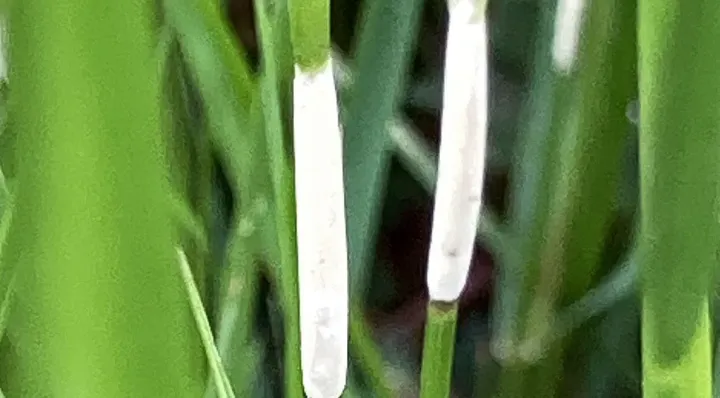
The most distinctive symptom of Choke disease is the formation of a dense, white to off-white fungal stroma that wraps around the grass stem.
This mycelial growth creates a rigid, choke-like sheath that prevents the emergence of the seed head, effectively trapping the developing inflorescence within the leaf sheath.
Affected plants often show stunted growth, leaf discoloration, and a general lack of vigor due to the fungus diverting nutrients away from the plant's developing tissues.
As the disease progresses, the fungal stroma may harden and become darker, signaling the maturation of spores that will further spread the infection throughout the area.
- Presence of a white, felt-like fungal coating on stems.
- Failure of the flower head (panicle) to emerge normally.
- Stunting and distortion of the vegetative grass stems.
- Premature death of tillers that are heavily colonized by the fungus.
Pathogen
The causative agent of Choke disease is the ascomycete fungus Epichloe typhina. It is a systemic pathogen that exists in close association with its host plants.
This fungus primarily affects a wide range of temperate grass species, including orchard grass, bluegrass, and various fescues, often thriving in managed turf and pastures.
Unlike many other pathogens, Epichloe typhina is an endophyte, meaning it lives within the plant tissues for most of its life cycle, often without showing immediate symptoms.
During the development phase, the fungus colonizes the crown and stem tissues, eventually emerging to grow on the surface of the grass, which disrupts normal plant functions.
Transmission occurs through the spread of spores, which are distributed by wind or insects, as well as through infected seed lots that carry the fungal mycelium.
Conditions for development
Choke disease development is strongly correlated with cool, humid weather conditions, which provide the optimal environment for fungal activity and spread.
Areas with poor air circulation, such as dense lawns or shaded grass patches, are significantly more prone to outbreaks of this fungal infection.
Over-fertilization with nitrogen can encourage rapid, succulent plant growth, making the stems more susceptible to the systemic invasion of Epichloe typhina.
Persistent dew and frequent spring rains are critical factors that facilitate the germination of spores and the subsequent colonization of healthy grass tillers.
Lack of proper maintenance, such as infrequent mowing, allows the fungus to thrive on plant debris and accumulate enough inoculum to affect the entire population.
Why it matters
The primary impact of Choke disease is the reduction or total loss of seed production in affected grasses, which is a major concern for seed growers and producers.
For livestock producers, the presence of the fungus in pasture grasses can lower the nutritional value and palatability of the forage, potentially harming animal health.
In turf management, the disease leads to unsightly patches and disrupts the uniformity of lawns, requiring intensive cultural efforts or chemical intervention to restore the area.
The systemic nature of the fungus weakens the host plant over time, making it less competitive against weeds and more prone to environmental stresses.
Increased susceptibility of the stand to other secondary pathogens often follows a Choke disease outbreak, leading to long-term degradation of the grass population.
Protection
Using certified, disease-free seed is the most effective way to prevent the introduction of Epichloe typhina into new turf areas or pasture fields.
Implementing proper fertility programs that balance nitrogen with potassium and phosphorus helps build plant resilience against fungal colonization.
Regular mowing practices help to keep the canopy open and remove colonized plant parts before the fungus reaches the sporulation stage of its life cycle.
Improving site drainage and ensuring adequate air circulation through thinning or aeration can significantly reduce the moisture levels required for the disease to flourish.
In cases of severe infestation, removing the affected plants completely and disposing of them away from the site is necessary to break the cycle of infection.
Discussion
No discussions yet — be the first.