
Choiromyces magnusii
Choiromyces magnusii
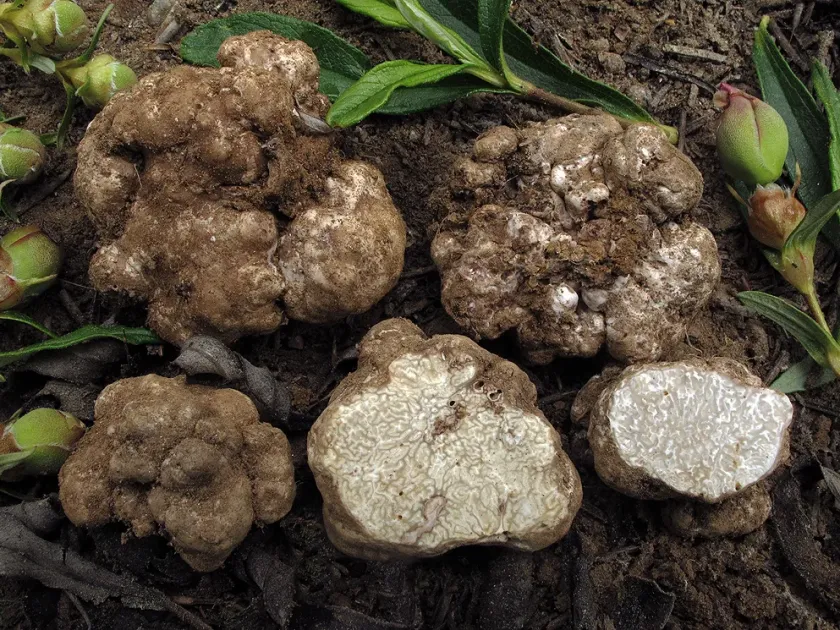
Description
Pathogen
Choiromyces magnusii is an ascomycete fungus belonging to the Tuberaceae family. Within the agricultural sector, it is recognized as a complex soil-borne pathogen capable of establishing parasitic relationships with the root systems of various plant species.
Unlike many members of this family, Choiromyces magnusii exhibits behaviors that can significantly interfere with plant health, specifically targeting the root zone. Its mycelial network actively interacts with host tissues, leading to physiological disruptions.
The life cycle of the pathogen is deeply integrated with the soil environment. It can persist for extended periods in the form of dormant spores, making it a resilient threat to sustainable crop production and nursery management.
Scientific identification requires microscopic analysis of fruiting bodies and spore morphology. Because it shares characteristics with other harmless soil fungi, accurate diagnosis is essential for applying appropriate remedial measures.
The presence of the fungus in the substrate is a persistent challenge. Without proactive management, the pathogen can quickly colonize the root zone, exploiting root exudates to expand its reach across the field or nursery beds.
Conditions for development
The development of Choiromyces magnusii is primarily driven by high soil moisture levels. Waterlogged or poorly aerated soils create the most favorable conditions for the fungal spores to germinate and establish infection.
Temperature plays a crucial role in its lifecycle, with moderate ranges (typically 12–18 degrees Celsius) being optimal for mycelial expansion. During these conditions, the fungus is at its most active, aggressively seeking out susceptible hosts.
Soil texture is a significant factor in disease distribution. Compact, heavy clay soils often retain enough moisture to promote the fungus, while well-drained, sandy soils may suppress its ability to thrive due to faster evaporation rates.
Excessive organic matter application without proper composting can stimulate fungal outbreaks. The fungus utilizes easily decomposable organic materials to bolster its initial population before shifting its focus to plant roots.
Environmental dispersal is facilitated by irrigation water runoff and the mechanical movement of infected soil on farming tools, footwear, or contaminated machinery, allowing the pathogen to move between different field sectors.
Why it matters
The primary harm caused by Choiromyces magnusii is the compromise of the plant's root system. This damage prevents the plant from efficiently absorbing essential water and nutrients, resulting in stunted growth.
Visible symptoms often include generalized chlorosis, wilting during peak sunlight hours, and an overall loss of vigor. If the infection reaches an advanced stage, root tissue degradation becomes irreversible.
In commercial nurseries, the fungus poses a severe risk to young seedlings. High levels of soil infestation can lead to significant mortality rates, causing substantial economic loss for producers who must replace lost stock.
The pathogen contributes to "soil fatigue," rendering the land unsuitable for sensitive crops for several growing seasons. This necessitates expensive soil sterilization or long-term crop rotation plans.
Loss of quality and inconsistent yield are inevitable consequences when a crop is impacted by Choiromyces magnusii. Furthermore, the presence of the pathogen lowers the overall commercial viability of the affected site.
Protection
Effective control of Choiromyces magnusii begins with good agricultural practices, specifically improving soil drainage to prevent the accumulation of excess water. Managing soil aeration is key to suppressing fungal activity.
Crop rotation serves as a critical prophylactic measure. By alternating host crops with non-susceptible species, growers can break the lifecycle of the fungus and reduce the inoculum density in the soil.
Chemical intervention involving systemic fungicides can be employed to treat contaminated soil before sowing. These treatments should be applied based on professional diagnostic findings to ensure efficiency and environmental safety.
Biological control, particularly the introduction of antagonistic fungi like Trichoderma species, offers a sustainable method for suppressing Choiromyces magnusii. These beneficial microorganisms compete for nutrients and space, naturally limiting pathogen growth.
Strict sanitation protocols must be enforced, especially in nurseries. All tools, containers, and equipment must be disinfected after use to prevent the spread of spores, ensuring that healthy areas remain free from contamination.
Discussion
No discussions yet — be the first.