
Cheilymenia
Cheilymenia
Cheilymenia is a genus of fungi belonging to the family Pyronemataceae. Contrary to common misconceptions among novice growers, it is not a plant disease but a saprotrophic organism that feeds on decaying organic material.
What the section contains
Cheilymenia
These fungi are typically found in moist environments rich in nitrogen and decomposing organic substances, such as manure, compost, or decaying wood. They act as decomposers, recycling nutrients within the ecosystem.
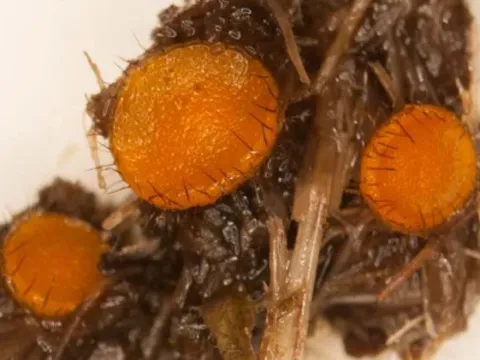
The morphology of Cheilymenia is characterized by small, cup-shaped fruiting bodies (apothecia). They are often bright orange or reddish and may feature small hairs, making them easily visible against dark soil or substrate.
Biological activity of this fungus is strictly limited to the surface of non-living organic matter. It does not possess the capacity to infect living plant tissues or damage root systems.
As a saprotroph, Cheilymenia is an essential participant in soil maturation processes, helping to break down complex organic compounds into forms that plants can eventually utilize.
The primary prerequisite for Cheilymenia development is high humidity in both the substrate and the surrounding air. It thrives in environments where soil moisture remains constant for extended periods.
The presence of uncomposted or poorly processed manure is the most common trigger for its appearance. When fresh organic matter is added to potting mixes, the fungus finds an ideal food source for colonization.
Optimum growth occurs at temperatures ranging from 15°C to 25°C. In controlled greenhouse environments, these conditions are frequently met, leading to rapid development of visible fruiting bodies.
Spore dissemination occurs via air currents and splashing water during irrigation. Because these spores are ubiquitous, they can easily enter cultivation areas if sanitation standards are neglected.
Poor soil aeration and constant saturation are the main factors that keep the fungus active. Once the substrate begins to dry out, the production of fruiting bodies typically ceases.
Cheilymenia is not pathogenic and does not cause economic damage to crops. It is entirely harmless to the health, growth, and physiological development of agricultural plants.
However, its presence can serve as a diagnostic indicator of poor cultural practices. For instance, heavy growth of the fungus often suggests that the irrigation frequency is too high or the substrate is poorly drained.
Dense mats of fungal mycelium may occasionally create a surface crust, which limits soil oxygen levels. This restricted gas exchange can indirectly negatively impact root respiration.
While not a disease, its presence can be a nuisance in commercial horticulture, as consumers may perceive the bright orange fungi on seedlings as a sign of infection or poor sanitation.
Furthermore, fungal growth can sometimes attract secondary pests, such as fungus gnats (Sciaridae), whose larvae may damage delicate root hairs, leading to secondary health problems in young plants.
The most effective management strategy is to ensure that only fully composted or mature organic matter is used in potting media. Fresh manure should never be used as a top dressing.
Adjusting the irrigation regime to allow the surface of the soil to dry out between waterings will naturally discourage the growth of Cheilymenia without the need for chemical intervention.
Improving substrate structure by incorporating drainage materials like perlite or coarse sand helps prevent the surface moisture retention that these fungi require to produce fruiting bodies.
If visible apothecia appear, they can be easily removed by hand or by scraping off the very top layer of the substrate. This mechanical control is usually sufficient to clear the issue.
Maintaining a clean greenhouse environment, providing adequate ventilation, and using sterile soil mixes are key to preventing the colonization of these saprotrophs in production areas.