
Cerrena
Cerrena
The pathogen is the fungus Cerrena unicolor, which belongs to the Basidiomycota division. This wood-decay fungus primarily acts as a saprotroph, but under certain conditions, it behaves as an active parasite, attacking weakened or damaged trees.
What the section contains
Cerrena
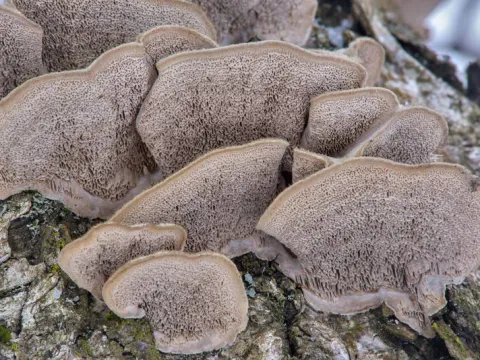
The fungal mycelium actively penetrates the wood, breaking down lignin and cellulose, which leads to significant structural changes in the plant's internal tissues. In its biological cycle, the fungus forms fruiting bodies, typically shaped like brackets or caps, which often grow together.
Fruiting bodies are characterized by a tough, leathery texture and a specific gray or grayish-brown color on the upper side. The lower surface of the caps features a characteristic porous hymenophore, which can be white, cream, or grayish, serving as a key diagnostic feature of the species.
Dissemination occurs via spores (basidiospores) dispersed by air currents. Upon reaching fresh bark wounds, cracks, or broken branches, the spores germinate, initiating a new infection site and gradually colonizing the wood.
The biology of this species is closely linked to the decomposition of organic matter in forest ecosystems; however, in forestry, it is considered a dangerous pathogen capable of spreading rapidly in stands when favorable conditions exist for its development.
One of the primary external signs of infection is the presence of the fungus's characteristic fruiting bodies on the surface of trunks, stumps, or large branches. These are often arranged in groups or overlapping rows, adhering tightly to the wood.
Internal signs include the development of white rot in the wood. Affected areas take on a characteristic pale shade, become fibrous, lose mechanical strength, and break down easily when pressed or struck.
In early stages, visual symptoms may be absent; however, over time, necrotic areas, depressions, or cracks may appear on the bark. In areas where mycelium emerges, peeling of the bark from the affected wood is often observed.
As the disease progresses, the tree crown begins to thin, and leaves or needles yellow and drop prematurely. Eventually, individual branches die, followed by the entire tree due to the disruption of the trunk's vascular system.
In the final stage, the tree becomes brittle and susceptible to windthrow, as the heartwood and sapwood are completely destroyed by the mycelium, turning the interior into a loose, pulpy mass.
The development of Cerrena is favored by high humidity and moderate temperatures typical of forest areas. Dense stands with poor air circulation create an ideal microclimate for spore germination.
An essential factor is the presence of "entry points" for the infection, such as mechanical bark damage caused by pests, frost cracks, sunburn, or improper pruning practices.
Weakened trees suffering from nutrient deficiency or drought become primary targets for the pathogen. Healthy plants with strong immune systems possess higher resistance to fungal colonization.
Infection often occurs in areas with accumulated wood debris. Leftover logging waste, stumps, and fallen trees serve as infection reservoirs from which spores spread to neighboring living trees.
Seasonal temperature fluctuations also affect fungal activity. Spring and autumn, characterized by frequent rainfall and high moisture, are the most favorable times for active sporulation and colonization of new areas.
The primary harm lies in the accelerated destruction of wood, leading to the death of the infected tree. This poses a serious threat to forest stands, park areas, and orchards.
Cerrena reduces the commercial quality of timber, making it unsuitable for industrial use. Affected trunks lose their value even as construction material or raw material for wood processing.
The disease can lead to widespread tree mortality if forest sanitation rules are neglected. Infection centers expand rapidly, encompassing adjacent trees and causing economic losses to the forestry sector.
Infestation by Cerrena increases the fire risk in the area due to the accumulation of deadwood and debris, which ignite easily and contribute to the rapid spread of surface and crown fires.
Biodiversity also suffers as the loss of keystone tree species alters the ecosystem structure, creating conditions for the colonization of the territory by secondary pests and pathogens.
The primary control measure is strict adherence to forest hygiene rules. Regular removal of deadwood, fallen branches, and logging debris denies the pathogen a substrate for reproduction and limits the infection pool.
Sanitary felling in infested areas is necessary, with immediate removal or disposal of infected wood. It is advisable to treat remaining stumps with chemical or biological agents to prevent colonization by fungi.
Protecting trees from mechanical damage is critical. It is essential to minimize trunk injuries during forestry operations and to promptly seal any wounds or cuts with wound paint or fungicides.
Improving the overall resilience of stands through timely fertilization and watering helps trees resist fungal infection penetration and heal natural wounds more effectively.
- Use of biological preparations based on antagonist fungi to protect stumps.
- Regular monitoring of stand conditions during spring and autumn.
- Removal of fungal fruiting bodies before the active spore release process begins.
- Maintaining optimal planting density to prevent moisture stagnation.