
Cetraria (Lichen)
Cetraria
Description
Symptoms
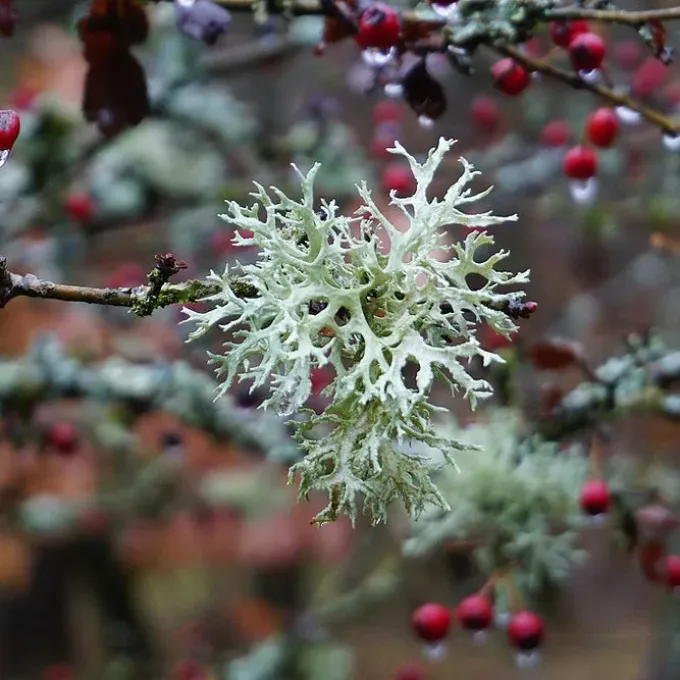
Cetraria is a genus of lichens that often colonizes the bark of mature trees. It manifests as shrubby or leafy growths, which can appear as grey, green, or brown patches on the trunk and branches.
Unlike parasitic fungi, Cetraria does not penetrate deep into the woody tissue. It forms a surface layer that can sometimes hang down in long, beard-like structures in high-humidity environments.
The primary visual sign is the presence of crusty or leafy formations that stay on the bark throughout the year. The lichen’s texture can vary depending on the specific moisture levels of the environment.
While the lichen itself is not a primary pathogen, its expansion can lead to rougher, more uneven bark surfaces. It often covers the northern or shaded sides of tree trunks.
Healthy trees with vigorous growth patterns are less likely to be heavily colonized, meaning the presence of Cetraria is often a sign of an underlying issues in tree vitality.
Pathogen
Cetraria is not a plant disease in the sense of a viral or fungal infection. It is a symbiotic organism consisting of a fungus and an alga (or cyanobacteria) living in a mutually beneficial relationship.
It functions as an epiphyte, using the bark of a tree merely as a substrate for support. It gains nutrients from the air, rain, and debris caught in its structure, not from the tree's sap.
Reproduction occurs through spores released into the wind or by fragments of the lichen body breaking off and settling elsewhere. Once settled, they grow very slowly over time.
From an agronomic perspective, the presence of Cetraria is considered a secondary indicator of the tree's health status. It thrives on surfaces where the tree has become dormant or slow-growing.
The biology of the lichen makes it highly resilient to harsh weather, which allows it to persist in stable environments, unlike more volatile pathogens.
Conditions for development
High humidity and poor ventilation are the primary drivers for Cetraria colonization. Dense orchard planting reduces airflow, creating an ideal microclimate for the lichen to thrive.
Trees that are poorly pruned and have overcrowded canopies remain moist for longer periods, which allows lichen spores to successfully germinate on the bark.
Old, rough bark provides better physical anchors for lichen compared to smooth, young bark. Therefore, older trees are significantly more prone to being covered in Cetraria.
Low light intensity, typical in neglected or overgrown orchards, prevents the rapid drying of bark surfaces, thereby fostering the expansion of lichen colonies.
The absence of regular maintenance, such as trunk cleaning, allows the population of Cetraria to build up over several seasons until it becomes quite noticeable.
Why it matters
The primary concern with Cetraria is that it provides a protective habitat for overwintering pests, such as mites, scales, and insect eggs, which are then protected from weather and predators.
By retaining excessive moisture against the bark, the lichen can inadvertently create a damp environment that promotes secondary infections from actual pathogenic fungi.
While the lichen itself isn't eating the tree, the visual presence of a heavy lichen crust is often a sign of declining tree health, which correlates with lower overall yield and vigor.
In cases of severe coverage, the lichen may slightly hinder the bark's natural gas exchange processes, potentially contributing to the premature aging of the bark.
Ignoring heavy lichen coverage can eventually make the trunk more susceptible to wood-rotting diseases by keeping the bark soft and continuously moist.
Protection
Mechanical removal is the most effective approach. Use a stiff-bristled brush or a scraper to carefully remove the lichen from the bark, taking care not to damage the living inner bark layers.
Whitewashing the trunk and the base of major branches with a lime-based mixture is a classic and highly effective preventive measure that alters the surface pH, making it unsuitable for lichen growth.
Pruning is essential to increase sunlight penetration and air circulation throughout the canopy. This dries out the bark and naturally discourages the growth of Cetraria.
Applying iron sulfate (ferrous sulfate) solution at the end of winter or early spring can help clear off lichen spores and strengthen the tree's bark resistance.
- Scrubbing off lichen in damp weather.
- Regular pruning for better canopy aeration.
- Trunk whitewashing with lime.
- Applying iron sulfate sprays.
- Improving overall tree fertilization and care.
Discussion
No discussions yet — be the first.