
Cetrelia sepincola
Cetrelia sepincola
Description
Symptoms
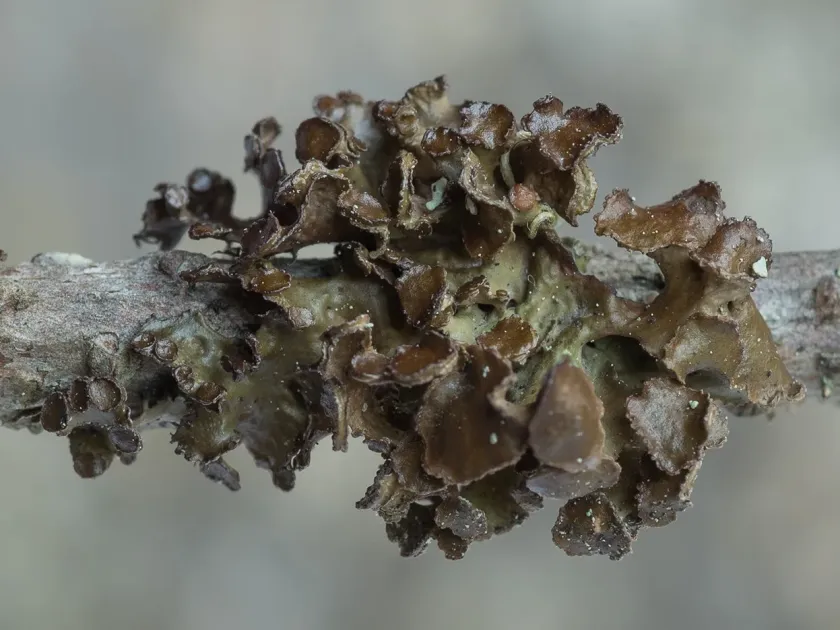
The primary sign of Cetrelia sepincola presence is the appearance of flat, leafy, or rosette-like structures firmly attached to the bark surface.
The thallus appears in shades of greyish-brown to olive-green, allowing it to blend naturally with the texture and color of the bark.
The lobes of the lichen often overlap each other in a complex, decorative pattern that covers parts of the branches or trunks.
Small granular structures called soredia can often be observed on the edges of the lobes, which are vital for the vegetative reproduction of the species.
Unlike parasitic plant diseases, there are no symptoms of tissue decay, necrosis, or wood rot associated with this lichen.
Pathogen
Cetrelia sepincola is a species of foliose epiphytic lichen belonging to the Parmeliaceae family.
This organism is not a plant pathogen; it does not cause infectious diseases, and it lives on tree bark strictly as an epiphyte, using the surface for support.
Biologically, it is a stable symbiotic association consisting of a fungal mycobiont and algal partners that function as a single organism.
The lichen does not parasitize the host plant; it does not penetrate the bark to reach the vascular tissues, nor does it consume the sap of the tree.
It derives its nutrients and moisture directly from the atmosphere, atmospheric dust, and rainwater, which is why it serves as an excellent bioindicator of air quality.
Conditions for development
Cetrelia sepincola thrives in environments with high ambient humidity, often appearing in areas with limited direct airflow or high moisture retention.
It prefers trees with rough or deeply fissured bark, which provide a stable surface for the spores or thallus fragments to anchor and grow.
Gardens with dense tree planting and poor ventilation create an ideal microclimate for the colonization of these epiphytes on trunks.
The lichen is most commonly found on mature or older trees where the growth of the bark has slowed down significantly.
Dispersal is primarily facilitated by wind or water, which carries the reproductive bodies to new suitable substrates within the garden or forest.
Why it matters
There is no direct harm to the tree's health or growth as this lichen does not extract resources from the host plant.
An indirect concern is that dense lichen growth can provide a hidden habitat for overwintering pests, such as small beetles or mites.
Large colonies can mask the early development of genuine tree diseases or bark pests, making visual inspection more challenging.
Excessive colonization may theoretically reduce the amount of light reaching specific parts of the bark, but this rarely affects the tree's overall vigor.
For young, fast-growing trees, the presence of heavy lichen cover is often just a symptom of slow growth rates rather than the cause of poor health.
Protection
No chemical pesticide or fungicide treatment is required, as the lichen is not a pathogen causing any plant disease.
Mechanical removal using soft-bristled brushes or plastic scrapers can be performed if the gardener wishes to improve the aesthetic appearance of the trees.
Care must be taken during cleaning to avoid damaging the living cambium layer of the bark, which could lead to secondary infections.
The most effective long-term preventative measure is proper horticultural maintenance, including annual pruning to ensure adequate light and airflow.
Promoting the overall health and vigor of the trees through balanced fertilization and irrigation will discourage the establishment of heavy lichen populations.
Discussion
No discussions yet — be the first.