
Ceriporiopsis carnegieae
Ceriporiopsis carnegieae
Description
Symptoms
The early manifestation of infection is often localized softening of the epidermis, which may be accompanied by minor discolouration or sunken areas on the stem.
Upon internal examination, the affected tissue displays a characteristic fibrous texture and a bleached appearance, indicating the complete loss of structural integrity.
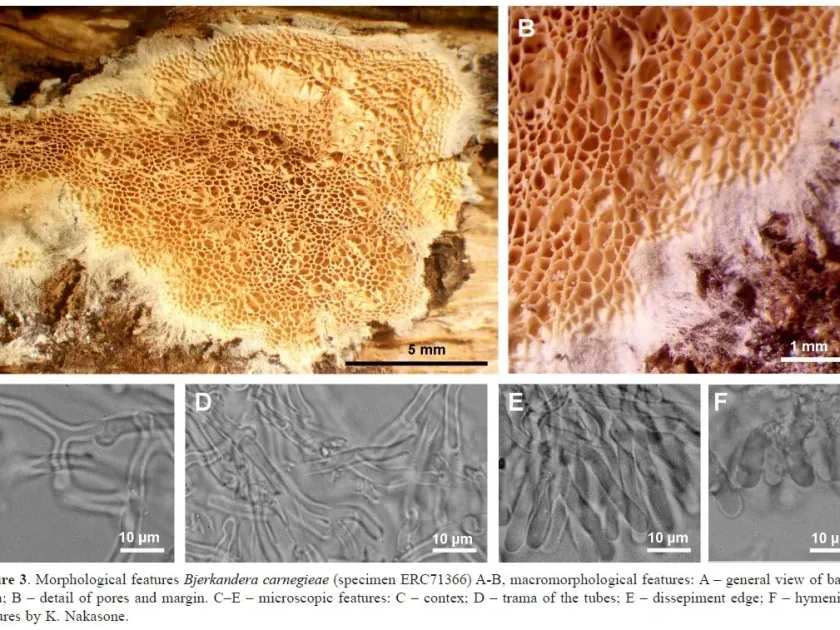
Small, leathery fruiting bodies of the fungus may emerge through cracks or existing wounds, particularly after periods of high humidity or rainfall.
The secretion of dark, viscous fluids from the infection site is a common sign, often resulting in crusty stains on the surface of the cactus.
The most severe sign is the loss of mechanical stability, which often manifests as sudden leaning, branch breakage, or the collapse of the entire cactus column.
Pathogen
Ceriporiopsis carnegieae is a wood-decay basidiomycete fungus known primarily for causing white rot in the structural tissues of columnar cacti, particularly the Saguaro (Carnegiea gigantea).
The fungus functions by secreting specialized enzymes capable of breaking down the lignin and cellulose matrix, effectively liquefying the interior woody structure of the host plant.
Reproductive structures, or sporocarps, are produced on the exterior surface of the cactus, releasing spores that serve as the primary means of dispersal within the habitat.
Once spores land on wounded surfaces or insect-created openings, the mycelium initiates infection, gradually colonizing the soft parenchymal and structural tissues of the plant.
As a specialized decomposer, this fungus plays a functional ecological role by recycling the remains of dead cacti, ensuring nutrient cycling in harsh desert environments.
Conditions for development
The development of Ceriporiopsis carnegieae is heavily dependent on the presence of entry points, such as wounds from wildlife, thorns of other cacti, or insect boreholes.
Moisture availability is a critical limiting factor; however, internal sap buildup or water infiltration through cracks provides the hydration necessary for fungal proliferation.
Stress factors, including extreme temperature fluctuations and drought, weaken the natural resistance of the cactus, making it more susceptible to colonization.
Insects, especially those that bore into the cactus stem, act as primary vectors by carrying fungal spores directly into the protected tissues of the plant.
The spatial distribution of hosts is also significant, as dense clusters of cacti provide a higher probability for airborne spore transmission during the active reproductive phase of the fungus.
Why it matters
The fungus causes irreversible structural damage, turning the inner support skeleton of the Saguaro into a degraded, porous material that cannot support its massive weight.
Collapse of infected plants creates localized habitat loss, impacting avian species that utilize the cacti for nesting and protection from desert predators.
For conservationists, the primary harm is the rapid loss of mature individuals that have taken decades or even a century to grow, which cannot be quickly replaced.
In managed horticultural settings, the fungus is considered a lethal threat because by the time visible signs of rot appear on the exterior, the internal damage is usually extensive.
Economic damage is primarily felt in the loss of iconic landscapes and the costs associated with the removal of hazardous, decaying plants in public or botanical areas.
Protection
Sanitation is the cornerstone of control: infected material must be removed and safely disposed of to prevent the spread of spores to healthy neighboring cacti.
Proactive management of insect populations that bore into cactus stems is essential to limit the number of infection sites on otherwise healthy plants.
Early identification through periodic monitoring is crucial; if rot is found in a small, isolated area, careful surgical excision might preserve the plant.
Preventative care includes avoiding mechanical injury during routine maintenance and ensuring that plants are not subjected to chronic over-watering in artificial landscapes.
Research into the ecological dynamics of this fungus helps in creating zones of protection where the integrity of critical habitat areas can be maintained against the pathogen.
Discussion
No discussions yet — be the first.