
Cetrelia
Cetrelia
Description
Symptoms
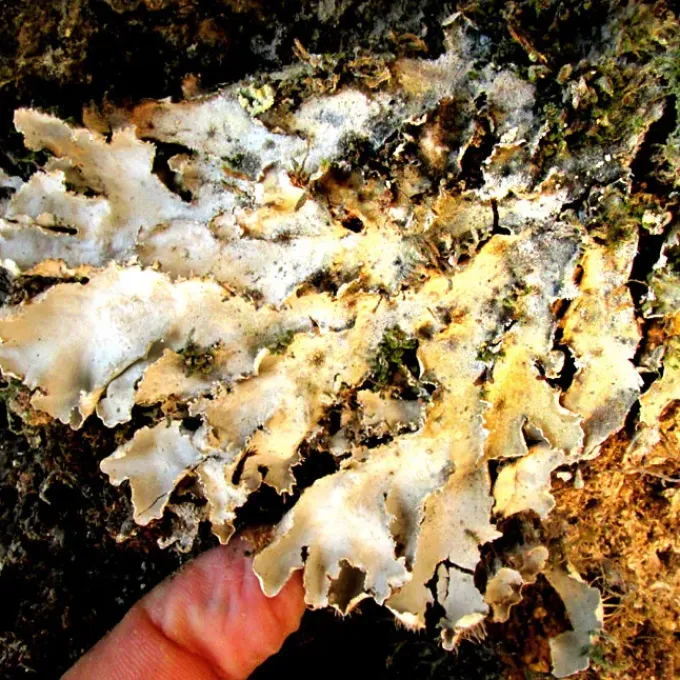
Cetrelia appears as a large, foliose lichen with broad lobes that are either tightly pressed against the bark or loosely attached to the surface.
The color of the thallus usually ranges from pale green or grey to brownish, allowing it to blend naturally with the host tree's bark.
One of the key identification features is the presence of white spots known as pseudocyphellae, which are scattered across the surface of the lobes.
Under humid weather conditions, the lobes often become more pliable and can rise slightly, giving the lichen a distinctive wavy, decorative appearance.
It is important to distinguish these lichen patches from true fungal infections, as the thallus sits on the surface and does not create diseased necrotic lesions.
Pathogen
It is crucial to clarify that Cetrelia is not a plant disease, but a lichen, which is a symbiotic association between a fungus and an alga or cyanobacteria.
This organism is an epiphyte, meaning it uses the tree solely as a physical substrate for anchoring without extracting any nutrients or water from the plant.
The fungal partner provides structural protection and attachment, while the photobiont component contributes to nutrient synthesis via photosynthesis.
Belonging to the Parmeliaceae family, Cetrelia is common in ecosystems with clean air and moderate moisture levels.
Its biological impact on the tree is negligible, as it does not invade the cambium or vascular tissues, remaining entirely superficial throughout its life cycle.
Conditions for development
Cetrelia thrives in environments with high atmospheric humidity, such as forests near water bodies or areas with frequent fog and mist.
The lichen prefers substrates that remain damp for extended periods, which is why it often colonizes the shaded sides of thick tree trunks.
Clean air is a prerequisite for its development, as the lichen is highly sensitive to air pollution and sulfur dioxide levels in the environment.
Because of its slow growth rate, colonization is typically observed on older, mature trees where the bark surface has remained undisturbed for many years.
Proper light and aeration levels within a garden canopy can influence the distribution of lichen colonies, though they are highly adaptable to shaded sites.
Why it matters
While not a parasite, excessive coverage of Cetrelia can create favorable hiding spots for various garden pests, including scale insects and mites.
In some cases, dense lichen mats may slightly hinder gas exchange on the bark surface, though this rarely poses a threat to healthy trees.
The presence of large colonies is often viewed as a sign of neglect in professional gardening, impacting the aesthetic quality of ornamental trees.
Moisture retention under the lichen thallus during winter may occasionally contribute to frost cracks if temperatures fluctuate rapidly near the bark surface.
Ultimately, the physical weight and coverage of the lichen are minor, and the primary harm is indirect, related to pest management challenges.
Protection
Mechanical removal using soft brushes or plastic scrapers during the dormant season is the most effective way to clean the tree bark.
Applying a horticultural lime wash to the trunks acts as an excellent preventive measure, as it raises the pH and inhibits spore germination.
Improving air circulation through regular pruning of the tree crown reduces ambient humidity, making the environment less suitable for lichen growth.
Spraying the affected trunks with a mild solution of ferrous sulfate (iron vitriol) is a standard method to safely eliminate established lichen colonies.
Focusing on overall plant vigor through proper fertilization and watering encourages healthy bark growth, which naturally sheds old lichen crusts over time.
Discussion
No discussions yet — be the first.