
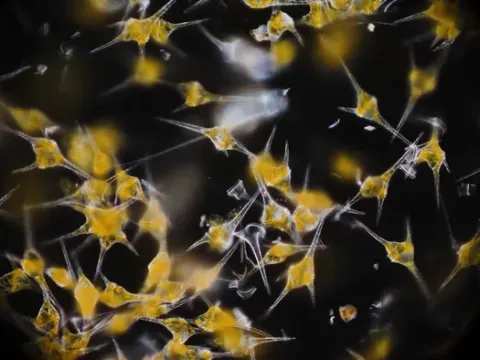
Ceratium
Ceratium
Ceratium is a genus of slime molds (myxomycetes) that can act as a plant pathogen under specific conditions, often colonizing tissues of weakened agricultural crops.
What the section contains
Ceratium
The pathogen exists as a soil-borne organism that can survive in the form of dormant spores, waiting for high humidity levels to initiate its life cycle and become active.
Biologically, it is distinct from true fungi, possessing a complex morphology that allows it to transition between a saprophytic stage and a parasitic mode of life.
Its life cycle involves the production of spores that are easily spread by water, wind, or agricultural equipment across the field during the vegetation period.
Diagnostic identification requires microscopic evaluation, as the reproductive structures of the pathogen exhibit unique branching patterns characteristic of the genus.
The primary symptom of infection is the emergence of distinctive crusts or mold-like growths on the leaves and stems, often accompanied by a slimy texture.
Affected plant tissues typically exhibit localized chlorosis, turning yellow or brown as the metabolic processes are disrupted by the invading pathogen.
In humid conditions, the pathogen forms visible spore-bearing bodies that may appear as tiny, clustered structures on the surface of the plant epidermis.
Stunting and loss of vigor are common in infected plants, frequently leading to the deformation of stems and premature senescence of the foliage.
Monitoring for unusual spots or patches that do not match standard fungal disease patterns can help in early detection and management of Ceratium infections.
Excessive soil and air moisture are the most significant drivers for the development of this pathogen, creating a favorable environment for spore germination.
Temperatures ranging from 15 to 22 degrees Celsius are considered optimal for the rapid colonization of host plants during the early stages of growth.
Poor field sanitation, including the accumulation of crop debris, provides a rich source of nutrients that facilitates the persistence of the pathogen in the soil.
Dense crop stands with inadequate airflow prevent the evaporation of surface moisture, which significantly increases the risk of successful infection by the organism.
Waterlogged soil conditions and poor drainage systems further exacerbate the susceptibility of the crop to infestation by this type of slime mold.
The damage caused by Ceratium involves a reduction in the photosynthetic capacity of the plant, which directly impacts biomass accumulation and final crop yield.
Infected areas often serve as entry points for secondary opportunistic pathogens, such as bacteria, which can lead to rapid decay and plant tissue collapse.
Crop quality is significantly diminished, resulting in lower economic value of the harvest due to damaged leaves, stems, and overall poor plant health.
Severe infestations can lead to substantial losses in field production, particularly if the environmental conditions remain favorable for the pathogen for a long duration.
The financial impact includes both the reduction in marketable yield and the increased costs associated with implementing emergency sanitation or chemical control.
Effective management begins with strict crop rotation practices, which help disrupt the life cycle of the pathogen and reduce its population in the soil.
Thorough soil cultivation and the removal of crop residues are essential to eliminate the primary sources of overwintering spores and secondary infection sites.
Managing plant density and ensuring proper field drainage are key physical strategies to reduce micro-humidity and create an environment unfavorable for the slime mold.
Fungicidal treatments may be employed in cases of high infection pressure, though products must be selected based on their efficacy against myxomycetes.
Regular field scouting is critical, especially after prolonged rainfall, to identify early outbreaks and prevent the pathogen from spreading across the entire crop.