
Ceratobasidium stem rot
Ceratobasidium gramineum
Description
Symptoms
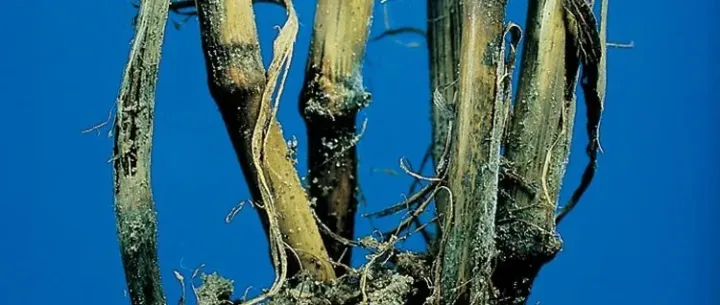
The primary external sign of the disease is the appearance of spots on leaf sheaths, which typically have an oval or elliptical shape. These spots often feature a brown or dark-red border, with the center fading over time.
Near the base of the stem in infected cereals, tissue darkening is observed, often accompanied by rotting processes. In high humidity, a faint white or grayish fungal growth may develop on the affected areas.
Damage to the root system leads to stunted growth, visually manifested by premature yellowing of the lower leaves. Plants often lag in development and produce less productive heads or ears.
In cases of severe infection, premature lodging occurs as the fungus destroys the mechanical tissues of the stem base. This complicates harvest operations and leads to significant yield losses.
- Yellowing and drying of lower leaf tiers
- Brown elliptical spots on leaf sheaths
- Rotting of the stem base
- Overall stunting and reduced vigor
Pathogen
The causal agent of the disease is the imperfect fungus Ceratobasidium gramineum (anamorph Rhizoctonia cerealis), which belongs to the basidiomycetes group. This pathogen is a soil-borne organism capable of surviving for long periods in infected plant debris.
The fungus affects a wide range of cereal crops, including winter and spring wheat, barley, rye, oats, and many wild grass species. The pathogen possesses high ecological plasticity, allowing it to adapt to various soil types.
In the fungal life cycle, the mycelial stage predominates, developing intensely in the root zone of plants. Infection spreads through soil, crop residues, and, in rare instances, via seed material.
The pathogen becomes active immediately after the resumption of vegetation in spring, once soil temperatures reach optimal levels for mycelial growth. It penetrates tissues through the root system or the base of the stems, causing a systemic infection of the plant.
A key biological feature of the pathogen is its ability to exhibit both parasitic and saprotrophic properties, making it highly resistant to unfavorable environmental factors during periods when a host plant is absent.
Conditions for development
The development of Ceratobasidium stem rot is favored by cool and wet weather during the spring season. The optimal temperature range for the pathogen's mycelial growth is between +5 and +15 degrees Celsius.
Excessive soil moisture, prolonged spring rains, and lack of effective drainage create ideal microclimatic conditions for active crop infection and rapid spread of the mycelium.
High plant density, which traps moisture and limits air circulation at the soil level, significantly accelerates the development of an epiphytotic. Thick stands lose immunity faster and are more susceptible to the pathogen.
Agronomic factors, such as unbalanced nitrogen nutrition, promote the development of soft plant tissues that are more easily penetrated by fungal hyphae. Excess nitrogen combined with high humidity is a critical risk factor.
Failure to follow crop rotation cycles and planting cereal crops on the same field more frequently than every 3-4 years leads to the accumulation of inoculum in the soil, inevitably increasing the severity of infection.
Why it matters
The economic impact of the disease lies in the significant reduction of productive stems per unit area. Due to root damage, water and nutrient uptake are impaired, resulting in shriveled grain.
Infected plants often fail to reach the heading stage or form shortened, deformed ears. This directly affects the thousand-kernel weight and overall cereal crop yield.
Damaging the base of the stem makes cereals vulnerable to secondary infections that exploit the weakened immune system. Combined, this can lead to the loss of a substantial portion of the crop during early growth stages.
Infected fields are characterized by uneven maturation, which complicates harvesting logistics. Grain quality, grade, and seed viability are all negatively impacted if the harvest is intended for sowing.
Economic losses arise not only from direct yield reductions but also from the costs of additional fungicide treatments necessitated by an outbreak of the disease.
Protection
Effective protection against Ceratobasidium stem rot is based on strict adherence to crop rotation, ensuring cereals do not return to the same plot for at least three years, which breaks the pathogen's life cycle.
Quality tillage, including deep plowing, is an important method that buries plant residues, which act as infection reservoirs, into lower soil layers where they decompose more rapidly.
The application of balanced mineral fertilizers, particularly potassium and phosphorus, strengthens cereal cell walls and significantly increases natural resistance to mycelial penetration.
Using high-quality treated seed material is essential for protecting crops during early vegetative stages. Systemic fungicides effectively suppress fungal development in the root zone during the initial growth phases.
Upon detection of initial disease symptoms at the tillering phase, spraying crops with fungicides from the triazole or benzimidazole groups is recommended, as they provide strong preventative and curative action against Rhizoctonia and Ceratobasidium infections.
Discussion
No discussions yet — be the first.