
Ceratocystidosis
Ceratocystidaceae
Description
Symptoms
The initial symptom of ceratocystidosis is often sudden wilting of leaves or individual branches, even during periods of adequate moisture. The foliage turns yellow, then brown, but often remains attached to the tree for some time.
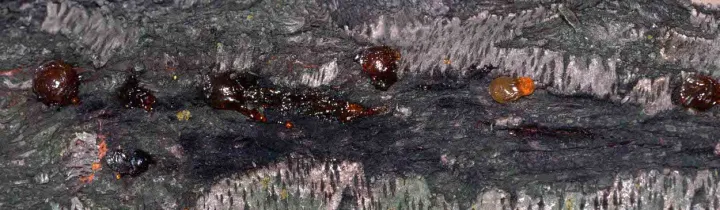
Necrotic lesions or cankers appear on the bark of trunks and branches. These areas often crack and may exhibit significant gumming (gummosis), which is the tree's defensive response attempting to wall off the infection site.
When the bark is removed from suspected areas, characteristic dark or black discoloration is visible in the underlying wood. This staining indicates deep penetration of the fungal mycelium and the destruction of the internal xylem structure.
Advanced stages of the disease manifest as progressive dieback of the canopy and eventual death of the entire tree. Symptoms are often unilateral, meaning the infection is restricted to one side of the tree initially before spreading globally.
Root systems may also exhibit signs of decay, which further compromises the tree's stability and nutrient uptake. This systemic infection eventually leads to the total collapse of the plant's vigor and its untimely demise.
Pathogen
Ceratocystidosis is caused by microscopic fungi belonging to the Ceratocystidaceae family. The most prominent and destructive species in this group is Ceratocystis fimbriata, which is notorious for causing vascular wilt and canker diseases in various plants.
The pathogen invades the plant's vascular system, effectively blocking the transport of water and essential nutrients. By colonizing the cambium and wood tissues, the fungus causes severe systemic damage that disrupts the plant's normal physiological functions.
The fungus produces numerous spores (endoconidia) that are easily dispersed by wind, water splashes, or insect vectors. These spores are highly resilient and can persist in soil or infected plant debris for several seasons, posing a long-term threat.
Ceratocystis fungi demonstrate significant genetic plasticity, allowing them to adapt to diverse environments and overcome plant defense mechanisms. This adaptability makes it difficult for researchers to develop consistently resistant plant varieties.
The life cycle involves both asexual and sexual reproduction, leading to high genetic diversity within populations. This variability increases the likelihood of more virulent strains emerging, making the disease harder to control in agricultural settings.
Conditions for development
The infection typically begins through mechanical wounds on the bark, which serve as entry points for fungal spores. Activities such as pruning, harvesting, or accidental damage from equipment create favorable conditions for initial colonization.
High humidity and moderate temperatures provide an ideal environment for spore germination and mycelial growth. During warm and wet weather, the fungus spreads through the host tissues with significantly higher speed.
Trees weakened by environmental stresses, such as drought, waterlogging, or poor soil nutrition, are highly susceptible to infection. Stressed plants cannot produce sufficient defensive compounds to stop the fungus from spreading.
Bark-boring insects often act as primary vectors, carrying spores directly into the tree's internal tissues. Their feeding tunnels provide a protected habitat for the fungus to thrive and colonize new sections of the tree.
Soil-borne transmission is also common if healthy roots come into contact with contaminated debris from previously infected plants. Furthermore, the use of unsterilized pruning tools is a major factor in the rapid spread of the disease within nurseries.
Why it matters
Ceratocystidosis is a major threat to stone fruit production, including apricots, peaches, and almonds. The disease can devastate entire orchards within a few years, leading to total harvest failures.
Economic damage includes not only the loss of seasonal yields but also the massive costs associated with tree removal and field sterilization. Infected areas may be quarantined, limiting future planting options for growers.
The structural integrity of the wood is severely compromised by the decay, making branches brittle and prone to breaking. This creates safety hazards in both commercial orchards and public landscapes.
The fungus secretes toxic metabolites that systemically poison the plant, inhibiting vital metabolic processes. This leads to accelerated aging of plant tissues and complete physiological failure of the affected tree.
Due to the speed of transmission and the difficulty of eradicating the pathogen, ceratocystidosis is considered a high-priority disease by phytosanitary authorities. Outbreaks often trigger strict regulations on the movement of plant material.
Protection
The cornerstone of control is strict sanitation: the rapid detection and destruction of infected trees, including their root systems. It is crucial to remove all debris to prevent the buildup of inoculum in the soil.
Disinfecting pruning tools after every single cut is essential to prevent the spread of spores between trees. Using alcohol, bleach solutions, or specific disinfectants ensures that contaminated tools do not facilitate new infections.
Maintaining optimal orchard hygiene and promoting tree health through balanced fertilization and correct irrigation help strengthen natural resistance. A vigorous tree is significantly more capable of defending itself against fungal invasion.
Selecting resistant rootstocks and cultivars is the most effective long-term strategy for managing the risk of ceratocystidosis. Breeders continuously work to identify and propagate genotypes with superior disease resistance.
Protecting pruning wounds with appropriate fungicides or wound-sealing pastes is a mandatory practice. These sealants act as a physical and chemical barrier, preventing spores from entering the sensitive exposed tissue of the plant.
Discussion
No discussions yet — be the first.