
Ceratium hirundinella
Ceratium hirundinella
Description
Pathogen
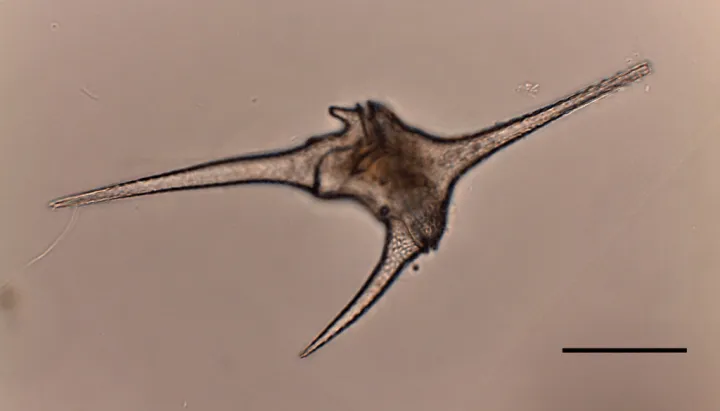
Ceratium hirundinella is a species of dinoflagellate algae characterized by its distinct, horn-like cell shape that resembles a swallow's tail.
In the context of agricultural management, this organism is classified as a phytoplanktonic species that contributes to the phenomenon known as water bloom.
While it is not a primary pathogen of cultivated plants, its mass proliferation represents a significant challenge for irrigation water quality.
The organism is motile and uses its flagella to navigate through the water column, adjusting its position based on light availability and nutrient concentrations.
Its biological cycle is fundamentally integrated with the trophic status of freshwater ecosystems, making it a bioindicator of nutrient-rich water conditions.
Conditions for development
The growth of Ceratium hirundinella is highly dependent on high levels of nitrogen and phosphorus, typically caused by nutrient runoff from fertilized fields.
Warm water temperatures, ideally between 18°C and 25°C, trigger rapid cell division and population explosions during the summer season.
Stagnant or slow-moving water bodies, such as irrigation reservoirs and canals, provide the optimal environment for the accumulation of these organisms.
Strong thermal stratification of water bodies further supports the concentration of Ceratium in the photic (upper) zones where light is abundant.
Sunny weather conditions facilitate intense photosynthetic activity, which leads to exponential population growth and dense algal blooms.
Why it matters
The most direct harm to agricultural operations is the clogging of irrigation filters, particularly in drip and micro-sprinkler systems.
Massive blooms can deplete oxygen levels in water sources as algae die and decompose, posing a threat to local fish and beneficial aquatic life.
The presence of large amounts of organic material from algae can alter the chemical properties of irrigation water, potentially affecting sensitive crop yields.
Increased turbidity of the water interferes with the efficiency of ultraviolet water treatment systems used to prepare water for crop irrigation.
The labor and material costs associated with frequent cleaning and replacement of clogged filtration media significantly impact farming budgets.
Protection
Reducing nutrient runoff by maintaining buffer strips between fields and water reservoirs is the most effective long-term preventative measure.
Implementing advanced filtration technology, such as automatic backwashing filters, helps maintain consistent water delivery despite high algae loads.
Routine monitoring of water chemistry, specifically phosphate and nitrate levels, allows for proactive management of potential bloom conditions.
Biological control methods, including the introduction of herbivorous fish species, can help manage the biomass of phytoplankton in private farm ponds.
In cases of severe infestation, specialized algae control measures and chemical treatments may be applied, provided they are safe for the target crop irrigation.
Discussion
No discussions yet — be the first.