
Ceratobasidiales fungi
Ceratobasidiales
Description
Symptoms
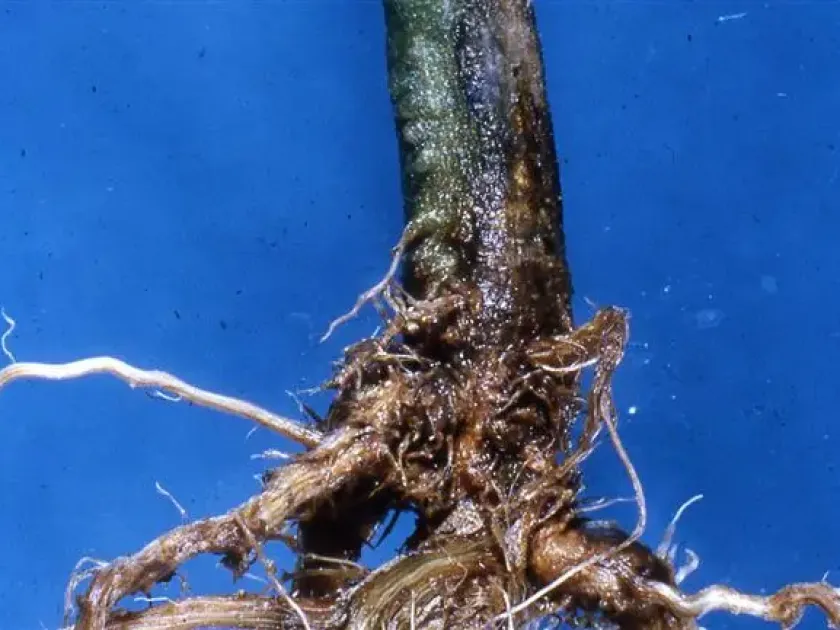
The most common symptom is the development of brown or black lesions on roots and the base of stems. These necrotic areas can girdle the stem, causing wilting, stunting, and eventual death of the plant, often referred to as damping-off.
In potatoes, the presence of dark brown to black irregular patches on the surface of tubers, known as black scurf, is the primary diagnostic sign. These patches are actually sclerotia that adhere to the skin and do not wash off easily.
Affected plants often show a decline in vigor, yellowing of the lower leaves, and reduced tuber or root size. In severe cases, the entire root system may decay, making it easy to pull the plant from the soil with very little resistance.
In humid conditions, a whitish or greyish web-like mycelium may appear on the soil surface near the base of the stems. This growth indicates active expansion of the fungus toward healthy, adjacent plants in the field.
Irregular patches of poor emergence or stunted growth throughout the field are typical of soil-borne outbreaks. Plants within these patches may die prematurely before reaching maturity, leading to yield gaps and uneven crop development.
Pathogen
The order Ceratobasidiales includes several significant plant pathogens, most notably species of Rhizoctonia. These fungi are soil-borne pathogens that primarily attack the roots, tubers, and lower stems of a wide range of economically important crops.
Unlike many other fungi, these organisms do not produce spores (conidia) in large quantities; instead, they persist in the soil and on infected plant debris as mycelium or hardened structures called sclerotia. These sclerotia allow the fungus to remain dormant for years.
Infection usually occurs when fungal hyphae in the soil make contact with plant tissues. The fungi produce specialized enzymes that degrade plant cell walls, allowing the pathogen to penetrate host tissues and establish an infection regardless of the plant's growth stage.
Common hosts include potatoes, cereals, vegetables (such as tomatoes and cabbages), and ornamental plants. The ability of the pathogen to feed on both live tissue and decaying organic matter makes it highly resilient and capable of persisting in the soil indefinitely.
Transmission of the disease often occurs through contaminated soil moved by machinery, tools, or water, as well as through the planting of infected seed tubers or contaminated propagules, which introduces the pathogen into clean fields.
Conditions for development
Development of these diseases is strongly favored by cool, moist soil conditions. Optimal temperatures for infection range typically between 12°C and 18°C, often occurring during the early spring or periods of prolonged rainy weather.
Compacted, poorly drained soils facilitate the spread of the pathogen by creating an anaerobic environment that stresses the host plants, making them more susceptible to fungal entry during the germination phase.
High nitrogen levels can exacerbate the problem by promoting rapid, succulent plant growth, which has softer cell walls and is more easily penetrated by the aggressive fungal hyphae. Proper nutrient balance is therefore crucial for disease management.
Short crop rotations involving the same susceptible families allow the population of sclerotia in the soil to build up to dangerous levels. Over time, the soil becomes "sick," making it increasingly difficult to grow any susceptible crop profitably.
Soil pH plays a role as well, as many Ceratobasidiales species thrive in slightly acidic conditions. Maintaining proper soil health and correcting acidity through liming can help create a less favorable environment for the pathogen.
Why it matters
The economic impact of these fungi is significant, primarily due to stand reduction, yield loss, and diminished quality of the produce. Poor stand establishment requires costly replanting and wastes seed and labor inputs.
In root crops and tubers, blemishes caused by the fungus result in lower market grades and reduced quality for fresh consumption. Tubers with high levels of black scurf are often rejected or command significantly lower prices.
Post-harvest losses are a major concern, as infected produce is prone to secondary rots in storage. Once the fungus enters a storage facility, it can spread rapidly, potentially destroying entire batches of stored crops.
Increased susceptibility to other environmental stressors, such as heat or drought, leads to less predictable crop yields. This volatility poses a risk to farm profitability and long-term sustainability.
The persistent nature of the pathogen in the soil forces farmers to adopt more expensive management strategies, such as continuous fungicide use or the adoption of long-term rotations that may not always be economically optimal.
Protection
Integrated disease management starts with the use of certified, disease-free seed and high-quality planting material. Preventing the introduction of the pathogen into non-infested fields is the most important first step.
Seed and tuber treatments with appropriate fungicides are standard practices to protect young, vulnerable tissues during emergence. These treatments provide a protective zone that inhibits hyphal penetration.
Crop rotation remains the cornerstone of control. Including non-host species, such as cereals or specific cover crops, helps starve the pathogen and reduces the total sclerotia load in the field over several seasons.
Cultural practices like deep tillage help break up infected plant debris, while improving soil drainage and structure can significantly reduce the moisture levels needed for fungal proliferation and spread.
Biological control methods using beneficial soil fungi, such as Trichoderma species, are increasingly used to colonize the root zone and outcompete pathogens for space and nutrients. These bioproducts enhance root health and support systemic resistance in plants.
Discussion
No discussions yet — be the first.