
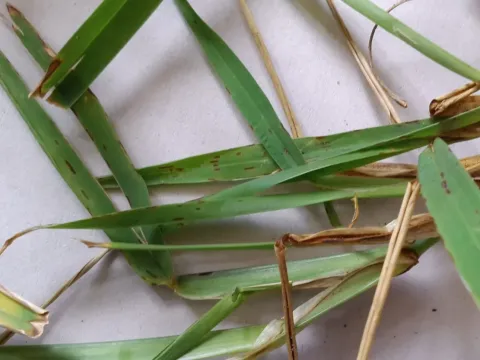
Catenulocercospora leaf spot
Catenulocercospora
The causative agent of this disease is a fungus from the genus Catenulocercospora. It is a specialized phytopathogen that primarily affects various tropical and subtropical woody plants, causing characteristic leaf lesions.
What the section contains
Catenulocercospora leaf spot
The fungus is characterized by the production of conidiophores arranged in fascicles, which are highly efficient for spreading in humid environments. The pathogen persists primarily in plant debris, serving as the main source of inoculum for subsequent seasons.
The mycelium enters host tissues through stomata or wounds, invading the mesophyll cells. As the infection progresses, the fungus disrupts the leaf's photosynthetic apparatus, leading to tissue chlorosis and necrosis.
Sporulation occurs on the underside of the leaf, releasing conidia that are disseminated by rain splash and wind currents. The life cycle can repeat several times within a single growing season under suitable weather conditions.
Taxonomically, the genus Catenulocercospora is closely related to other cercosporoid fungi, necessitating careful microscopic identification of conidia and conidiophores to confirm the presence of this specific pathogen.
The primary symptom is the appearance of necrotic leaf spots, which are often irregular in shape. These spots are frequently delimited by leaf veins, creating a distinctive pattern typical of this pathogen.
Lesions typically start as brown or black spots, often surrounded by a chlorotic halo. As the infection spreads, the spots can merge, causing significant portions of the leaf surface to wither and die.
On the abaxial surface of the leaf, a thin, olive-gray velvety mold may be observed. This mold consists of fungal structures and spores, confirming active infection and providing evidence for further spread.
Severe infestations lead to premature yellowing and defoliation of the tree or shrub. This stress significantly compromises the plant's ability to produce energy through photosynthesis, weakening it over time.
In susceptible species, the infection may also extend to petioles and succulent green stems, resulting in elongated lesions that can lead to tissue dieback or secondary stem infections.
The development of Catenulocercospora leaf spot is highly dependent on environmental moisture. High humidity, heavy rainfall, and prolonged dew periods are major catalysts for spore germination and infection.
Optimal temperatures for mycelial growth range between +20 and +28 degrees Celsius. These conditions accelerate the fungal life cycle and increase the probability of severe disease outbreaks.
Poorly ventilated and overcrowded plantings provide a microclimate that remains humid for longer periods. This inhibits rapid drying of foliage, which is essential for preventing the pathogen from taking hold.
Lack of sanitation, specifically leaving infected fallen leaves under the canopy, provides a primary reservoir for the fungus. These debris act as the starting point for spring infections.
Plants that are physiologically stressed due to improper fertilization or drought are more susceptible. A healthy plant with optimal nutrient levels is generally more resistant to initial infections.
The economic impact of the disease is significant, as it leads to reduced crop yield and lower fruit quality. Reduced photosynthetic area means the plant cannot adequately support fruit development.
Chronic infection drains the plant's nutrient reserves, leading to stunted growth and reduced winter hardiness. Over time, affected trees may become more susceptible to other stressors, including pests and frost.
Young plants or nursery stock affected by this fungus may exhibit significant growth delays. The loss of foliage forces the plant to allocate energy to regeneration rather than vegetative expansion.
Control efforts, including the use of fungicides, add significant costs to production. Failure to manage the disease early can lead to recurring outbreaks that jeopardize the entire plantation's health.
The potential for rapid spore dispersal makes this disease a serious threat in intensive cultivation settings. Early detection is crucial to preventing the widespread loss of leaf canopy.
Cultural practices are the first line of defense: removing and destroying infected plant debris in autumn significantly reduces the inoculum potential for the next season.
Pruning to open up the canopy improves air circulation and increases sunlight penetration. This promotes faster drying of leaves, creating an unfavorable environment for fungal growth.
Preventative applications of copper-based fungicides are highly effective at forming a protective barrier on the plant surface, preventing the spores from infecting healthy tissue.
In severe cases, the use of systemic fungicides, such as triazoles or strobilurins, is recommended. These treatments penetrate the leaf tissue to inhibit the growth of established fungal mycelia.
Maintaining balanced soil fertility, particularly with adequate potassium and phosphorus, helps strengthen plant cell walls and enhances the plant's natural systemic resistance to fungal pathogens.