
Catillaria
Catillaria
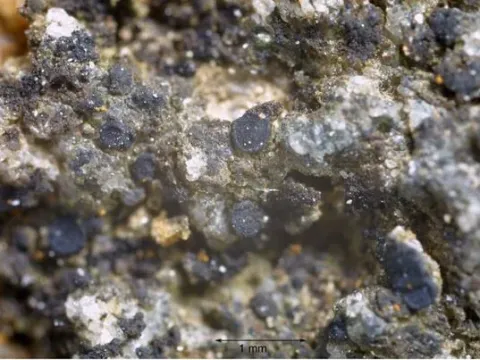
The genus Catillaria refers to a group of crustose lichens, which are symbiotic organisms composed of a fungus and an alga or cyanobacterium.
What the section contains
Catillaria
While often discussed in the context of orchard health, they are not true plant pathogens, as they do not invade the living tissues of the host tree.
They act as epiphytes, utilizing the tree bark exclusively as a stable surface or substrate for their physiological activities and growth.
Morphologically, these lichens form thin, tight, crust-like structures that are well-adapted to surviving on woody surfaces.
Distinguishing these lichens from parasitic fungal infections is a standard diagnostic procedure in modern orchard management and plant pathology.
The most visible sign of Catillaria presence is the formation of a granular, crust-like coating on the surface of the trunk and older branches.
The colonies typically appear in shades of gray, olive, or light brown, often mimicking the natural color of the tree bark as they age.
Unlike leafy lichens, Catillaria adheres very closely to the substrate, making the affected bark look weathered or textured rather than having obvious growths.
Their distribution is typically localized to areas of the tree that remain damp for extended periods, such as the shaded side of a thick trunk.
The development of these crusts is slow, and they do not cause immediate changes to the bark color, which often leads to them being overlooked.
High relative humidity is the primary environmental factor that drives the establishment and growth of Catillaria on woody plants.
Orchards with dense canopy cover, which limits light penetration and reduces airflow, are highly conducive to the development of lichen colonies.
Older trees with rough, deeply fissured bark provide the perfect anchor points, as these fissures retain moisture necessary for lichen survival.
Poor orchard drainage and lack of proper canopy management contribute to stagnant air conditions that favor the rapid spread of epiphytic growth.
Low light levels in the lower sections of the tree canopy are statistically correlated with higher densities of crustose lichen populations.
The main concern with lichens like Catillaria is that they create a microhabitat that can harbor insect pests and their overwintering stages.
The presence of a thick crust may potentially inhibit gas exchange in the bark, although this effect is typically negligible on mature, healthy trees.
Persistent moisture trapped beneath the lichen layer can potentially soften bark tissues, creating entry points for opportunistic fungal pathogens.
While they don't extract nutrients directly, heavy colonization is frequently used as a biological indicator of tree stress or slow growth rates.
High coverage of lichens is often associated with orchards that have not received consistent maintenance, such as regular pruning or thinning.
Mechanical cleaning of the bark using stiff-bristled brushes is the most straightforward and effective method for removing lichen layers.
Pruning is essential to increase airflow and light penetration, which dries out the bark and makes the environment unfavorable for lichen colonization.
Applying traditional horticultural white wash to tree trunks acts as a deterrent and helps protect the bark from colonization by lichen spores.
Dormant season sprays, such as iron sulfate solutions, are widely used to control lichens and sanitize the bark surface effectively.
Improving overall tree vigor through balanced fertilization and appropriate irrigation is the best long-term strategy for preventing excessive lichen growth.