
Catinella olivacea
Catinella olivacea
Description
Symptoms
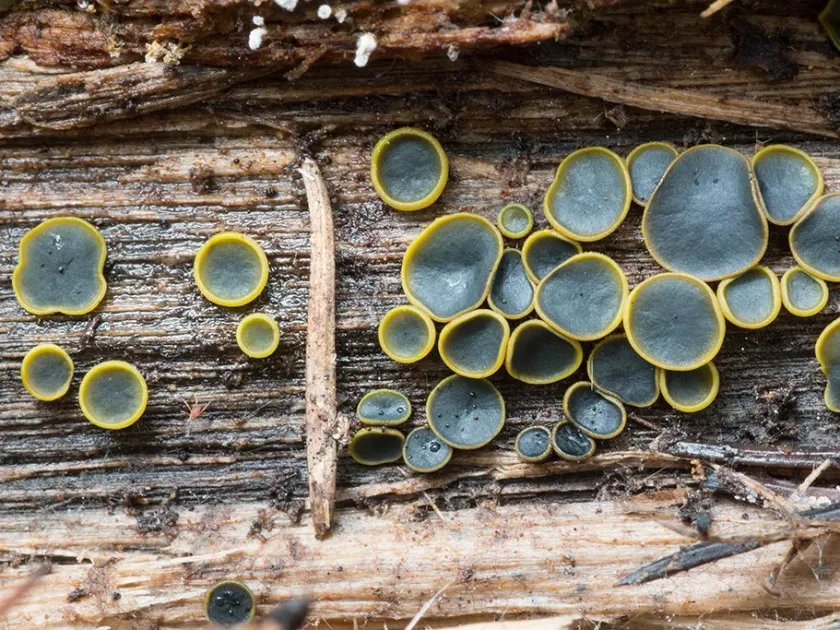
The most visible sign of Catinella olivacea is the presence of its small fruiting bodies. These often appear in dense, clustered groups on the surface of damp wood.
Each apothecium typically measures between 2 to 8 millimeters in diameter. Their dark, olive-toned coloration makes them stand out against lighter woody textures.
Wood colonized by this fungus undergoes structural changes. The texture becomes soft and weakened as the fungal mycelium penetrates the interior structure of the wood cells.
In later stages of decay, the wood may exhibit signs of degradation, such as a brittle consistency or a darkened, water-soaked appearance of the affected area.
Microscopic identification is often required for precise diagnosis, as the external morphology can resemble other related species of discomycetes found in similar habitats.
Pathogen
Catinella olivacea is a species of ascomycete fungus within the Leotiomycetes class. It functions primarily as a saprotrophic organism, specializing in the decomposition of dead woody biomass.
The fungus is characterized by its small, cup-shaped fruiting bodies known as apothecia. These structures often display an olive-green to blackish pigment, which is distinctive for the species.
As a wood-decay fungus, it thrives on the breakdown of lignin and cellulose within hardwood substrates. It uses a sophisticated enzymatic system to recycle organic matter in forest ecosystems.
The lifecycle involves the production of ascospores released into the atmosphere. These spores colonize decaying wood when environmental conditions are sufficiently moist and favorable.
It is not considered a primary pathogen of living trees, meaning it focuses its lifecycle on trees that are already dead, dying, or have fallen in the forest.
Conditions for development
Development is heavily dependent on moisture levels. The fungus requires a continuously damp environment to sustain the growth of its mycelial network and reproductive structures.
Preferred substrates include dead branches, fallen logs, and stumps of deciduous trees. The fungus colonizes wood that has already begun the natural decomposition process.
Temperatures that are moderate and stable promote the fastest colonization. It is most active during periods of high humidity, such as autumn or rainy summer seasons.
Shaded environments, such as dense forest floors or poorly ventilated lumber yards, are ideal for the proliferation of this species due to higher moisture retention.
The presence of cracks and wounds in the wood provides entry points for the fungal spores, allowing them to penetrate deep into the substrate more efficiently.
Why it matters
While ecologically beneficial as a decomposer, Catinella olivacea can cause significant damage to stored timber, leading to economic losses in the forestry sector.
Infested wood loses its structural integrity and mechanical strength, rendering it unsuitable for high-quality carpentry or structural building applications.
The degradation process lowers the commercial grade of the timber, as the fungal growth marks the wood and alters its physical properties permanently.
If left unmanaged, the presence of the fungus in storage areas can promote further decay and encourage the growth of other, more aggressive wood-rotting pathogens.
Although it does not threaten healthy, standing trees, it contributes to the overall loss of raw material quality in any outdoor wood storage facility with poor climate control.
Protection
Preventative measures center on good hygiene in woodlots. Removing deadfall and forest debris reduces the overall spore load in the immediate environment.
In industrial settings, keeping wood dry is the most effective defense. Reducing the moisture content below 20% effectively inhibits the growth of the fungus.
Chemical treatments and wood preservatives can be applied to high-value timber to prevent colonization and ensure long-term durability during storage.
Proper stacking and elevation of lumber off the ground help improve airflow, reducing the likelihood of moisture accumulation and fungal development.
Regular inspections of stored wood facilitate the early identification of infestations, allowing for rapid corrective action, such as kiln drying or isolation of the material.
Discussion
No discussions yet — be the first.