
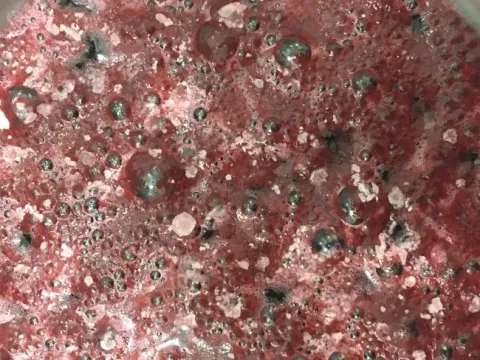
Wine flowers
Candida vini
Wine flowers, scientifically referred to as mycoderma, are caused by aerobic film-forming yeasts of the species Candida vini (formerly known as Mycoderma vini). These microorganisms are specialized spoilers of fermented and alcoholic beverages.
What the section contains
Wine flowers
These yeasts are obligate aerobes, meaning they strictly require the presence of oxygen to survive and reproduce. Their growth is restricted to the surface layer of the liquid where air contact occurs.
Their metabolism involves the enzymatic oxidation of ethanol into carbon dioxide and water. This consumption of alcohol results in a significant reduction of the beverage's original alcoholic content.
The spores of Candida vini are highly resilient and can remain viable for extended periods on winery equipment, in empty tanks, or on contaminated cellar surfaces.
Transmission occurs primarily through airborne currents or contaminated tools, making winery hygiene a critical factor in preventing the establishment of the pathogen.
The first visual sign of contamination is the emergence of a thin, whitish or translucent film on the surface of the wine.
As the colony expands, the film thickens, often taking on a dull, matte, or wrinkled appearance, varying in color from white to grey or light yellow.
In later stages, pieces of the film may break off and sink to the bottom of the container, causing significant cloudiness in a previously clear wine.
A distinct, musty, or «oxidized» off-odor develops, which aggressively masks the natural fruit and floral aromas of the wine.
The taste profile becomes thin, watery, and stale, as the yeast strips the wine of its alcohol and replaces it with various oxidation byproducts.
The primary prerequisite for the growth of Candida vini is the presence of headspace in storage containers, which allows for oxygen contact with the wine surface.
Wines with lower alcohol concentrations (below 12% ABV) are significantly more susceptible to infection, as higher alcohol levels act as a natural growth inhibitor.
Warm storage environments, specifically temperatures between 15°C and 25°C, greatly accelerate the reproduction rate of these aerobic yeasts.
Low acidity (high pH) and the presence of residual fermentable sugars create a nutrient-rich environment that promotes rapid colonization.
Poor sanitation practices in the cellar, such as inadequate cleaning of hoses, valves, and barrels, provide the initial reservoirs for the yeast to colonize the wine.
Wine flowers pose a major threat to commercial and hobbyist winemaking, often rendering the affected product completely unsaleable or undrinkable.
The total oxidation of ethanol not only lowers the proof but also leads to the formation of acetic acid, which can trigger secondary vinegar spoilage.
The sensory degradation is irreversible; once the chemical structure of the wine is altered by the yeast, standard filtration cannot restore its original quality.
If left unmanaged, the contamination can quickly spread throughout a cellar, impacting all stored vessels and resulting in substantial economic losses.
Furthermore, the presence of these yeasts indicates poor cellar management, which can damage the reputation of a winery among consumers and experts.
The most effective strategy is the proper filling of containers to the top, minimizing the air-to-liquid interface and preventing oxygen exposure.
Regular sulfur dioxide (SO2) management, including careful monitoring of free sulfur levels, is essential for suppressing aerobic microbial activity.
Strict cleaning and sanitizing protocols for all winery equipment and cellar surfaces are mandatory to eliminate yeast spores before they contact the wine.
Using inert gas systems, such as nitrogen or argon blanketing, is an excellent method to protect the surface of the wine from oxygen contact.
- Maintain low and stable cellar temperatures.
- Ensure all bungs and seals are airtight.
- Conduct regular checks of all stored wine vessels.
- Promptly rack the wine to remove lees and clarify the liquid.