
Winter stalkpuff
Tulostoma brumale
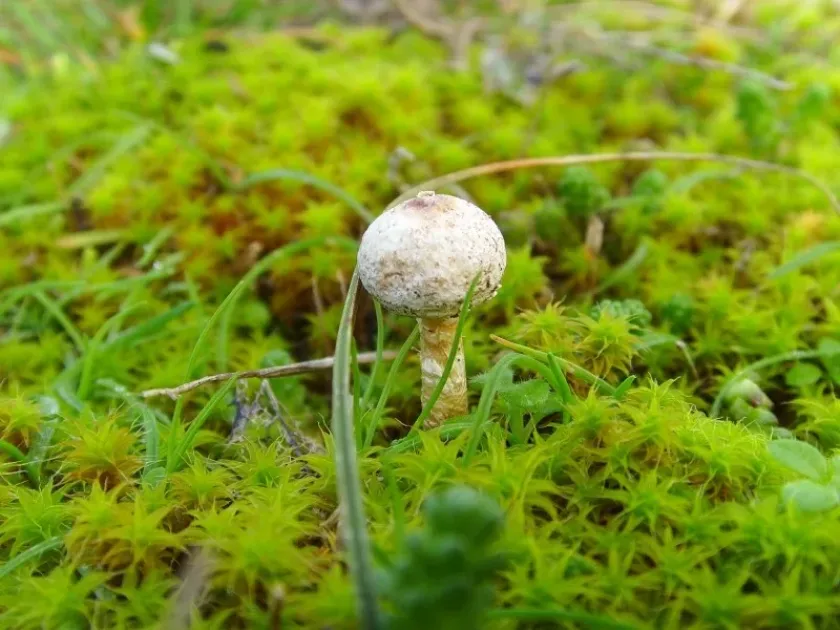
Description
Pathogen
The Winter stalkpuff (Latin Tulostoma brumale) is a member of the Agaricomycetes class and the Agaricaceae family. In agronomy, this species is classified as a soil saprotroph that thrives in specific organic-rich environments.
Biologically, this organism is a gasteromycete that forms characteristic fruiting bodies shaped like spherical heads on long stalks. Despite its saprotrophic nature, it can be viewed as an unwanted inhabitant in certain agricultural settings.
The pathogen's life cycle is closely linked to organic substrates in the soil, where the mycelium actively decomposes plant residues. Understanding the morphology of this fungus is essential for distinguishing it from pathogenic species that affect crops.
Reproduction occurs through spores released via an apical pore on the fruiting body, triggered by rain droplets or mechanical vibrations. These spores are capable of maintaining viability in the soil for extended periods.
Although the Winter stalkpuff is not a classic obligate parasite, its presence indicates a specific soil background with high levels of decaying organic matter. Research indicates that the fungus prefers sandy or loamy soils.
Conditions for development
Optimal conditions for the development of Winter stalkpuff fruiting bodies occur during the autumn and winter months, as implied by the species epithet. A moist and cool environment is the primary factor for mycelium activation.
The fungus actively colonizes areas with open, sparsely covered soil where competition with other fungal species is reduced. It is frequently found in fields with disturbed topsoil layers.
Temperature ranges from +5 to +15 degrees Celsius are favorable for spore germination and the formation of mature fruiting bodies. During periods of severe frost, development slows significantly, yet the spores remain viable.
Soil pH levels have an indirect effect on the prevalence of the species, with the Winter stalkpuff showing a preference for neutral or slightly alkaline substrates. High nitrogen fertilizer content may inhibit the development of this saprotroph.
The presence of un-decomposed plant residues in the soil is a prerequisite for mycelial nutrition. Timely incorporation of crop residues significantly reduces the likelihood of the fungal population appearing in the field.
Protection
There are no specialized pesticides against the Winter stalkpuff, as it is not considered a primary agricultural pest. The main control measure involves following proper agrotechnical practices.
Regular plowing and deep tillage facilitate the destruction of the fruiting body structures and redistribute spores to deeper soil layers, which prevents their germination.
Adhering to crop rotation schedules helps reduce the accumulation of specific organic matter required for the fungus to thrive. It is important to avoid waterlogging in areas prone to drainage issues.
The use of cover crops (siderates) helps improve soil structure and displaces non-beneficial fungal microflora. A healthy soil microbiocenosis serves as a natural barrier against the development of such species.
- Deep autumn plowing
- Proper disposal of plant residues
- Optimization of soil acidity
- Implementation of crop rotation
Discussion
No discussions yet — be the first.