
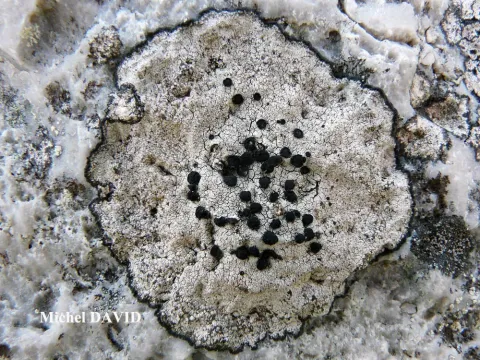
Buellia subdisciformis
Buellia subdisciformis
Buellia subdisciformis is a species of lichen belonging to the Physciaceae family. In an agronomic sense, it is classified as an epiphytic organism rather than a classic plant pathogen.
What the section contains
Buellia subdisciformis
Biologically, it is a stable symbiotic association between a fungus and algae. It uses tree bark exclusively as a substrate for attachment and does not derive nutrients directly from the host plant's tissues.
The lichen's body, known as the thallus, has a crustose structure that adheres tightly to the bark. A key feature of this species is the presence of apothecia—small, dark, disk-shaped reproductive structures.
While not a parasite, its colonization indicates specific microclimatic conditions, such as sustained humidity levels and relatively clean air, as this species is sensitive to atmospheric pollution.
Because it does not infiltrate the plant's vascular system, it does not cause disease in the traditional sense, though its presence is often associated with tree vigor issues.
The primary symptom of Buellia subdisciformis is the appearance of grayish, whitish, or greenish-yellow crusty patches on tree trunks and larger branches.
Close inspection reveals numerous small, black, disk-like structures scattered across the thallus. These are the fruiting bodies (apothecia) of the lichen, which stand out against the crust.
Bark covered by these lichens often looks rough and textured. In severe cases, the lichen can form extensive colonies, creating a blanket-like effect over the surface of the tree trunk.
Unlike soft fungal growths, this lichen is firm and brittle when dry. It does not possess a velvety texture and adheres so closely to the substrate that it is difficult to remove without mechanical tools.
Colonies tend to aggregate over time, and they are frequently observed in association with other lichen species and mosses, particularly on older or neglected trees.
The development of Buellia subdisciformis is largely governed by moisture availability. It thrives in environments where bark remains damp for extended periods, such as in orchards with poor air circulation.
Environmental factors are crucial: the lichen is an indicator of relatively clean air, as it cannot survive in areas with high sulfur dioxide concentrations or other pollutants.
Light exposure plays a role in its distribution; while it prefers some light, it requires consistent atmospheric humidity to sustain its growth cycle and reproduction.
Poor orchard management, including lack of pruning and excessive tree density, creates the stagnant microclimate necessary for the lichen to establish itself and proliferate.
Older trees with thick, rough, or fissured bark provide the most suitable habitats, as these surfaces are more effective at trapping and holding the moisture required by the lichen.
The lichen physically impedes the natural gas exchange of the bark, which can subtly restrict the physiological processes occurring in the outer layers of the tree's cortex.
The dense layer of lichen creates a permanently moist interface, which serves as a breeding ground for secondary fungal and bacterial infections that can damage the underlying bark.
Buellia subdisciformis colonies act as ideal refuges for overwintering pests, including scale insects, mites, and various insect eggs, shielding them from environmental extremes and natural predators.
Heavy lichen coverage obscures the bark, preventing farmers from conducting early visual diagnostics of dangerous pathogens like black rot, canker, or cytospora dieback.
From an economic standpoint, trees heavily covered in lichens are often perceived as being in a state of decline, which impacts the overall valuation and health assessment of an orchard.
The most effective long-term prevention is diligent orchard hygiene, including regular pruning to ensure proper canopy ventilation and sufficient light penetration to the trunks.
Mechanical removal can be achieved during the dormant season using stiff brushes or scrapers. This should be performed carefully to avoid damaging the living cambium layer of the tree.
Whitewashing the trunks with a lime-based mixture containing copper sulfate is a traditional and effective control method, as it creates an alkaline environment that suppresses lichen growth.
For severe infestations, spraying with a 3–5% ferrous sulfate solution can effectively kill the lichen colonies while providing a beneficial mineral boost to the tree.
After manual removal or chemical treatment, it is recommended to apply a preventative fungicide treatment to sanitize the bark and protect against opportunistic pathogens that might invade the treated areas.