
Buellia
Buellia
Description
Symptoms
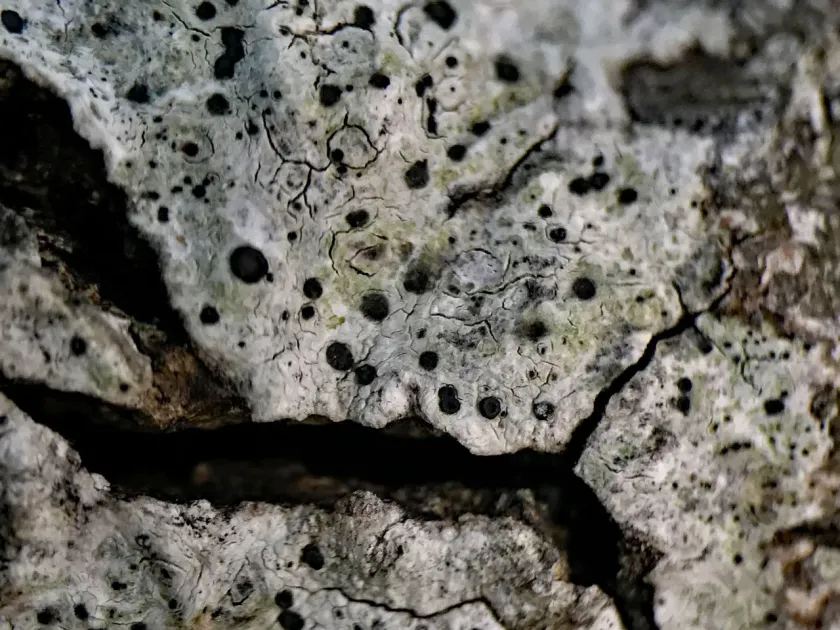
The primary symptom of Buellia colonization is the appearance of thin, crust-like patches that adhere tightly to the bark.
These patches typically have a granular or cracked surface, ranging in color from white-grey to dark brown or black.
A distinctive diagnostic feature is the presence of apothecia—tiny, black, disk-like fruiting bodies scattered across the thallus.
Colonies often appear first on the shaded, northern side of the trunk where humidity levels remain elevated for longer periods.
As the colony expands, it can form irregular mosaic patterns that cover significant areas of the tree’s structural limbs.
Pathogen
Buellia is a genus of crustose lichens, which are symbiotic organisms consisting of a fungal component (mycobiont) and an algal component (phycobiont).
In agronomy, Buellia is recognized not as a pathogenic disease in the traditional sense, but as an epiphyte that lives on the surface of tree bark.
These organisms obtain moisture and nutrients from the atmosphere and dust, rather than parasitizing the host tree's living tissues.
While they do not directly feed on the tree, their presence often indicates an environment that favors the accumulation of moisture on bark surfaces.
Taxonomically, the genus is vast, and many species are specifically adapted to colonize woody substrates in orchards and forests.
Conditions for development
The development of Buellia is heavily influenced by high atmospheric humidity and persistent moisture on bark surfaces.
Orchards located in low-lying areas with poor air drainage are significantly more susceptible to lichen colonization.
A dense, unpruned canopy creates a stagnant microclimate that prevents bark from drying out after rainfall or morning dew.
Trees with compromised health or older bark structures provide a more stable substrate for lichen establishment compared to young, vigorous trees.
Neglecting standard orchard hygiene practices, such as routine cleaning and pruning, encourages the rapid spread of these epiphytes.
Why it matters
Buellia causes minimal direct physiological damage, but it acts as a physical barrier that restricts essential gas exchange through the bark.
The dense cover of the lichen can trap moisture, potentially promoting the growth of opportunistic rot-causing pathogens beneath the surface.
The crust provides a protected habitat for various insect pests, including scale insects and mites, allowing them to evade predators and pesticides.
Massive colonization of the trunk is often a symptom of an underlying decline in the tree's overall vitality or growth rate.
If left unmanaged, the cumulative effects can negatively impact the tree’s resilience and lead to increased bark fragility over time.
Protection
Mechanical removal is the most direct and effective strategy for managing Buellia on commercial and home garden trees.
Using soft-bristled brushes or specialized scrapers during the dormant season allows for the removal of the lichen without damaging the living bark.
Applying a protective whitewash (often containing lime and copper-based fungicides) after cleaning helps disinfect the bark and deters new colonization.
Routine pruning to open the canopy is crucial for improving airflow and lowering humidity, making the environment less hospitable for lichens.
Maintaining tree vigor through proper irrigation and balanced fertilization is the best long-term strategy to prevent excessive lichen growth.
Discussion
No discussions yet — be the first.