
Bulgaria
Bulgaria
The causative agent of this disease is the fungus Bulgaria inquinans, which is classified within the Ascomycota. It often acts as a weak parasite, primarily affecting wood that is already stressed or damaged.
What the section contains
Bulgaria
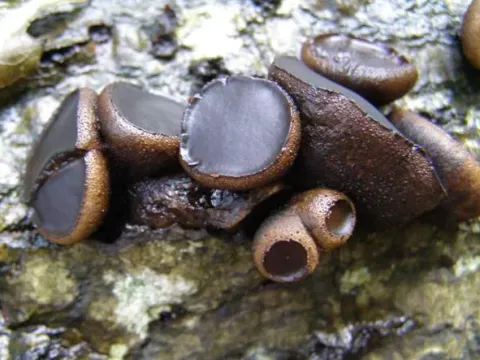
The fungus produces distinctive fruiting bodies known as apothecia, which appear as dark, gelatinous, or rubbery discs. These structures are often found protruding through the bark of infected branches or trunks.
Spore dispersal occurs when conditions are favorable, with the apothecia releasing large numbers of ascospores into the surrounding environment. These spores can travel through wind or rain splash.
The mycelium of the fungus penetrates the inner bark and cambium layers. By secreting specific enzymes, it breaks down the structural integrity of the wood, causing a necrotic reaction.
Biologically, Bulgaria inquinans is commonly associated with dead or dying wood, but it can successfully establish itself on living trees if there is a compromised physical barrier like a wound.
The most visible symptom is the presence of black, shiny, rubbery fruiting bodies on the bark surface. These bodies are particularly noticeable during humid or rainy weather conditions.
The infected bark becomes brittle, dries out, and eventually begins to crack or slough off. You may observe discolored areas on the bark where the fungal activity is most concentrated.
Underneath the peeling bark, there is often a visible layer of dark mycelial growth. The wood tissue underneath may turn a darker shade and show signs of advanced softening or decay.
As the disease progresses, the necrotic areas spread, affecting the tree's vascular system. This manifests in the canopy as yellowing leaves, premature leaf drop, or branch dieback.
In advanced cases, the structural integrity of the branch or trunk is significantly weakened. This increases the risk of mechanical failure during high winds or heavy snow load.
High humidity and poor ventilation are the primary drivers for the development and spread of the fungus. Shaded, dense tree stands with stagnant air create an ideal microclimate for Bulgaria inquinans.
Trees that are physically stressed by drought, nutrient deficiency, or insect damage are significantly more susceptible to infection. A healthy, vigorous tree is usually able to wall off small infections.
The most active period for spore production and infection usually occurs during temperate seasons with high rainfall, specifically in autumn or spring.
Any physical damage to the tree, including sunscald, frost cracks, or improper pruning cuts, acts as an entry point for fungal spores to colonize the interior wood.
Neglected landscapes or forest areas without adequate sanitation become reservoirs for the pathogen, facilitating its spread to neighboring healthy plants.
The primary harm is the disruption of nutrient and water flow caused by the necrosis of the cambium layer. This leads to stunted growth and a decline in overall tree vitality.
The structural damage caused by the fungus makes the affected parts of the tree brittle and hazardous, which is a major concern for urban and park safety.
Secondary infections from other pathogens can easily colonize the wounds opened by the fungus, further accelerating the decay process and leading to rapid tree death.
The aesthetic value of the trees is severely diminished, which impacts the visual appeal of managed landscapes and causes economic losses for property owners.
Mass infestations can result in the loss of entire tree stands, necessitating costly removal and disposal of hazardous wood materials to prevent further spread.
Effective management begins with maintaining high tree vigor through proper irrigation, fertilization, and appropriate tree spacing to allow for airflow.
Regular sanitation pruning is essential. All dead or visibly infected branches should be pruned and removed immediately to reduce the inoculum load in the environment.
- Prompt removal and disposal of infected tree parts.
- Sterilizing pruning tools between different trees to prevent cross-contamination.
- Applying wound sealants or fungicide-based dressings to large cuts.
- Protecting the bark from environmental stresses like sunscald.
Chemical control can include the use of copper-based fungicides applied to the trunk and branches during the dormant season to inhibit fungal growth.
Monitoring the landscape for early signs of the disease allows for timely intervention, such as removing minor infections before they reach the main trunk.