
Buds proliferate
Buds proliferate
Buds proliferate is a phytoplasma-associated disease. Phytoplasmas are specialized bacteria that lack cell walls and reside strictly within the phloem tissues of the host plant, disrupting their normal physiological functions.
What the section contains
Buds proliferate
The transmission of this pathogen occurs exclusively through insect vectors, primarily leafhoppers and psyllids. These insects feed on the phloem sap of infected plants, acquiring the pathogen and transmitting it to healthy crops during subsequent feeding cycles.
Phytoplasmas have a complex biology, maintaining a symbiotic relationship with their insect vectors while causing severe pathogenic effects in plant hosts. The pathogen persists in the insect throughout its lifespan, facilitating continuous spread.
This disease affects a wide range of crops, including soybeans, sugar beets, and various ornamental and vegetable species. The pathogen induces hormonal imbalances that lead to atypical morphological development.
Due to the intracellular nature of phytoplasmas within the plant's vascular system, conventional pesticides are ineffective against the pathogen itself. Management focuses on vector control and host sanitation.
The primary symptom is the abnormal proliferation of axillary buds, resulting in stunted, bushy growth. This phenomenon creates a characteristic appearance often referred to as a witches' broom effect.
In soybeans, the disease manifests as excessive branching, leaf chlorosis, and the formation of small, distorted leaves. The plants lose their standard structural integrity and fail to develop normally.
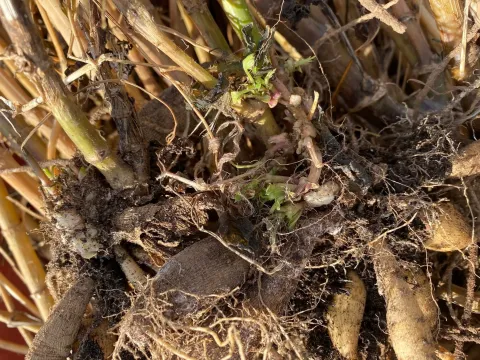
Sugar beet plants suffering from this disease exhibit the growth of numerous secondary rootlets at the crown. The main taproot often becomes deformed, woody, and suffers a significant decline in sugar content.
Flowers on infected plants frequently show virescence, where floral parts are transformed into green leaf-like structures. This condition typically renders the affected plant sterile and incapable of producing seeds.
Affected crops display severe stunting, as resources are diverted from growth and reproduction to the production of excessive, non-functional vegetative structures. The overall impact is a dramatic loss of plant vigor.
The spread of this disease is highly dependent on the population dynamics of insect vectors. Warm, dry weather conditions generally favor the activity and migration of leafhoppers across agricultural fields.
The presence of infected weed hosts in or near the field serves as a crucial reservoir for the phytoplasma. These weeds sustain the pathogen during periods when the main crop is not present or is at a non-vulnerable stage.
Early-season infection is particularly detrimental. If young plants are exposed to vector feeding during initial growth stages, the disease often leads to total crop failure within the affected patches.
Poor agricultural practices, such as failure to control weeds or excessively dense planting, create microclimates that promote the colonization and survival of insect vectors within the crop canopy.
Regional climate and geography play a role, as fields adjacent to wild meadows or natural habitats are more likely to be subjected to high vector pressure throughout the growing season.
The economic impact of buds proliferate is significant due to the irreversible nature of the disease. Once a plant is infected with a phytoplasma, there is no curative treatment available to recover its productivity.
Yield loss occurs through a combination of reduced biomass, poor fruit or seed set, and diminished quality of the harvested product. For sugar beet, the reduction in sugar accumulation directly affects industrial processing.
Infected plants are immunocompromised and more susceptible to secondary infections by fungi and bacteria. This can lead to rapid rot and further complicates the diagnosis of the underlying phytoplasma problem.
In severe cases, the disease can reach epidemic proportions within a field. The rapid colonization of insect vectors ensures that the pathogen spreads efficiently, leading to large-scale crop abandonment.
Long-term field infestation is common if the cycle of reservoir weeds and insect vectors is not broken. This necessitates intensive management and often requires a complete overhaul of the regional cropping strategy.
The most effective strategy for disease management is the systematic control of insect vectors using appropriate insecticides. Applications must be timed to coincide with peak vector migration periods.
Strict weed management is essential for long-term control. Removing potential reservoir hosts from field edges and within the crop rows reduces the pathogen's primary source and discourages insect accumulation.
Field scouting and the immediate rogueing of symptomatic plants are critical to limiting disease spread. Removing infected material reduces the probability of vectors acquiring the pathogen and spreading it to healthy neighbors.
Utilizing resistant crop varieties or hybrids is the most sustainable approach. Breeding for resistance to phytoplasmas and their vectors provides a robust solution for areas with high disease pressure.
Spatial isolation and appropriate crop rotation schedules can significantly interrupt the life cycle of the pathogen and its insect vectors. These practices help create a safer environment for crop development.