
Chondrilla rust
Puccinia chondrillina
Description
Symptoms
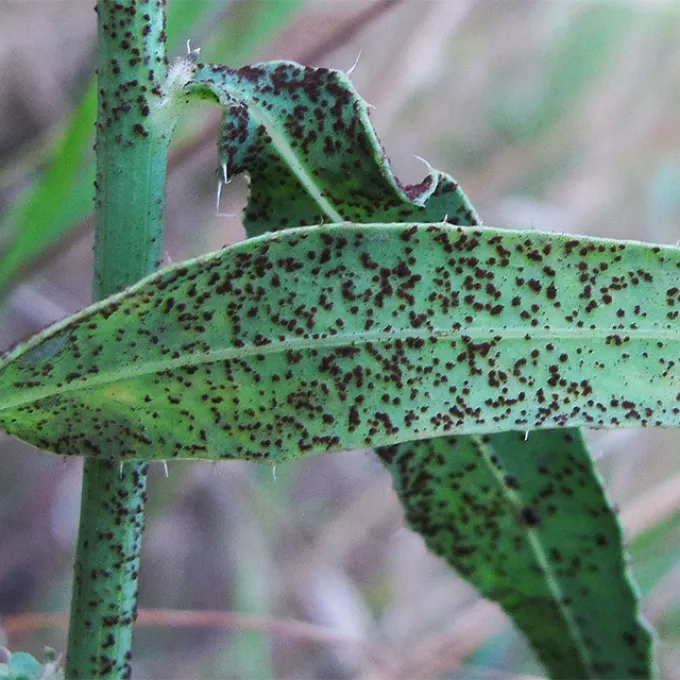
The primary symptom is the formation of small, dusty pustules on leaves and stems. Initially, these appear as yellow to orange lesions that gradually expand as the fungus develops.
As the spores mature, they rupture the host epidermis, releasing masses of urediniospores. This gives the affected plant parts a characteristic rusty appearance, for which the disease is named.
Leaves affected by the rust gradually turn yellow, curl, and die prematurely. This loss of photosynthetic area severely impacts the metabolic processes of the plant, leading to stunted growth.
Stems may show signs of deformation and loss of structural integrity. In severe cases, the infected plant can become entirely desiccated, preventing it from producing seeds or maintaining its root system.
Toward the end of the season, the color of the pustules typically darkens to brown or black. This indicates the production of teliospores, which are the resting stage of the fungus used for dormancy.
Pathogen
The causative agent of this disease is Puccinia chondrillina, a highly specialized obligate fungal pathogen. It belongs to the Basidiomycota phylum and is known for its narrow host range, primarily affecting the Chondrilla genus.
The life cycle of the fungus is complex, involving the production of different spore types. This adaptation allows the pathogen to disperse efficiently and infect its specific host plants under favorable conditions.
Biologically, the pathogen extracts nutrients from host tissues via haustoria, which penetrate the plant cells. This constant drain of resources leads to the progressive weakening and eventual decline of the plant.
The fungus is capable of overwintering as teliospores or mycelium in plant debris. This survival strategy ensures that the infection persists in the environment, ready to re-emerge in the next growing season.
Due to its high specificity, Puccinia chondrillina is extensively researched as a biological control agent to manage invasive Chondrilla populations in agricultural and wild settings.
Conditions for development
Development is heavily dependent on moisture and temperature. High humidity, morning dews, and frequent rainfall are essential for spore germination and successful infection of the host tissues.
The optimal temperature range for the development of Puccinia chondrillina is between 15 and 22 degrees Celsius. Within this window, the fungus propagates most rapidly.
Wind serves as the primary vector for spore dispersal, carrying the pathogen across vast distances. Once spores land on a susceptible host, they require a film of moisture to begin the infection process.
Dense vegetation or crowded plant stands provide an ideal microclimate with stagnant, humid air, which significantly accelerates the rate of infection within a population of Chondrilla.
While drought periods can temporarily halt the spread of the disease, the fungus is resilient. It quickly resumes development once environmental conditions improve following rainfall.
Why it matters
The primary harm is the significant reduction in the growth, vitality, and competitive ability of the host plant. Infected weeds are less capable of surviving stress, such as competition for nutrients and sunlight.
Infection leads to a substantial decline in seed production. This reduces the seed bank in the soil, which is critical for long-term weed control and population management in agricultural fields.
Weakened plants are more susceptible to secondary stressors, including other diseases or environmental harshness. This makes them easier to manage through standard agricultural practices.
In biological control programs, the rust is utilized to stress the weed population naturally. This reduces the need for heavy herbicide applications, promoting more sustainable farming practices.
Proper monitoring is required to ensure the pathogen does not negatively impact non-target species or native vegetation, maintaining ecological integrity in the surrounding environment.
Protection
Standard agronomic practices, such as crop rotation and soil tillage, remain the foundation for controlling invasive weed populations, including Chondrilla.
Herbicides remain a highly effective tool for controlling weed density in fields where natural biological control is insufficient or slow to take effect.
Integrated management plans involve monitoring rust prevalence in the field. This data helps in determining whether additional chemical interventions are required to keep the weed population under control.
Field management should aim to optimize moisture and plant spacing, which can inadvertently affect the microclimate and influence the susceptibility of weeds to natural pathogens.
Prevention and hygiene measures are essential to avoid the accidental spread of the pathogen, especially in areas where native plant conservation is a priority.
Discussion
No discussions yet — be the first.