
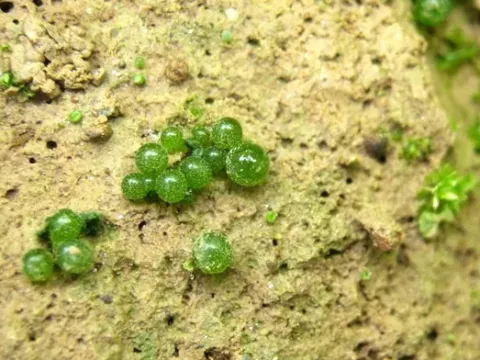
Botrydium granulatum
Botrydium granulatum
Botrydium granulatum is not a fungal pathogen but a yellow-green alga belonging to the class Xanthophyceae. In an agronomic context, it acts as a colonizer of moist soil surfaces and potting media.
What the section contains
Botrydium granulatum
The organism consists of a non-cellular thallus that appears as microscopic bladder-like vesicles submerged in the soil, connected by a network of rhizoids that anchor it to the surface.
The life cycle of this alga involves both asexual and sexual stages, allowing for rapid colonization of damp areas whenever light and moisture are available.
Its presence is a clear agronomic indicator of excessive irrigation, poor aeration, or high nutrient levels in the growing medium, particularly in greenhouses.
Botrydium thrives in stable microclimates where constant moisture and light allow it to photosynthesize, making it a common sight in commercial plant nurseries.
The primary symptom is the appearance of tiny, bright green or yellow-green, granular vesicles on the surface of the soil or substrate, often resembling a green dusty layer.
In cases of high density, these vesicles merge to form a continuous velvety mat. When the substrate dries out, the mat may turn dull, greyish, or brownish in color.
Unlike mosses, Botrydium lacks a complex structure and can be easily wiped away or broken apart from the surface with a small tool or brush.
Symptoms are most prevalent in areas where water pools, such as edges of pots, capillary mats, or locations where condensation gathers during nighttime.
Heavy infestations may result in the formation of a surface crust that can inhibit water absorption and change the texture of the growing medium.
Consistent high moisture content at the surface of the soil is the main requirement for the development of Botrydium granulatum populations.
As a photosynthetic organism, it requires light to survive, meaning it will only grow on the uppermost layer of the medium or in cracks where light can penetrate.
Temperatures ranging from 18°C to 25°C are optimal for growth, which correlates perfectly with standard greenhouse conditions for seedling production.
High levels of residual mineral salts from fertilizers serve as an abundant food source, promoting rapid population growth of these algae on the soil surface.
Poor ventilation or excessive atmospheric humidity contributes to prolonged periods of surface dampness, creating the perfect conditions for the algae to establish.
The main danger is the physical barrier created by the algal mat, which interferes with proper soil aeration, leading to restricted oxygen uptake by plant roots.
A dense algal layer can become hydrophobic or create a slimy crust, preventing uniform watering and leading to uneven moisture distribution in the root zone.
Botrydium competes with young plants for essential nutrients like nitrogen and phosphorus, potentially leading to nutrient deficiencies in early stages of growth.
The accumulation of organic mass from the algae can harbor pests such as fungus gnats (sciarids), which can cause secondary damage to plant root systems.
In some cases, the metabolic activity of the algae may slightly shift the pH of the soil surface, causing physiological stress to sensitive young crops.
The most effective management strategy is to optimize irrigation practices, allowing the top layer of the substrate to dry out significantly between watering sessions.
Top-dressing the soil with a thin layer of fine sand or perlite can effectively block light from reaching the substrate surface, stopping algal growth.
- Regular shallow cultivation of the soil surface.
- Improving greenhouse ventilation to reduce overall humidity.
- Monitoring and adjusting fertilizer application rates.
When necessary, apply approved algaecides or mild antiseptics that are safe for crops to suppress established algal populations.
For small-scale infestations, mechanical removal of the affected top layer of soil followed by a refresh of the substrate is an efficient and clean solution.