
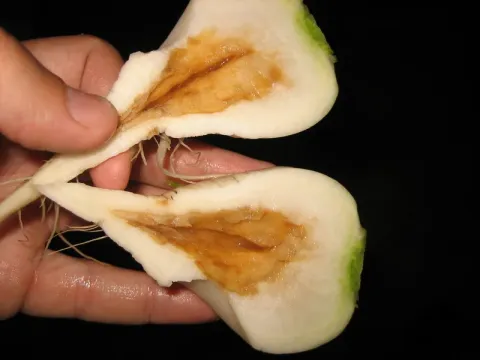
Boron deficiency
Rare
Boron deficiency is not an infectious disease; it is a physiological disorder caused by the lack of bioavailable boron in the plant growth environment.
What the section contains
Boron deficiency
Since it is not caused by a pathogen like fungi or bacteria, it cannot be controlled with pesticides, but requires specific nutritional adjustments.
Boron is a vital micronutrient essential for cell wall synthesis, pollen germination, and the development of reproductive organs in plants.
This disorder occurs systemically across the field whenever soil conditions prevent the root system from absorbing the necessary amount of boron.
The deficiency significantly disrupts plant metabolism, stopping the development of terminal buds and hindering general crop progress.
Visible symptoms often start with chlorosis of younger leaves, followed by crinkling, deformation, or stunted growth of the new foliage.
In corn, boron deficiency typically causes the formation of poorly developed, twisted ears with numerous gaps where kernels failed to form.
Death of the terminal growing point is common, which forces the plant to sprout excessive side shoots, resulting in a bushy appearance.
The root system becomes weakened, with root tips showing signs of necrosis and reduced ability to transport nutrients and water.
- Deformed and curled leaves.
- Death of growing points.
- Poor kernel set in corn ears.
- Reduced root system development.
Boron deficiency is frequently observed on alkaline or heavily limed soils, which reduce the chemical availability of boron for plants.
Dry weather conditions decrease the mobility of boron in the soil, preventing roots from reaching the required concentrations of the nutrient.
High levels of nitrogen or potassium fertilization can sometimes induce an antagonistic effect, blocking the uptake of boron by the plant.
Sandy soils are naturally low in boron and prone to leaching, making these areas high-risk zones for this physiological disorder.
Fluctuating temperatures and cold, wet springs can inhibit the root activity necessary for steady boron uptake, triggering deficiency symptoms.
The main impact of boron deficiency is a severe reduction in harvest quantity and quality, particularly in sensitive crops like corn.
Poor pollination caused by boron shortage leads to empty cobs, which directly reduces grain yield and market value of the harvest.
Plants affected by this disorder show increased susceptibility to secondary stressors, including cold damage and drought-related injury.
Long-term exposure to boron-deficient conditions can lead to the complete cessation of reproductive growth, causing total crop failure.
The economic harm to producers is multifaceted, combining yield loss with the costs of remedial nutrient applications mid-season.
The most effective strategy is the application of boron-containing fertilizers via foliar spray during the early vegetative stages.
Soil testing is essential to determine current boron levels and prevent over-application or deficiency through proper management.
Balanced fertilization programs that prevent nutrient antagonism help ensure that micronutrients remain available throughout the growing season.
Using chelated forms of boron in foliar programs ensures rapid absorption and immediate benefit for the plant's metabolic processes.
Monitoring the fields during critical growth stages allows agronomists to identify symptoms early and correct the imbalance before irreversible damage.