
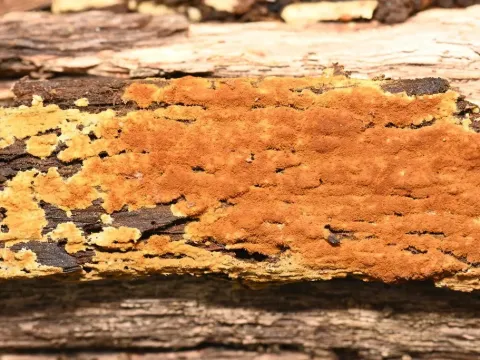
Botryobasidium aureum
Botryobasidium aureum
The causative agent of the disease is the fungus Botryobasidium aureum, which is classified as a basidiomycete. This fungus often acts as a saprotroph, decomposing dead plant matter in various environments.
What the section contains
Botryobasidium aureum
Morphologically, the fungus is distinguished by the formation of a golden-yellow hymenium that spreads across the substrate. The mycelium forms thin, web-like structures that become visible under high humidity.
The fungus reproduces through basidiospores, which are easily dispersed by wind and water splash. This allows the pathogen to colonize new areas rapidly when environmental conditions are suitable.
While primarily a saprotroph, it can act as a weak parasite under certain conditions, attacking weakened or damaged plant tissues in agricultural fields or greenhouses.
The biology of Botryobasidium aureum is deeply linked to the degradation of cellulose, making it common in areas where plant debris is abundant and poorly managed.
High relative humidity, typically exceeding 80%, is the primary factor driving the development and spread of Botryobasidium aureum in agricultural settings.
The temperature range optimal for spore germination and mycelial growth is between +15°C and +25°C. These mild temperatures, combined with damp conditions, create a perfect environment for outbreaks.
Accumulation of untreated plant debris on the soil surface serves as the main reservoir for the pathogen, allowing it to survive and proliferate between growing seasons.
Poor ventilation and overcrowded planting density significantly increase the risk of infection by preventing leaves from drying out and creating a stagnant microclimate.
Physical injuries to plants, whether caused by machinery, pests, or improper handling, facilitate the entry of the fungus into healthy tissues, leading to localized rotting.
The damage caused by Botryobasidium aureum is primarily associated with the premature decay of plant tissue. This can lead to significant reductions in both yield and quality of the harvested crops.
Infected seedlings often exhibit signs of rotting at the root collar or stem base, which can lead to mass plant loss, particularly in controlled greenhouse environments.
The presence of visible mycelial growth on harvested produce renders it aesthetically unappealing and prone to rapid degradation, making it unsellable for commercial markets.
By weakening the host plants, the fungus leaves them susceptible to secondary infections by more aggressive pathogens, compounding the negative impact on the overall crop health.
Economic losses arise not only from reduced output but also from the increased need for intensive sanitation and chemical applications to manage the spread of the disease.
Cultural practices are the most effective way to control this fungus. Crop rotation and the systematic removal of plant debris help to break the life cycle of the pathogen.
In greenhouses, maintaining proper humidity levels and ensuring good air circulation are critical steps to prevent the fungus from establishing a foothold on crops.
If the infection level becomes critical, targeted fungicide treatments may be necessary, though these should be used as a supplement to, not a replacement for, good sanitation.
- Deep plowing to bury infested organic matter.
- Regular disinfection of farming tools and surfaces.
- Selective thinning of plants to improve airflow.
Maintaining balanced plant nutrition and pest control helps improve plant vigor, making them more resilient against weak parasites like Botryobasidium aureum.