
Boron deficiency
Boron deficiency
Boron deficiency is a non-infectious physiological disorder caused by an insufficient supply of available boron in the soil. Unlike many nutrients, boron is immobile within the plant, meaning it cannot be redistributed from older leaves to the new growth, causing symptoms to appear first at the growing tips.
What the section contains
Boron deficiency
The deficiency disrupts carbohydrate metabolism and nucleic acid synthesis, which are essential for cell division. Without adequate boron, the transport of sugars from leaves to fruits and roots is blocked, leading to stunted plant development.
It is not a disease caused by an external pathogen like a fungus or bacteria; rather, it is a nutritional imbalance. The plant remains stunted and physiologically impaired until the chemical deficiency is addressed.
This disorder can affect large plantations if the soil chemical composition does not support boron availability, making it a critical aspect of commercial crop management.
Common horticultural crops, especially Apple (Malus domestica) and Pear (Pyrus communis), are highly susceptible to this deficiency, which often results in severe fruit quality loss.
Symptoms include the dieback of terminal buds and the inhibition of apical growth. Leaves often become brittle, thickened, and deformed, while internodes shorten significantly, giving the plant a stunted or rosetted appearance.
In apples and pears, the most distinct signs are found on the fruit: the development of "corky" brown spots on the skin and hardened, necrotic areas within the fruit flesh. Fruits often drop prematurely and show significant deformation.
Flowering is adversely affected, with frequent abortion of flower buds and poor fruit set. This is because boron is essential for pollen tube growth and successful fertilization.
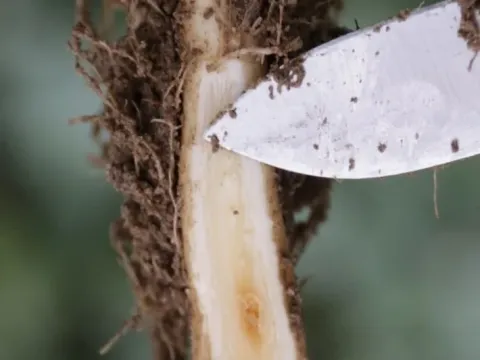
Root systems show restricted growth, with thickened or necrotic root tips. This poor root development reduces the plant's ability to absorb water and other essential nutrients, compounding the stress.
- Death of terminal shoots and buds.
- Deformed, corky, and pitted fruit.
- Chlorosis and curling of young leaves.
- Poor fruit set and premature fruit drop.
- Cracking of the bark on young branches.
Boron deficiency is most common in light, sandy, or coarse-textured soils where boron is easily leached by rain or irrigation, moving deeper than the root zone.
High soil pH levels (alkaline conditions) are a primary cause of boron unavailability. Excessive liming often exacerbates this problem by binding boron into insoluble compounds that plants cannot absorb.
Drought conditions significantly worsen symptoms because boron uptake is heavily dependent on transpiration. When water movement in the plant slows down, boron transport to the growing tissues practically stops.
Cool and wet spring weather can trigger temporary deficiency even in nutrient-rich soils, as the root activity is suppressed while the plants have high growth demands.
Heavy nitrogen application can mask or induce boron deficiency because the rapid growth triggered by nitrogen increases the plant's demand for boron beyond what the soil can provide.
The primary economic damage is the massive reduction in marketable yield. Fruits affected by boron deficiency are aesthetically unappealing, have poor texture, and are often discarded during harvest.
The weakened state of the trees makes them more vulnerable to secondary infections and pests. Over time, chronic boron deficiency leads to severe tree decline, where branches die back, and the canopy loses its productive structure.
In terms of production, the inability to achieve a consistent fruit set means that orchards fail to reach their revenue potential despite significant inputs in labor and pesticides.
Trees that suffer from long-term deficiency become structurally compromised, requiring heavy pruning or eventual removal, which represents a total loss of the initial investment in the orchard.
Post-harvest quality is significantly reduced, as boron-deficient fruit has a shorter shelf life and is more susceptible to storage rots and physiological breakdowns.
The most effective remedy is the application of foliar sprays containing soluble boron, such as boric acid or chelated boron. This method bypasses soil-related availability issues and provides an immediate supply to the plant tissues.
Regular soil testing is essential to maintain an optimal pH range and to detect boron levels before the onset of visual symptoms. Proper pH management is key to keeping boron accessible.
For fruit orchards, applications should be timed carefully: sprays during the "pink bud" stage and immediately after flowering are crucial for ensuring high-quality fruit set in apples and pears.
Increasing soil organic matter through composting helps improve the soil's capacity to retain and supply micronutrients over a longer period, mitigating the risk of sudden boron shortages.
Integrated nutrient management should prioritize balanced fertilization, avoiding excessive lime and ensuring that micronutrients are included in the fertilizer schedule as preventive measures.