
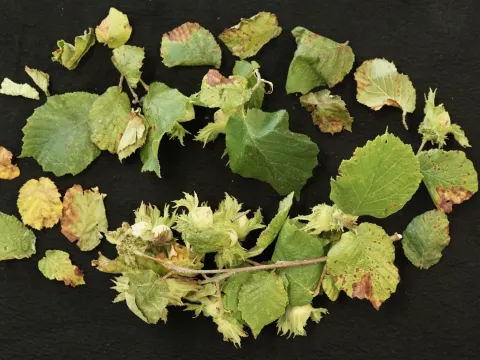
Borro sec
Cryptosporiopsis tarraconensis
The causal agent of the disease is the fungus Cryptosporiopsis tarraconensis. It is a pathogenic microorganism that specifically affects woody species, particularly hazelnut.
What the section contains
Borro sec
The fungus belongs to the ascomycetes group, capable of damaging the bark and shoots of plants. Its development is characterized by the formation of specific structures called pycnidia, where spores mature.
The pathogen can persist in infected plant tissues for a long period. It is adapted to the climatic conditions of regions with temperate and warm climates where hazelnuts are grown.
In the fungus's life cycle, the dispersal of conidia by rain droplets and wind plays a crucial role. Infection enters the plant through cracks, wounds, or natural openings in the bark.
Studies show that Cryptosporiopsis tarraconensis is a contributing factor to reduced productivity in hazelnut orchards in the Mediterranean region and other growing zones.
The primary sign of infection is necrotic spots on the bark of hazelnut branches and trunks. The affected areas darken over time and may become sunken, forming cankers.
Cracking of the bark is often observed around the cankers, which is a consequence of the fungus's active growth in the cambium layer. This disrupts normal sap flow.
In early stages, the disease may manifest as localized yellowing or wilting of individual shoots. With further pathogen development, the shoots die off completely.
- Appearance of dark brown or black cankers on the bark.
- Cracking and peeling of the bark in affected areas.
- Withering of branches located above the infection site.
- Presence of small fungal fruiting bodies (pycnidia) on the surface of the infected bark.
- Reduced overall leaf turgor in the area of damaged branches.
In advanced cases, visible bark deformation can be observed. This is a critical sign that requires immediate intervention by an agronomist.
High air humidity periods favor the development of Cryptosporiopsis tarraconensis. Rainy springs and autumns are the most dangerous phases for plant infection.
Temperature ranges between 18–25 degrees Celsius are considered optimal for the active germination of pathogen spores and the colonization of hazelnut tissues.
The presence of mechanical bark damage, resulting from pruning, hail, or insect pests, significantly facilitates the entry of the infection into the plant.
Overcrowded hazelnut plantings, which lack proper air circulation, create a favorable microclimate for prolonged moisture retention on the branch surfaces.
Poor agronomic practices and nutrient deficiencies in plants make them more vulnerable to the pathogen, reducing their natural disease resistance.
Borro sec causes serious damage to commercial hazelnut plantations. The infection leads to tree weakening and a significant reduction in overall yield.
Damage to vascular tissues disrupts fruit nutrition, leading to premature drop or the formation of empty, low-quality nuts.
Severe infection of individual branches or skeletal parts of the tree can trigger the premature death of entire plants in the orchard, resulting in economic losses.
The prolonged presence of the infection in an orchard leads to the accumulation of the pathogen in the environment, making stable harvests impossible without fungicide application.
The disease negatively impacts the longevity of plantations, forcing farmers to conduct expensive replacements of dead trees earlier than planned.
The primary control method is regular sanitary pruning. Affected branches must be immediately removed and destroyed outside the plantation area.
During pruning, it is important to disinfect tools to prevent the transfer of fungal spores from diseased trees to healthy parts of the orchard.
Preventive treatments with copper-based fungicides in spring and autumn can significantly reduce the risk of primary pathogen infection.
Maintaining optimal planting density and timely management of bark-damaging insects are mandatory elements of agronomic control.
Utilizing disease-resistant hazelnut cultivars remains the most effective and environmentally safe method for long-term disease management.