
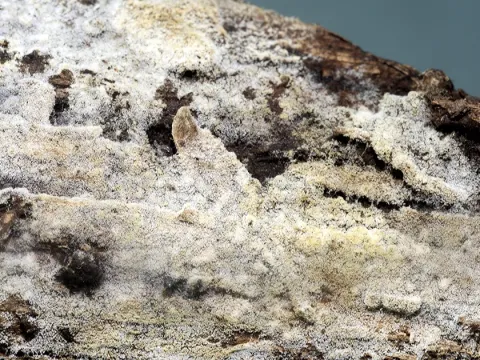
Botryobasidium laeve
Botryobasidium laeve
Botryobasidium laeve is a fungal species belonging to the class Basidiomycetes. It is primarily known as a saprotrophic organism that thrives on decaying organic matter, although it can act as a weak opportunistic parasite on stressed plants.
What the section contains
Botryobasidium laeve
The fungus is characterized by a thin, cobweb-like or crust-like mycelial layer that adheres closely to the substrate. Its biological role involves the enzymatic degradation of plant structural components like cellulose.
Reproduction is primarily achieved through basidiospores, which are easily dispersed by wind currents. This allows the fungus to survive and spread across various agricultural landscapes, colonizing suitable organic debris.
In the context of agricultural pathology, it is often found as part of a complex of fungi causing basal stem rot. While rarely the primary driver of disease, it exacerbates the decline of already weakened plants.
The persistence of its mycelium in the soil makes it a resilient pathogen that can survive unfavorable conditions, waiting for a host or a suitable environmental trigger to begin rapid growth.
Symptoms of infection are usually visible as a whitish or cream-colored fungal growth on the stem base or roots. This growth often appears as a thin, delicate film or a crust-like structure.
As the infection progresses, the tissues in contact with the fungal layer become soft and discolored. The epidermis may darken, and the stem tissue loses its structural integrity, becoming brittle.
Early warning signs include the yellowing of the lower leaves and a general lack of vigor in the affected plant. As the vascular tissue is compromised, wilting occurs, particularly during periods of high transpiration.
Microscopic examination of the mycelium often reveals characteristic hyphae with clamp connections. This structure helps distinguish Botryobasidium laeve from more aggressive necrotrophic pathogens.
In humid conditions, the fungal growth can spread horizontally, creating a visible white patch at the soil level around the base of the plant, potentially leading to stem collapse if not addressed.
The development of Botryobasidium laeve is heavily dependent on high relative humidity, ideally exceeding 85%. It thrives in temperate conditions with temperatures typically between +15°C and +22°C.
Dense crop stands with poor air circulation create the perfect microclimate for the fungus. The lack of ventilation keeps the stem bases consistently moist, which is favorable for spore germination.
High levels of undecomposed organic matter left on the soil surface provide an ideal energy source for the pathogen, facilitating its build-up before it colonizes healthy plant tissues.
Shaded areas in the field that do not dry out quickly after rain or irrigation provide protected zones where the fungus can flourish without being exposed to desiccation from sunlight.
Mechanical injuries resulting from cultivation practices or pest damage provide entry points for the fungal hyphae to penetrate the plant, turning a saprotroph into a localized pathogen.
The primary impact of the fungus is the interference with water and nutrient transport from the roots to the rest of the plant. This leads to stunted growth and significant reductions in crop yield.
By weakening the base of the stem, the fungus makes the plant more susceptible to lodging and secondary infections. This can lead to total crop loss if environmental conditions remain favorable for the pathogen.
In greenhouses and nurseries, the pathogen is particularly problematic due to the controlled environment, which may inadvertently favor fungal growth, leading to uniform loss of seedlings or young plants.
Beyond direct yield loss, the presence of the pathogen increases the infectious burden of the soil, making subsequent crops more vulnerable to the same disease cycle if appropriate management is ignored.
Overall, the cumulative effect on plant health results in lower quality harvests, shorter shelf life for produce, and increased costs related to disease management and remediation.
Preventative management is key, starting with proper crop rotation. Disrupting the cycle of host availability helps reduce the population density of the pathogen in the field.
Effective management of crop residues is essential. Incorporating plant debris deep into the soil promotes faster decomposition, limiting the pathogen's ability to survive and multiply.
Field sanitation, including the removal of infected plant parts, can significantly limit the spread. Ensuring adequate spacing between plants improves airflow and reduces humidity, making the environment less hospitable.
In cases of severe outbreaks, chemical fungicides may be employed, specifically those effective against Basidiomycetes. Application should focus on the base of the plants to target the pathogen directly.
Biological control agents, particularly beneficial fungi like Trichoderma species, have shown promise in outcompeting Botryobasidium laeve, providing an environmentally friendly alternative to traditional fungicides.