
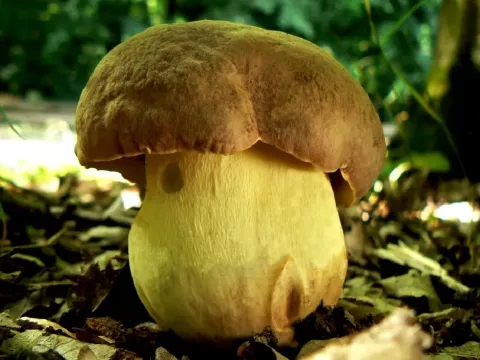
Boletus subappendiculatus
Boletus subappendiculatus
Boletus subappendiculatus is a species of bolete mushroom in the family Boletaceae. It is important to clarify that this fungus is not a plant disease and does not act as a pathogen for agricultural crops.
What the section contains
Boletus subappendiculatus
This species functions as a mycorrhizal fungus, establishing a mutualistic relationship with the root systems of coniferous trees, particularly spruce. This relationship is beneficial for both the tree and the fungus.
In agronomy, it is strictly classified as a non-parasitic organism. It does not cause infections, decay, or physiological stress in cultivated plants.
The fungus plays a critical role in nutrient cycling within forest ecosystems by breaking down organic matter and facilitating the uptake of essential minerals by trees.
Therefore, any identification of this fungus as a plant disease is factually incorrect; it is a natural component of healthy woodland ecosystems.
The fruit body features a robust cap, typically ranging from 5 to 15 cm in diameter, which transitions from convex to flat as it matures.
The cap surface is dry and ranges in color from light brown to ochre-yellow. During dry weather, the surface may occasionally show small cracks.
The pore surface underneath the cap is distinctly yellow, which often intensifies in color when touched or mechanically damaged.
The stem is solid and often thickened at the base. It is adorned with a fine reticulate pattern, which is a key identification feature for this species.
The flesh is firm and usually does not change color, or turns slightly yellow, when exposed to air. It has a mild taste and pleasant aroma, making it edible.
The primary habitat for Boletus subappendiculatus is mountainous or hilly spruce forests where it finds its symbiotic host, Picea abies.
It prefers acidic to neutral soils with a thick layer of conifer litter, which maintains the consistent soil moisture necessary for fungal mycelium health.
Optimal growth conditions for fruiting include temperatures between 15°C and 22°C, combined with high atmospheric humidity and adequate rainfall.
The fungus is sensitive to environmental quality; it thrives in undisturbed forest soils that are free from heavy chemical pollutants or excessive pesticide runoff.
Fruiting typically occurs during the late summer to early autumn, coinciding with periods of stable, moist weather patterns in temperate climates.
Boletus subappendiculatus poses no risk or economic threat to agricultural crops, orchards, or horticultural plants.
Because it lacks the biological mechanisms to infect plant tissue, it does not cause wilting, necrosis, or root rot in crops.
There is no evidence of harm to plant health, nor does it compete with crops for resources in an agricultural setting.
The presence of this fungus is often a bio-indicator of a healthy, stable forest environment, which is beneficial for surrounding biodiversity.
Consequently, no crop protection efforts or economic loss assessments are applicable to this species.
No chemical or biological control measures are needed, as the fungus is not a pest or a causative agent of disease.
Conservation of the natural forest habitat is the only management strategy recommended to ensure the continued presence of this mycorrhizal species.
In the unlikely event that the fungus is found in a location where it is not desired, simple physical removal of the fruit body is sufficient.
The application of fungicides in areas where these mushrooms grow is strictly discouraged, as it can disrupt beneficial soil mycorrhizae.
Monitoring the environmental health of forest fringes is the best practice for maintaining the integrity of such symbiotic fungal populations.