
Boletus rhodoxanthus
Boletus rhodoxanthus
Description
Symptoms
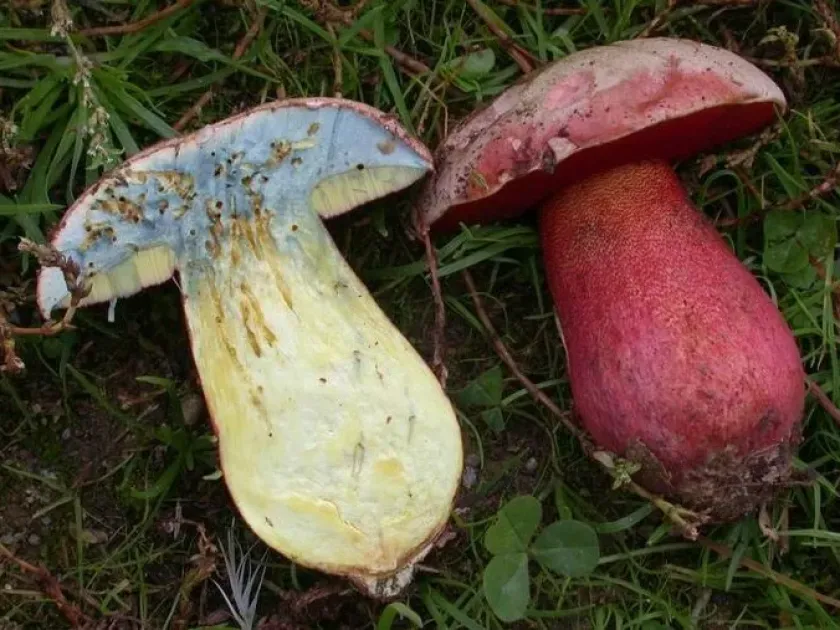
The fruit body of Boletus rhodoxanthus features a massive cap, which can reach up to 20 centimeters in diameter and is colored in grayish or brownish-yellow tones.
The hymenophore (pore surface under the cap) has a distinct red or carmine color, which is one of the primary diagnostic characteristics for this species.
The stem is dense and barrel-shaped, typically yellowish and covered with a prominent bright red reticulated pattern that is very visible to the naked eye.
When sliced, the flesh changes color rapidly, turning an intense blue upon contact with air, which is a common trait among many boletes but is diagnostic here.
The odor is generally mild or nondescript, while the taste of the raw flesh can be unpleasant or bitter, indicating the presence of specific toxins.
Pathogen
Boletus rhodoxanthus is a species of fungus in the Boletaceae family. It is important to state that this species is not a plant pathogen and does not cause diseases in agricultural crops.
This fungus is a macrofungus that forms a mycorrhizal relationship with deciduous trees, such as oaks and beeches, playing a role in forest ecology.
Biologically, it is classified as an inedible or toxic mushroom in its raw state, often mistaken for highly prized edible species like the penny bun.
Its mycelium resides within the soil and does not infect plant tissues; thus, it is not an agent of plant disease or a pest in the agricultural sector.
Knowledge of this species is primarily relevant for the identification and safety of foraging enthusiasts and those working in woodland areas.
Conditions for development
Optimal conditions for the development of Boletus rhodoxanthus fruit bodies occur during the summer and early autumn months when temperatures are warm.
This fungus prefers calcareous soils, which limits its distribution to specific forest ecosystems that have a rich mineral composition in the ground.
The species is sensitive to moisture levels and thrives after moderate rainfall, which triggers the growth and development of its fruiting bodies.
It is mainly found in oak or beech forests and mixed woodlands, preferring sunny edges and well-lit areas rather than dense, dark thickets.
A temperature range between 18 and 25 degrees Celsius is ideal for its growth, while extreme cold or drought significantly inhibits its activity.
Why it matters
The primary danger of this species is its toxicity if ingested raw or insufficiently cooked, which can lead to severe gastrointestinal distress.
It poses a significant risk to inexperienced mushroom hunters who may confuse it with edible boletes, leading to accidental poisoning incidents.
The toxins present in the flesh may not be fully destroyed by standard cooking methods, making consumption risky even after processing.
There is no agricultural damage associated with this fungus, as it does not compete with or infect any crops or forestry products.
The harm is strictly related to human safety and the potential for toxic reactions if the mushroom is mistakenly identified as a food source.
Protection
The most effective measure for safety is public education regarding mushroom identification and the dangers of misidentifying poisonous species.
Preventive measures include encouraging foragers to inspect key features such as the red pore surface and the red reticulation on the stem before collection.
Since this fungus is not a plant pathogen, no chemical or biological control methods are required in agricultural or forestry practices.
When in doubt about the identity of any wild mushroom, the safest practice is to leave it in the forest and avoid harvesting it altogether.
In cases of accidental ingestion and suspected poisoning, immediate medical attention should be sought to manage symptoms and prevent complications.
Discussion
No discussions yet — be the first.