
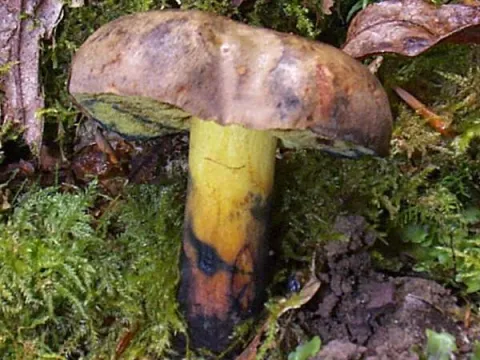
Boletus pulverulentus
Boletus pulverulentus
Boletus pulverulentus, commonly known as the inkstain bolete, is a species of fungus in the Boletaceae family. It is vital to state that this organism is not a plant disease and does not pose a threat to crops or garden plants.
What the section contains
Boletus pulverulentus
Biologically, it is a saprotrophic mushroom. It does not act as a pathogen and does not infect or cause damage to the tissues of agricultural or woody plants.
The mushroom interacts with the soil environment rather than parasitizing living host plants. Its life cycle involves the decomposition of organic matter, contributing to soil health in forest environments.
As a member of the Basidiomycota division, it functions primarily as a decomposer within its natural habitat. It lacks any mechanism that could lead to the infection of vegetative plant organs.
For agronomists, this fungus is a non-issue. There is no record of it causing any agricultural disease, and it does not fall under the category of plant pests or pathogens.
The mushroom features a convex or cushion-shaped cap, which typically displays shades of reddish-brown to dark olive. Its surface has a distinct velvety texture.
The most diagnostic feature is the rapid, intense blue staining that occurs on the cap, pores, and flesh when touched or bruised. This oxidation is a unique chemical signature of the species.
The stem is generally yellowish with red to brown dots or a powdery coating, hence the name pulverulentus. The pore surface is bright yellow, turning darker with age.
The spore print is olive-brown. The physical appearance can vary slightly depending on the age of the mushroom and the surrounding environmental conditions.
It usually grows solitary or in small groups on the ground, preferring nutrient-rich forest litter beneath deciduous trees.
This species thrives in deciduous and mixed forests where there is abundant organic matter. It requires specific soil moisture levels to produce fruit bodies.
The growth period is mainly during summer and early autumn. It requires stable environmental temperatures and is highly sensitive to extreme drought or frost.
The fungus is often associated with tree roots, forming symbiotic relationships known as mycorrhiza, which are mutually beneficial to the tree and the fungus.
Proper aeration and high-quality forest litter are essential for the mycelium to spread. Excessive chemical usage in nearby areas can disrupt its growth patterns.
It does not colonize cultivated soil or crop fields, as it relies on specific ecological cues typical of undisturbed natural forest soils.
Boletus pulverulentus causes no damage to cultivated plants or harvests. It is entirely harmless to agriculture and does not result in yield reduction.
There are no known instances where this fungus has acted as a plant disease. It does not produce enzymes or toxins that interfere with plant physiology.
The presence of this fungus is actually a sign of a healthy and biologically active soil environment. It poses no competitive threat to crop growth.
No protective measures, such as fungicide application, are required or recommended. Attempting to eradicate this fungus is unnecessary and counterproductive to soil biodiversity.
As it is not a plant pathogen, it does not spread between plants, nor does it require any quarantine or monitoring protocols in an agricultural context.