
Boletus poikilochromus
Boletus poikilochromus
Description
Symptoms
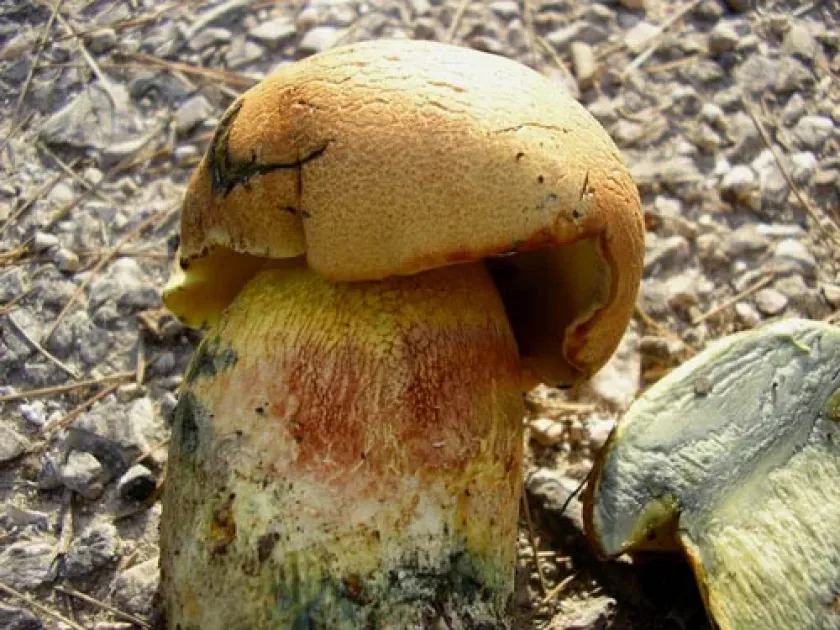
The fruiting body is characterized by a cap that displays variable yellow to brown colors, often appearing mottled as it matures.
A distinctive feature is the rapid oxidation of the flesh upon exposure to air, which turns from yellow to a deep blue or greenish-blue.
The pore surface beneath the cap starts as bright yellow and transitions to an olive-brown hue in mature specimens.
The stem is generally robust, often featuring a distinct, darker reticulated pattern that runs along its surface.
Mycelium typically develops within the leaf litter and humus layers, forming a dense mycorrhizal sheath around host roots.
Pathogen
Boletus poikilochromus is not a plant pathogen and does not cause diseases in agricultural crops.
It is classified as a mycorrhizal fungus that lives in a symbiotic relationship with various broad-leaved tree species, such as oaks and beeches.
Unlike parasitic fungi that degrade plant tissues, this species contributes to the nutrient uptake of its host trees through an extensive mycelial network.
It plays a beneficial role in forest ecosystems by facilitating the exchange of minerals and water between the soil and the tree roots.
Agricultural practices remain unaffected by this fungus, as it is strictly confined to natural forest environments.
Conditions for development
The fungus thrives in warm, temperate deciduous forests with well-drained, nutrient-rich soil conditions.
Fruiting occurs primarily during the late summer and early autumn months, following sustained periods of rainfall.
Successful growth is dependent on the presence of specific tree symbionts and a stable forest microclimate free from heavy pollution.
Spore dispersal is facilitated by air currents and interactions with local wildlife inhabiting the forest floor.
Disruption of the forest canopy or significant changes in soil chemistry can inhibit the development of this sensitive species.
Why it matters
This fungus poses no risk to agricultural crops, as it lacks the physiological traits required to act as a phytopathogen.
There is no record of it causing blight, rot, or any other form of degradation to cultivated plants or commercial timber stocks.
Interactions with humans are limited, primarily involving scientific observation and the need for correct identification by foraging enthusiasts.
It is considered an ecologically beneficial organism rather than a pest, as it supports the health of forest tree populations.
Economic impact is negligible, and the species is of interest mainly for ecological monitoring and conservation purposes.
Protection
No control measures are necessary, as the fungus is not a threat to agricultural productivity or plant health.
Conservation strategies should focus on protecting forest habitats from deforestation and industrial pollution to preserve this species.
Forestry management should prioritize sustainable practices that maintain soil health and the presence of healthy tree symbionts.
Chemical applications intended for crop protection should be applied with caution near forest borders to avoid damaging mycorrhizal networks.
Public awareness and education are recommended to prevent the accidental destruction of these rare and ecologically valuable fungi.
Discussion
No discussions yet — be the first.