
Boletus xanthocyanus
Boletus xanthocyanus
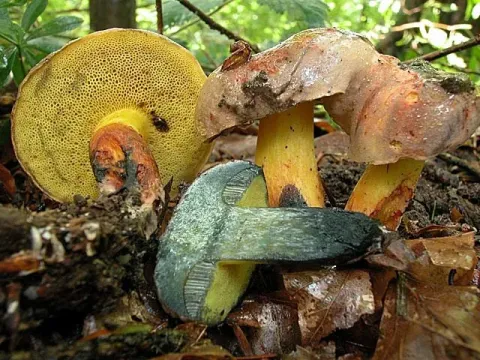
Boletus xanthocyanus is a distinctive species within the Boletaceae family, recognized primarily for the rapid color transformation of its flesh upon exposure.
What the section contains
Boletus xanthocyanus
When the mushroom is cut or bruised, the internal tissue shifts from a pale yellow to an intense, vibrant blue, which eventually fades over time.
The cap is typically brownish or olive-toned with a firm texture. Its surface can range from smooth to slightly velvety, reflecting the health of the specimen.
Underneath the cap, the pore surface starts as a bright yellow color before transitioning to olive or greenish shades as the spores reach maturity.
The stipe is solid and often features a fine, raised network pattern known as a reticulation, which is a common diagnostic characteristic in this group.
Boletus xanthocyanus is not a plant pathogen. It does not cause diseases in agricultural crops, as its biological role is strictly linked to forestry and soil health.
As a mycorrhizal fungus, it establishes a symbiotic relationship with the roots of trees, providing a mutually beneficial exchange of nutrients and moisture.
It lacks the enzymatic pathways required to degrade living plant cell walls, which distinguishes it from parasitic fungi that cause rots or blights.
From an agronomical perspective, this species is considered a beneficial organism that supports forest tree vigor and soil ecosystem resilience.
There are no control measures required for this species, as it contributes positively to the overall health of the forest environment where it resides.
The development of this mushroom is strictly tied to the presence of mature host trees, which provide the carbon sources necessary for the mycelial network.
It favors environments with well-aerated soil that is rich in organic matter, specifically deep forest litter that maintains constant levels of moisture.
Temperature stability is crucial for the fruiting process, with the fungus showing preference for mild, humid summers following wet spring seasons.
Environmental degradation, such as soil compaction or deforestation, significantly limits the growth and reproductive capability of this fungal species.
Microclimate factors, including shade density and wind protection, are essential for maintaining the delicate humidity levels required for the mushroom to emerge.