
False truffle
Diehliomyces microsporus
Description
Symptoms
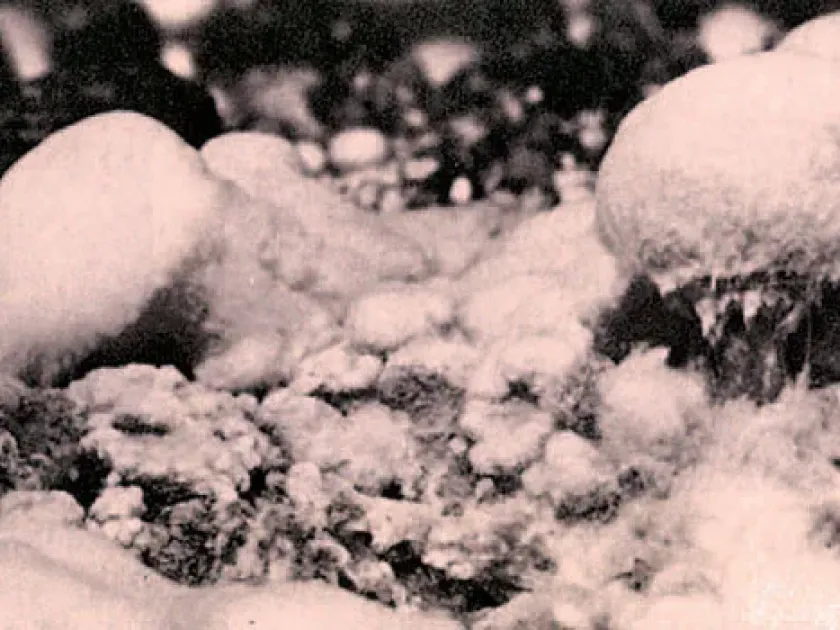
The initial signs appear on the casing surface as a dense, white mycelial growth resembling a web. Over time, this growth thickens and changes color to yellowish or tan.
A specific characteristic is the development of small, convoluted, truffle-like fruit bodies which can be found either embedded in the casing soil or on its surface.
A distinct, unpleasant odor reminiscent of rancid fat or decaying matter is emitted from infected areas, which differs greatly from the earthy smell of healthy mushrooms.
The growth of the cultivated mushroom mycelium in the affected area stops abruptly. These sites quickly become sources of infection for the rest of the cultivation room.
When the fruit bodies of the parasitic fungus are cut open, they reveal a granular, brownish interior filled with a vast number of spores.
Pathogen
The causal agent of this disease is the ascomycete fungus Diehliomyces microsporus (formerly known as Pseudobalsamia microspora). It is a microscopic pathogen that acts as a serious competitor for nutrients against the mushroom mycelium.
The life cycle of the pathogen involves the production of ascospores which are exceptionally heat-resistant. This allows the fungus to survive inadequate substrate pasteurization processes.
The infection is most frequently introduced into cultivation rooms through contaminated casing material or unsanitized tools and equipment used by the workers.
This fungus behaves as an aggressive parasite that blocks the formation of mushroom fruit bodies. Its colonization of the substrate renders it useless for commercial production.
The biology of Diehliomyces microsporus makes it one of the most difficult pathogens to eradicate in industrial mushroom farming due to its rapid spread and persistence.
Conditions for development
The development of False truffle is favored by excessive moisture in the casing soil and poor ventilation. Stagnant air zones are particularly prone to outbreaks.
Failure to reach required temperatures during substrate pasteurization is the primary cause of contamination. If spores are not killed, they germinate rapidly in the rich environment.
Low pH levels in the casing material provide an environment that is highly favorable for Diehliomyces microsporus growth compared to the mushroom mycelium.
Inadequate sanitation protocols on the farm are a leading factor in the spread of the pathogen, as spores are easily carried on staff clothing and equipment.
High humidity and poor air circulation create the perfect conditions for the pathogen to produce large quantities of airborne spores, facilitating its rapid dissemination.
Why it matters
False truffle causes massive economic losses to mushroom farms, often resulting in a complete loss of the harvest within the affected production blocks.
The pathogen depletes the substrate of nutrients, effectively starving the cultivated mushrooms. This results in the complete cessation of pinhead formation.
Metabolites produced by the fungus are toxic to the mushroom mycelium, inhibiting its growth even in areas surrounding the actual infection site.
Cleaning and disinfecting rooms after a severe outbreak is costly and time-consuming. Some production areas may remain unusable for long periods.
The spores are highly mobile, allowing the infection to move quickly through ventilation systems, potentially threatening multiple growing rooms at once.
Protection
Strict adherence to temperature protocols during substrate pasteurization and casing soil sterilization is the foundation of effective control.
Regular sanitation of all cultivation rooms and equipment using professional-grade fungicides is essential. All tools must be thoroughly cleaned after each use.
If an outbreak is detected, the affected area should be isolated and carefully removed, ensuring surrounding material is treated with salt or lime to prevent further spread.
Monitoring and adjusting the pH level of the casing soil with agricultural lime helps to create an environment that discourages the growth of the pathogen.
- Ensure only sterilized casing soil is used.
- Restrict movement of staff between growing rooms.
- Implement mandatory footbaths for all entrants.
- Regular inspection and cleaning of all ventilation ducts.
Discussion
No discussions yet — be the first.