
Burnet rose rust
Phragmidium rosae-pimpinellifoliae
Description
Symptoms
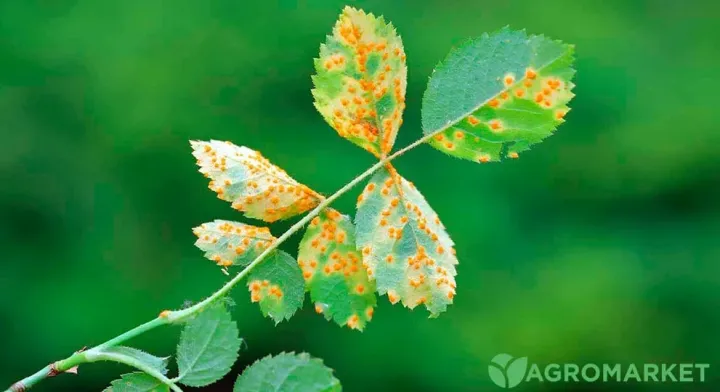
Early symptoms appear as small, yellow-orange spots on the upper leaf surface. Over time, distinct powdery pustules, known as aecia, form on the underside of the leaf, filled with vibrant orange spores.
As the season progresses, these pustules shift in color from bright orange to rusty brown or black, signaling the production of overwintering teliospores. This gives the leaves a characteristic burnt or rusty appearance.
The fungus often attacks non-lignified stems, causing swellings, distortions, and cracks in the bark. These physical deformities can significantly weaken the structural integrity of the affected branches.
Severe infestations cause premature yellowing and dropping of leaves, which can lead to complete defoliation by mid-summer, severely reducing the aesthetic value of the rose bushes.
- Bright orange pustules on the undersides of leaves.
- Yellow spots on the upper leaf surface.
- Distortion and cracking of young, green stems.
- Premature leaf drop starting from the bottom of the plant.
- Stunted growth and reduced overall plant vigor.
Pathogen
The causal agent of this disease is the highly specialized parasitic fungus Phragmidium rosae-pimpinellifoliae, which belongs to the class Basidiomycetes. It is an obligate parasite, meaning it relies entirely on the host plant to complete its lifecycle.
The fungus goes through a complex sequence of spore development stages, including aeciospores, urediniospores, and teliospores. It primarily targets the Burnet rose (Rosa pimpinellifolia) and related wild rose species.
The mycelium develops within the intercellular spaces of the leaves, stems, and young shoots. The pathogen overwinters in infected plant debris or within bark crevices, preparing for a new cycle the following spring.
Infection begins when spores are dispersed by wind, rain splashes, or insects onto susceptible parts of the host. The fungus penetrates the plant through stomata or directly through the epidermis.
This pathogen is highly evolved to synchronize its life cycle with the growing season of the host, allowing it to become a persistent problem in gardens where it has established itself.
Conditions for development
High relative humidity and frequent rain or heavy morning dew are the primary catalysts for rust development. The optimal temperature range for spore germination is between 15°C and 22°C (59°F to 72°F).
Overcrowded planting environments prevent air circulation, keeping foliage moist for longer periods and creating perfect conditions for fungal colonization and rapid spread between neighboring plants.
Excessive nitrogen fertilization promotes the growth of soft, succulent tissues that are easily penetrated by fungal hyphae, making the plant more susceptible to infection.
Neglecting proper pruning and sanitation allows the fungus to remain on-site throughout the winter, increasing the disease pressure at the start of the next growing season.
Lack of proper drainage and poor soil aeration can also stress the plants, weakening their natural resistance mechanisms and making them easier targets for the pathogen.
Why it matters
Burnet rose rust severely damages the plant by disrupting photosynthesis. The loss of foliage prevents the plant from producing sufficient energy, leading to a significant depletion of carbohydrate reserves.
The infection reduces the ability of the rose to set flower buds for the subsequent year. This decline in vitality impacts not only current blooms but also the long-term health and productivity of the shrub.
Stem infections interfere with the movement of nutrients and water, which can lead to branch dieback or total plant collapse in extreme cases. Weakened branches are also more susceptible to winter cold damage.
Repeated yearly infections leave the roses vulnerable to secondary pathogens and pests, which can accelerate the decline of the shrub, potentially leading to the death of the specimen.
From a maintenance perspective, the disease requires intensive intervention, leading to increased costs and labor, or the need to replace susceptible varieties with more resistant alternatives.
Protection
Sanitation is the most critical control measure. Carefully prune and remove all infected foliage and stems. All plant waste must be collected and disposed of away from the garden, preferably by burning or deep burial.
Ensure proper spacing when planting to improve airflow. Maintain garden hygiene by keeping the area beneath the rose bushes clean and applying fresh mulch to prevent soil-borne spores from splashing onto leaves.
Use fungicides as a management tool. Systemic fungicides, particularly those containing triazoles or strobilurins, are effective when applied at the first signs of disease or as a preventative measure.
Regular monitoring and application are key. Treatments should be repeated at 10-14 day intervals during the growing season, especially during periods of wet, humid weather that favor fungal spread.
Promote plant vigor by balancing nutrient intake. Adequate levels of potassium and phosphorus help strengthen cell walls, making it more difficult for fungal pathogens to penetrate the plant tissues.
Discussion
No discussions yet — be the first.