
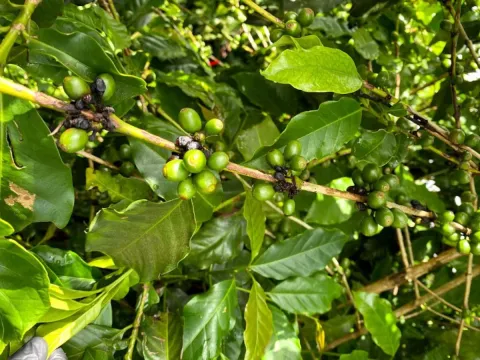
Coffee phoma disease
Boeremia coffeae
The causative agent of this disease is the ascomycete fungus Boeremia coffeae (formerly known as Phoma costarricensis). This pathogen is specialized in infecting the aerial parts of coffee trees.
What the section contains
Coffee phoma disease
The fungus survives in crop debris and infected plant tissues, where it produces pycnidia, its fruiting bodies. Inside these structures, conidia mature, serving as the primary source of infection throughout the growing season.
The fungus is highly aggressive and capable of penetrating young plant tissues through stomata or micro-wounds in the epidermis.
The pathogen's life cycle is closely linked to environmental conditions. Spore dispersal occurs primarily through rain splashes, wind, and contaminated pruning tools.
Mycological identification requires isolating the pathogen in pure culture on nutrient media, where it forms characteristic colonies with distinct pycnidia.
The first symptoms manifest on leaves as chlorotic spots that eventually turn necrotic, often displaying concentric zones, which is a key diagnostic feature.
On young shoots and branches, the disease causes deep ulcers (cankers) that can girdle the stem, leading to the dieback of the apical parts.
When berries are infected, dark sunken spots appear on their surface, causing premature drop or shriveling while still on the branch.
Coffee tree flowers are also susceptible: they turn brown and wither before fruit set, directly reducing the overall yield of the plantation.
- Yellowing of leaf margins.
- Dark necrotic spots on berries.
- Premature leaf and fruit drop.
- Apical shoot dieback.
- Visible pycnidia on dead tissues.
The optimal conditions for Phoma disease development are high relative humidity (above 80%) and moderate temperatures ranging from 18–24°C.
Densely planted trees without proper pruning create stagnant, humid air pockets within the canopy, which promotes rapid disease spread.
Plants grown at high altitudes with frequent fog exposure face a higher infection risk due to the persistent moisture film on leaf surfaces.
Mechanical injuries caused during harvest or improper pruning serve as entry points for the fungal infection.
Nutritional imbalances, especially deficiencies in potassium and copper, can lower the trees' immune response and resistance to the pathogen.
Phoma disease causes significant economic losses by directly damaging the tree's reproductive organs, with yield losses reaching 30–50% during severe outbreaks.
Infection of the berries leads to deformation and rotting, which severely compromises the quality of the coffee beans and their market value.
Damage to shoots disrupts the tree's metabolic processes and reduces the total photosynthetic area, weakening the plant.
Infected trees become susceptible to secondary pathogens and pest infestations, shortening the plantation's productive lifespan.
Massive outbreaks often require complete plant replacement or radical pruning, which involves high financial costs and loss of income for several years.
The primary control method involves sanitary pruning and the removal of all infected plant parts to reduce the inoculum level.
Preventive spraying with copper-based fungicides before the rainy season is highly effective in curbing the pathogen's development.
Implementing proper agricultural practices, including regular pruning to improve aeration and canopy light penetration, significantly reduces humidity.
The use of disease-resistant coffee varieties is the most strategic approach for the long-term protection of plantations.
Disinfecting pruning tools after each tree is a mandatory practice to prevent the mechanical transfer of spores between healthy and infected plants.