
Coffee tracheomycosis
Gibberella xylarioides
Description
Symptoms
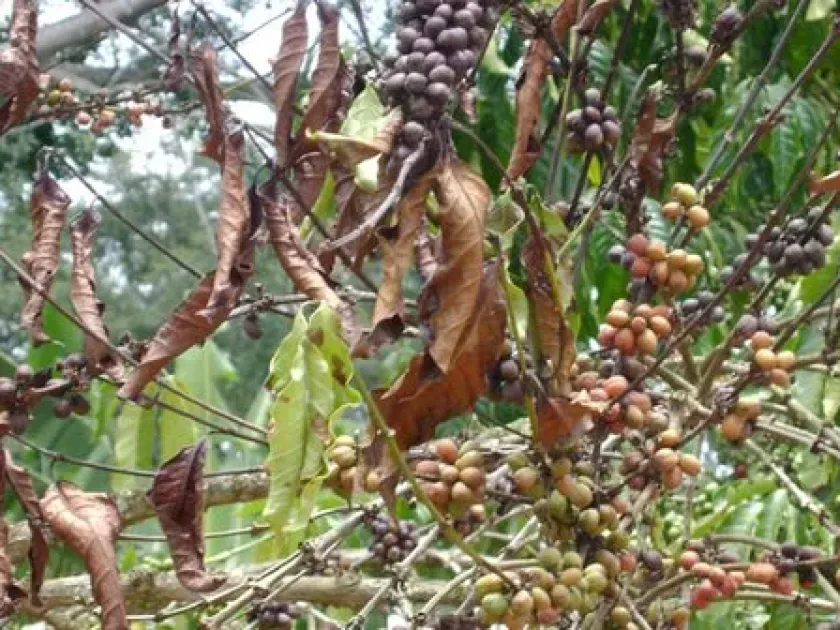
The earliest symptom is typically chlorosis of the leaves, which progresses to premature wilting and defoliation, starting from the lower parts of the plant.
A classic sign is the wilting of branches, which lose turgor rapidly, turn brown, and die back as the blockage of the xylem becomes complete.
When the stem or branches of an infected tree are cut, one can observe a distinct browning or discoloration of the vascular ring inside the wood.
In advanced stages, cracks appear on the bark of the main stem, where sporulation occurs if the ambient humidity is high enough for the fungus.
The overall appearance of the tree becomes withered and stunted, with extensive dieback occurring as the pathogen consumes the internal plant structures.
Pathogen
The causal agent of this severe disease is the fungus Gibberella xylarioides (the anamorph stage is Fusarium xylarioides). It is a specialized vascular pathogen.
The disease is classified as a vascular wilt, as the fungus targets the xylem, systematically colonizing the plant's vascular network.
This pathogen can persist in the soil and on infected crop residues for extended periods, remaining a constant threat to the health of the coffee plantation.
The fungal mycelium spreads through the plant's conductive tissues, effectively blocking the transport of water and nutrients from the roots to the upper canopy.
It primarily attacks Coffea arabica (Arabica coffee) and Coffea canephora (Robusta/Congo coffee), causing rapid physiological decline.
Conditions for development
High humidity and consistent rainfall are major drivers of infection, providing the ideal conditions for Gibberella xylarioides spores to germinate.
Mechanical injuries to the roots or stems during standard pruning or harvesting operations significantly increase the risk of pathogen entry into the plant.
Temperatures ranging from 20°C to 28°C are optimal for the rapid colonization of the vascular system by the fungus inside the host plant.
Plants under nutritional stress or those growing in degraded soils are far more susceptible to infection and exhibit faster decline than healthy, vigorous trees.
The disease can be spread through contaminated pruning equipment, as well as by the movement of spores via rainwater runoff or wind across the plantation.
Why it matters
Tracheomycosis is considered one of the most destructive diseases in coffee production, capable of killing entire plantations within a few seasons.
The disease severely impacts yields, as the impaired vascular system prevents the tree from transporting the necessary resources to develop healthy coffee cherries.
Economic losses arise not only from reduced production but also from the high costs associated with removing and destroying entire infected sectors.
The hidden nature of the infection makes it difficult to manage, as trees often appear outwardly healthy until the damage is already at an irreversible stage.
Massive outbreaks frequently require the complete replanting of fields, creating a significant long-term financial burden for coffee growers.
Protection
Strict phytosanitary measures are the primary defense, including the immediate removal and destruction of infected trees, including their entire root systems.
Disinfection of all pruning tools using alcohol or professional-grade fungicides is essential after contact with any suspect or infected coffee tree.
The use of resistant coffee varieties and healthy, certified nursery stock is the most effective long-term strategy for maintaining plantation health.
Providing balanced nutrition and maintaining optimal soil fertility helps strengthen the tree’s natural defenses and mitigates the impact of pathogen attacks.
Effective plantation management, such as proper spacing and drainage, helps reduce microclimate humidity, which in turn discourages the spread of fungal spores.
Pathogens and affected parts
Affects crops · 2
Discussion
No discussions yet — be the first.